
TL;DR
Receiving an Income Tax Notice does not automatically mean you have committed tax evasion or fraud. In many cases, notices are generated because of mismatches in reported income, missing information, incorrect tax credit claims, or routine verification processes. With the Income Tax Department increasingly using technology and data analytics, taxpayers should carefully verify AIS, Form 26AS, bank interest, capital gains, and other financial information before filing their Income Tax Returns. Understanding the common reasons behind notices can help you respond appropriately and reduce the risk of future compliance issues.
What is an Income Tax Notice?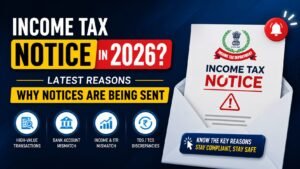
An Income Tax Notice is an official communication issued by the Income Tax Department when it requires additional information, clarification, verification, or action from a taxpayer.
Not every notice indicates wrongdoing. Many notices are generated automatically through system-based verification when the information available with the department does not match the details reported in the Income Tax Return (ITR).
Depending on the nature of the issue, a notice may request:
- Clarification regarding reported income.
- Verification of tax credits.
- Supporting documents.
- Correction of filing errors.
- Additional financial information.
- Response within a prescribed timeline.
Reading the notice carefully and understanding its purpose is the first step toward resolving the matter effectively.
Should You Panic After Receiving an Income Tax Notice?
The simple answer is No.
Receiving a notice is relatively common, especially as tax administration becomes increasingly data-driven.
Many notices relate to:
- Routine verification.
- Mismatch of reported information.
- Missing documentation.
- Incorrect tax credit claims.
- Processing-related queries.
Ignoring a notice, however, can create unnecessary complications. Responding accurately and within the specified timeline is important to ensure smooth resolution.
Common Types of Income Tax Notices
The Income Tax Department may issue notices for different reasons depending on the taxpayer’s filing history and reported information.
Some commonly encountered notices relate to:
Return Processing
Issued when the department processes the Income Tax Return and identifies adjustments, refunds, outstanding demands, or other processing outcomes.
Defective Return
Issued when the filed return contains incomplete or incorrect information requiring correction within the prescribed time.
Information Verification
The department may request clarification if financial information reported by third parties differs from the details disclosed in the Income Tax Return.
Scrutiny Assessment
In selected cases, taxpayers may be asked to provide supporting documents or explanations regarding specific transactions or deductions claimed.
Reassessment or Escaped Income Proceedings
Where permitted under applicable law, the department may initiate proceedings if it believes certain income has not been properly reported.
The exact nature of every notice depends on the applicable provisions of the Income-tax Act and the facts of the taxpayer’s case.
Latest Reasons Income Tax Notices Are Being Sent in 2026
Advances in digital reporting and data analytics have significantly increased the ability of the Income Tax Department to compare taxpayer information from multiple sources.
Below are some of the most common reasons notices may be issued.
1. AIS and Form 26AS Mismatches
One of the leading reasons for notices is inconsistency between:
- Annual Information Statement (AIS)
- Form 26AS
- Income disclosed in the ITR
For example:
- Interest income appearing in AIS but omitted from the return.
- Dividend income not reported.
- Incorrect TDS claims.
- Missing financial transactions.
Taxpayers should always reconcile AIS and Form 26AS before filing.
2. High-Value Financial Transactions
Banks, mutual funds, registrars, financial institutions, and other reporting entities provide specified financial information to the Income Tax Department.
Large transactions such as:
- Significant cash deposits.
- Property purchases.
- Securities transactions.
- Mutual fund investments.
- Foreign remittances.
- High-value credit card payments.
may be reviewed alongside the taxpayer’s declared income.
Where there are inconsistencies, the department may seek clarification.
3. Unreported Interest Income
Interest earned from:
- Savings accounts.
- Fixed deposits.
- Recurring deposits.
- Bonds.
is frequently overlooked during ITR preparation.
Since banks report certain financial information, failure to disclose taxable interest income may result in verification queries.
4. Incorrect TDS Claims
Claiming tax deducted at source (TDS) that is not reflected in Form 26AS or supported by available records may lead to processing issues or notices.
Before claiming tax credits, taxpayers should confirm that:
- TDS has been deposited by the deductor.
- The credit appears correctly in Form 26AS.
- The PAN quoted by the deductor is accurate.
5. Omission of Dividend Income
Dividend income received from listed companies or mutual funds may be reflected in AIS.
If this income is omitted from the Income Tax Return, the department’s systems may identify the discrepancy during processing.
6. Capital Gains Not Properly Reported
With increasing investment activity, capital gains reporting has become a major area of scrutiny.
Common issues include:
- Incorrect purchase cost.
- Wrong holding period.
- Omitted transactions.
- Incorrect exemption claims.
- Missing sale transactions.
Taxpayers should reconcile broker statements, capital gains reports, and AIS before filing.
7. Business Income Discrepancies
Businesses and professionals may receive notices if there are inconsistencies between:
- Reported turnover.
- GST records.
- Tax audit reports.
- Income declared in the ITR.
- Financial statements.
Maintaining proper books of accounts significantly reduces compliance risks.
Early Warning Signs That May Increase the Risk of a Notice
While no taxpayer can completely eliminate the possibility of receiving a notice, certain patterns may increase the likelihood of verification.
Watch out for:
- Differences between AIS and ITR.
- Missing TDS credits.
- Unreported interest or dividend income.
- Large financial transactions not reflected in income disclosures.
- Incorrect deduction claims.
- Incomplete or inaccurate ITR forms.
- Failure to reconcile Form 26AS.
- Reporting errors in capital gains.
- Inconsistencies between GST records and income reported by businesses.
Identifying and correcting these issues before filing your Income Tax Return can significantly improve the accuracy of your return and reduce the chances of future notices.
What Should You Do If You Receive an Income Tax Notice?
Receiving an Income Tax Notice does not necessarily mean that you have made a serious mistake or violated tax laws. In many cases, the notice simply requests clarification, additional documents, or confirmation of information already available with the Income Tax Department.
The most important step is to respond calmly, understand the reason for the notice, and act within the prescribed timeline.
Ignoring the notice or delaying your response can lead to additional compliance issues that may have been avoided with timely action.
Step 1: Read the Notice Carefully
Before taking any action, review the notice thoroughly.
Pay attention to:
- Assessment Year
- Financial Year
- Notice reference number
- Date of issue
- Section under which the notice has been issued
- Response deadline
- Information requested
Understanding these details helps determine the appropriate course of action.
Step 2: Verify the Information Mentioned
Compare the details in the notice with your financial records, including:
- Filed Income Tax Return
- Form 16
- Form 26AS
- Annual Information Statement (AIS)
- Bank statements
- Investment statements
- Capital gains reports
- GST records (for businesses)
- Books of accounts
Many notices arise because of simple reporting mismatches that can be resolved by verifying the available information.
Step 3: Gather Supporting Documents
Depending on the nature of the notice, you may need to keep the following documents ready:
- Income Tax Return acknowledgment
- PAN and Aadhaar details
- Salary slips
- Form 16
- Bank statements
- Interest certificates
- Investment proofs
- Capital gains statements
- Business financial statements
- GST returns
- Tax payment challans
Maintaining organised records helps you respond accurately and efficiently.
Step 4: Respond Within the Prescribed Time
Every Income Tax notice specifies a response period.
Responding within the prescribed timeline demonstrates compliance and helps prevent unnecessary escalation of the matter.
If additional clarification or documentation is required, ensure that your response is complete, accurate, and supported by relevant records.
Step 5: Seek Professional Guidance When Needed
If the notice involves:
- Business income
- Capital gains
- International transactions
- Multiple income sources
- Large financial transactions
- Complex tax issues
consulting a Chartered Accountant can help you understand the notice, prepare an appropriate response, and ensure compliance with the applicable provisions of the Income-tax Act.
Common Mistakes That Trigger Income Tax Notices
Many notices arise due to avoidable filing mistakes rather than intentional non-compliance.
1. Not Reviewing AIS Before Filing
AIS contains a comprehensive summary of financial information reported against your PAN.
Ignoring AIS may result in:
- Omitted interest income
- Missing dividend income
- Unreported securities transactions
- Incorrect financial reporting
2. Claiming Incorrect TDS Credit
Some taxpayers claim TDS based only on salary records or certificates without verifying whether the credit appears in Form 26AS.
Incorrect tax credit claims may delay refund processing and trigger verification.
3. Forgetting Additional Sources of Income
Apart from salary, taxpayers often forget to disclose:
- Savings account interest
- Fixed deposit interest
- Dividend income
- Rental income
- Freelance income
- Capital gains
Complete income reporting is essential for accurate tax compliance.
4. Incorrect Capital Gains Reporting
Capital gains calculations require accurate reporting of:
- Purchase cost
- Sale value
- Holding period
- Eligible exemptions
- Indexation benefits (where applicable)
Errors in these calculations can lead to notices or reassessment.
5. Incorrect Deduction Claims
Claiming deductions without proper supporting documentation or claiming ineligible deductions can result in scrutiny during processing.
Always retain documentary evidence supporting every deduction claimed in your return.
6. Filing the Wrong ITR Form
Selecting an incorrect Income Tax Return form is another common reason for defective return notices.
The appropriate form depends on factors such as:
- Nature of income
- Residential status
- Business or professional income
- Capital gains
- Foreign assets
How to Reduce the Chances of Receiving an Income Tax Notice
Although no taxpayer can guarantee that a notice will never be issued, adopting good compliance practices significantly reduces the likelihood of avoidable notices.
Verify AIS and Form 26AS
Always reconcile both documents before filing your return.
Report Every Source of Income
Disclose all taxable income, including:
- Salary
- Interest
- Dividends
- Capital gains
- Rental income
- Business income
- Professional income
Match Financial Records
Cross-check your Income Tax Return with:
- Form 16
- AIS
- Form 26AS
- Bank statements
- Investment reports
- Business accounts
Keep Supporting Documents
Maintain organised records of:
- Tax payment challans
- Investment proofs
- Loan certificates
- Salary records
- Business invoices
- Expense records
These documents may be useful if clarification is required later.
File Before the Due Date
Early filing provides sufficient time to:
- Identify errors
- Correct mismatches
- Verify tax credits
- Resolve reporting issues
rather than rushing close to the deadline.
Practical Examples
Example 1: Salaried Employee
A salaried employee files an Income Tax Return based only on Form 16.
Later, the Income Tax Department identifies additional savings account interest and dividend income reflected in AIS but omitted from the return.
The taxpayer receives a notice requesting clarification.
This situation could have been avoided by reviewing AIS before filing.
Example 2: Business Owner
A business owner reports turnover in the Income Tax Return that differs from GST records.
During system-based verification, the discrepancy is identified, and the taxpayer receives a notice seeking clarification.
Maintaining consistent accounting records and reconciling GST and income tax data before filing helps minimise such issues.
Example 3: Investor
An investor sells listed shares during the financial year but forgets to include one transaction while preparing the return.
The transaction appears in AIS, prompting the department to seek clarification.
Reconciling broker statements, AIS, and capital gains reports before filing would have helped ensure complete reporting.
Income Tax Compliance Checklist
Before filing your return, ensure the following:
Personal Details
✔ PAN verified
✔ Aadhaar linked (where applicable)
✔ Correct bank account details
✔ Updated contact information
Income Verification
✔ Salary income
✔ Interest income
✔ Dividend income
✔ Capital gains
✔ Rental income
✔ Business or professional income
Tax Credit Verification
✔ Form 26AS reviewed
✔ AIS reviewed
✔ TDS matched
✔ Advance tax verified
✔ Self-assessment tax verified
Documentation
✔ Form 16
✔ Bank statements
✔ Investment proofs
✔ Capital gains reports
✔ Business accounts (if applicable)
Final Review
✔ Correct ITR form selected
✔ Deductions verified
✔ Return preview checked
✔ E-verification completed
Why Professional Tax Support Matters
Tax compliance has become increasingly technology-driven, with the Income Tax Department using data from multiple reporting sources to verify taxpayer information.
Professional assistance can help:
- Interpret Income Tax notices.
- Reconcile AIS and Form 26AS.
- Verify tax credits.
- Calculate tax liability accurately.
- Respond to notices within the prescribed timeline.
- Handle scrutiny or assessment proceedings.
- Improve overall compliance.
Seeking timely professional advice can often resolve issues efficiently while reducing the risk of future disputes.
Conclusion
Receiving an Income Tax Notice in 2026 should not automatically be viewed as a sign of serious non-compliance. In many instances, notices are generated due to data mismatches, incomplete reporting, incorrect tax credit claims, or routine verification by the Income Tax Department’s automated systems.
The best way to reduce the likelihood of receiving a notice is to prepare your Income Tax Return carefully, reconcile AIS and Form 26AS, report all sources of income accurately, verify tax credits, and maintain proper supporting documentation.
By staying informed and following good compliance practices, taxpayers can significantly reduce filing errors and respond confidently if clarification is ever required.
6. FAQ SECTION
1. Why did I receive an Income Tax Notice in 2026?
An Income Tax Notice may be issued for several reasons, including mismatches between your Income Tax Return (ITR) and the information available with the Income Tax Department, incorrect TDS claims, unreported income, high-value financial transactions, or routine verification. Receiving a notice does not automatically mean you have committed tax evasion.
2. Is receiving an Income Tax Notice a serious issue?
Not necessarily. Many notices are informational or seek clarification regarding specific transactions or reported income. However, taxpayers should read the notice carefully, understand its purpose, and respond within the prescribed timeline to avoid further complications.
3. Can I ignore an Income Tax Notice?
No. Ignoring an Income Tax Notice may lead to additional proceedings, penalties, or other legal consequences under the applicable provisions of the Income-tax Act. It is always advisable to review the notice promptly and submit an appropriate response.
4. What documents should I keep ready after receiving a notice?
Depending on the nature of the notice, you may need:
- Income Tax Return acknowledgment
- PAN and Aadhaar
- Form 16
- Form 26AS
- Annual Information Statement (AIS)
- Bank statements
- Investment proofs
- Capital gains reports
- Business financial statements (if applicable)
- Tax payment challans
The exact documents required depend on the issues raised in the notice.
5. Can AIS or Form 26AS mismatches trigger an Income Tax Notice?
Yes. Differences between the income reported in your ITR and the information reflected in AIS or Form 26AS are among the most common reasons for verification notices. Reconciling these documents before filing your return helps reduce this risk.
6. How long do I have to respond to an Income Tax Notice?
The response period depends on the type of notice issued and the applicable provisions of the Income-tax Act. Taxpayers should check the deadline mentioned in the notice and respond within the prescribed time.
7. Can a Chartered Accountant help me respond to an Income Tax Notice?
Yes. A Chartered Accountant can review the notice, identify the underlying issue, prepare supporting documentation, draft an appropriate response, and represent you where professional assistance is permitted under the applicable law.
8. How can I reduce the chances of receiving an Income Tax Notice?
You can minimise the likelihood of receiving a notice by:
- Filing your ITR on time.
- Reporting all sources of income accurately.
- Reconciling AIS and Form 26AS.
- Verifying TDS credits.
- Maintaining proper financial records.
- Reviewing your return carefully before submission.