
TL;DR
GST mistakes authorities are using increasingly sophisticated technology to identify mismatches, unusual filing patterns, incorrect tax positions, and compliance gaps.
Most GST notices are not caused by fraud.
They are often triggered by preventable mistakes such as reconciliation failures, incorrect input tax credit claims, reporting inconsistencies, and filing errors.
Businesses that implement regular GST mistakes reviews significantly reduce their risk of notices, penalties, and departmental scrutiny.
Why GST Notices Are Increasing in 2026
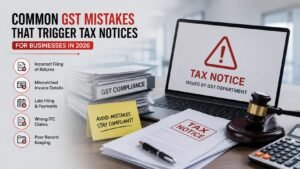
GST compliance has become far more data-driven.
Authorities now compare information across:
- GSTR-1
- GSTR-3B
- GSTR-2B
- E-Invoicing systems
- E-Way Bills
- Income Tax data
- TDS records
- Banking information
The result is simple:
Even small inconsistencies can be identified automatically.
Businesses can no longer rely solely on year-end reviews.
Regular compliance monitoring has become essential.
How GST Authorities Detect Compliance Issues
Modern GST compliance systems rely heavily on data analytics.
The department can quickly identify:
- Input tax credit mismatches
- Underreported sales
- Excess credit claims
- Suspicious vendor transactions
- Filing inconsistencies
- Revenue anomalies
Many notices are now generated through automated risk assessments.
This means businesses must focus on prevention rather than reaction.
10 Common GST Mistakes That Trigger Notices
1. Mismatch Between GSTR-1 and GSTR-3B
This remains one of the most common causes of notices.
Common Issues
- Sales reported differently
- Tax liability inconsistencies
- Invoice omissions
- Amendment errors
Risk
Authorities may assume underreporting of revenue.
Prevention
Monthly reconciliation before return submission.
2. Incorrect Input Tax Credit Claims
Claiming ineligible ITC continues to attract scrutiny.
Examples include:
- Blocked credits
- Unsupported expenses
- Vendor non-compliance
- Duplicate claims
Risk
Interest, penalties, and ITC reversals.
Prevention
Review ITC eligibility before claiming.
3. Failure to Reconcile GSTR-2B
Many businesses claim credits without matching supplier data.
Common Problems
- Missing supplier filings
- Duplicate invoices
- Incorrect GSTINs
Prevention
Monthly GSTR-2B reconciliation.
4. Incorrect GST Classification
Incorrect HSN or SAC codes may result in:
- Wrong tax rates
- Incorrect reporting
- Additional liabilities
Prevention
Periodic classification review.
5. Late GST Return Filing
Consistent delays increase compliance risk.
Authorities often identify repeated late filers for further review.
Prevention
Compliance calendar and automated reminders.
6. E-Invoice Data Mismatches
Businesses covered under e-invoicing requirements must ensure consistency.
Mismatches between:
- E-Invoices
- GSTR-1
- Accounting records
can trigger notices.
Prevention
Automated integration and reconciliation.
7. Ignoring Vendor Compliance
Your GST compliance depends partly on supplier compliance.
Risks
- ITC denial
- Reversals
- Scrutiny
Prevention
Vendor compliance monitoring.
8. Wrong Place of Supply Determination
Interstate transactions often create errors.
Common Mistakes
- Wrong GST type
- Incorrect tax allocation
- Misclassification
Prevention
Transaction-level review.
9. Underreporting Revenue
Authorities compare data across multiple systems.
Differences between:
- Income Tax returns
- GST returns
- Financial statements
often trigger scrutiny.
Prevention
Cross-report validation.
10. Ignoring GST Notices
One of the most expensive mistakes is ignoring departmental communication.
Delayed responses can lead to:
- Escalation
- Penalties
- Assessments
- Litigation
Prevention
Immediate professional review.
Early Warning Signs of GST Risk
Watch for:
- Frequent amendments
- ITC reversals
- Vendor mismatches
- Revenue inconsistencies
- Filing delays
- E-invoice discrepancies
These indicators often appear before notices are issued.
GST Compliance Checklist for Businesses
| Compliance Area | Review Frequency |
|---|---|
| GSTR-1 vs GSTR-3B | Monthly |
| GSTR-2B Reconciliation | Monthly |
| Vendor Compliance Review | Monthly |
| E-Invoice Validation | Monthly |
| Revenue Matching | Quarterly |
| GST Health Check | Quarterly |
| Internal GST Audit | Annually |
What To Do If You Receive a GST Notice
Step 1
Read the notice carefully.
Step 2
Identify the underlying issue.
Step 3
Gather supporting records.
Step 4
Review reconciliations.
Step 5
Prepare a structured response.
Step 6
Seek professional GST advice where required.
Quick and accurate responses significantly improve outcomes.
How Professional GST Reviews Reduce Notice Risk
A proactive GST review helps businesses:
- Detect mismatches early
- Validate ITC claims
- Improve reconciliations
- Strengthen documentation
- Reduce compliance gaps
- Improve audit readiness
Preventing notices is usually far less expensive than responding to them.
Conclusion
Most GST notices in 2026 are triggered by avoidable compliance mistakes rather than intentional wrongdoing.
Businesses that regularly reconcile data, monitor vendor compliance, validate tax positions, and maintain accurate records significantly reduce their risk of scrutiny.
A proactive GST compliance framework not only minimizes notices but also improves financial accuracy, operational confidence, and long-term business stability.
FAQ SECTION
Why do businesses receive GST notices?
Most GST notices result from mismatches, incorrect ITC claims, filing inconsistencies, delayed returns, or reconciliation failures.
What is the most common GST mistake?
Mismatch between GSTR-1 and GSTR-3B remains one of the most common triggers for GST scrutiny.
Can incorrect ITC claims trigger notices?
Yes. Ineligible or unsupported input tax credit claims frequently attract GST department review.
How often should GST reconciliation be performed?
Monthly reconciliation is considered best practice.
Can vendor non-compliance affect my business?
Yes. Vendor filing failures can impact your ITC eligibility and increase compliance risk.
What should I do after receiving a GST notice?
Review the notice carefully, identify the issue, gather documentation, and prepare a timely response.
How can businesses reduce GST notice risk?
Regular reconciliations, compliance reviews, accurate reporting, and professional oversight significantly reduce risk.