Outsourcing vs In-House Accounting: ROI Guide 2026
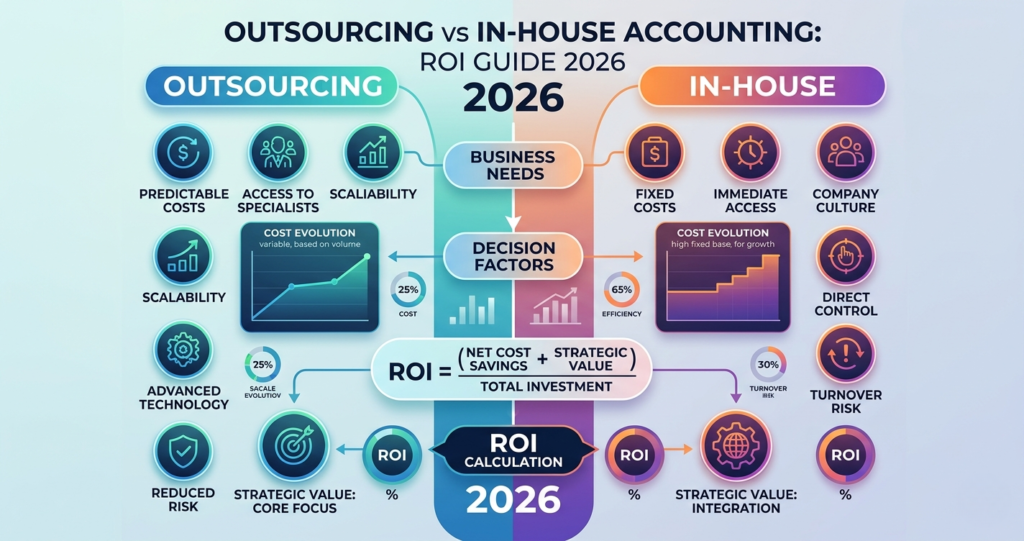
TL;DR Outsourced accounting delivers 30–50% cost savings, better scalability, and higher compliance efficiency for most startups and SMEs. In-house teams make sense only for large enterprises with complex, real-time financial needs. Why This Decision Matters in 2026 Accounting is no longer just bookkeeping. In 2026, it directly impacts: Profit margins Compliance risk Fundraising readiness Business scalability With rising salaries, compliance complexity, and tech adoption, choosing the wrong model can cost businesses lakhs annually. What is In-House Accounting? An in-house accounting team involves hiring: Accountants Finance managers Compliance specialists Typical Setup: 1 Accountant: ₹3–6 LPA 1 Senior Accountant: ₹6–12 LPA Tools & software: ₹1–2 LPA Total Annual Cost: ₹10–20+ lakhs What is Accounting Outsourcing? Outsourcing means delegating accounting functions to a CA firm or specialized service provider. Services Include: Bookkeeping GST filing TDS & payroll Financial reporting Compliance management Typical Cost: ₹1–5 lakhs annually (depending on scale) Cost Comparison: Real Numbers Factor In-House Team Outsourcing Salary Cost High None Software Cost High Included Training Cost Ongoing Zero Scalability Cost Expensive Flexible Total Annual Cost ₹10–20L ₹1–5L Insight:Outsourcing reduces accounting costs by 50–80%. ROI Breakdown: Outsourcing vs In-House ROI is not just cost — it’s value delivered. Outsourcing ROI Drivers: Lower operational cost Access to expert CAs Reduced compliance penalties Faster reporting In-House ROI Drivers: Real-time control Internal coordination Custom processes Verdict:For 90% of SMEs, outsourcing delivers higher ROI due to cost efficiency + expertise. Scalability & Flexibility Analysis In-House Limitations: Hiring delays Fixed cost structure Difficult to scale up/down Outsourcing Advantages: Pay-as-you-grow model Instant scalability No hiring dependency Compliance & Risk Management Compliance errors can cost businesses heavily. Outsourcing Advantage: Dedicated compliance experts Up-to-date with tax laws Reduced penalties In-House Risk: Knowledge gaps Dependency on individuals Technology & Automation Advantage Outsourcing firms use: Cloud accounting tools Automation workflows Real-time dashboards In-house teams often lag due to: Budget constraints Resistance to change When In-House Makes Sense Choose in-house if: Revenue > ₹50 Cr Complex financial operations Need daily financial control Large internal teams When Outsourcing Wins Outsourcing is ideal if: Startup or SME Revenue < ₹50 Cr Need cost optimization Limited finance expertise Hybrid Model (Best of Both Worlds) Many businesses adopt: 1 internal finance manager Outsourced accounting team This ensures: Strategic control Operational efficiency Final Verdict For most Indian businesses in 2026: Outsourcing = Higher ROI In-house = Higher control The smartest companies don’t choose one blindly — they choose based on scale and strategy. Conclusion Accounting is a strategic function, not just a compliance requirement. Businesses that outsource smartly gain: Cost efficiency Expert insights Better compliance Faster growth CTA:Looking to reduce accounting costs and improve financial efficiency? Partner with CA Arihant Lodha & Associates for expert outsourced accounting solutions tailored to your business. 6. FAQ SECTION 1. Is outsourcing accounting cheaper than in-house?Yes. Outsourcing can reduce costs by 50–80% compared to hiring a full in-house team. 2. Is outsourced accounting safe?Yes, if handled by a professional CA firm with proper data security and compliance systems. 3. When should I hire an in-house accountant?When your business requires real-time financial decision-making and has complex operations. 4. What is the ROI of outsourced accounting?Higher ROI due to lower costs, expert handling, and reduced compliance risks. 5. Can startups rely fully on outsourcing?Yes, most startups operate efficiently with outsourced accounting until they scale. Blog By : CA Arihant & Lodha
Mumbai Startup Tax Saving Guide 2026 (Save 30%)

TL;DR Most startups overpay taxes due to poor planning, not high rates Legal strategies can reduce tax liability by 20–30% Key levers: structure, exemptions, GST optimization, and expense planning Early CA involvement = maximum savings Why Most Mumbai Startups Overpay Taxes Mumbai’s startup ecosystem is booming—but many founders unknowingly bleed money through taxes. Common reasons: No structured tax planning Missing eligible deductions Poor salary vs profit distribution decisions Ignoring government schemes Result? Startups often pay 10–30% more tax than necessary. Understanding Startup Taxation in India (2026 Update) Startups in India are primarily taxed under: Corporate tax (22–25%) GST (if applicable) TDS compliance Dividend taxation However, the government offers multiple benefits under: Startup India recognition Section 80 IAC R&D incentives The difference between average and optimized tax? Strategy. 7 Smart CA Strategies to Save Up to 30% Tax 1. Choose the Right Business Structure Your structure directly impacts taxation. Structure Tax Impact Best For Proprietorship Individual slab Freelancers LLP Lower compliance Small teams Pvt Ltd Corporate tax benefits Scalable startups Insight: Most scalable startups benefit from Private Limited structure due to funding and tax advantages. 2. Leverage Section 80 IAC Benefits Eligible startups can claim: 100% tax exemption for 3 consecutive years Conditions: DPIIT recognition Incorporated after April 2016 Turnover under ₹100 crore Missing this = massive loss. 3. Optimize Salary vs Dividend Strategy Founders often make this mistake: Taking excessive salary → higher personal tax Smart approach: Balanced mix of: Salary (for expenses) Dividends (tax-efficient distribution) 4. Claim All Eligible Business Expenses Most startups under-claim expenses. Common deductible expenses: Office rent Software subscriptions Marketing costs Salaries Travel Pro tip: Maintain proper documentation to avoid scrutiny. 5. GST Input Credit Optimization If your startup is GST-registered, you can claim: Input tax credit on purchases Example: Paid GST on software/tools → claim credit → reduce liability Poor GST handling = direct cash loss. 6. R&D Deductions and Innovation Benefits Tech startups can claim: Weighted deductions on R&D expenses Especially useful for: SaaS startups Product-based companies 7. Smart Loss Carry Forward Planning Losses in early years? Good news. Startups can: Carry forward losses for up to 8 years This helps offset future profits → reducing tax significantly. Real Example: Tax Saving Breakdown Startup Type: SaaS company in MumbaiAnnual Profit: ₹50 lakh Strategy Applied Savings 80 IAC Exemption ₹12–15 lakh Expense Optimization ₹3–5 lakh GST Credit ₹2–3 lakh Salary Structuring ₹2–4 lakh Total Savings: ₹15–20 lakh (~30%) Common Mistakes That Kill Tax Savings Avoid these at all costs: Filing taxes without planning Ignoring compliance deadlines Mixing personal & business expenses Not consulting a CA early Poor bookkeeping When Should a Startup Hire a CA? Answer: Immediately after incorporation. Why? Setup right structure from day one Avoid costly mistakes Plan tax-saving roadmap early Why Professional CA Strategy Beats DIY Tax Filing DIY tools are fine for individuals—not startups. A professional CA helps with: Strategic tax planning Compliance management Audit readiness Fundraising support For Mumbai startups, working with experts like CA Arihant Lodha (SAKG & Associates) ensures: Tailored strategies Updated compliance Maximum legal savings Conclusion: Stop Overpaying, Start Planning Tax saving isn’t about loopholes—it’s about smart planning. Mumbai startups that treat tax as a strategy—not a liability—gain: Better cash flow Faster growth Investor confidence 6. FAQ Section 1. How can startups reduce tax in India? Startups can reduce tax through exemptions (like 80 IAC), expense deductions, GST credits, and smart structuring. Professional planning is key. 2. What is Section 80 IAC? It allows eligible startups to claim 100% tax exemption for 3 consecutive years under Startup India. 3. Is GST optimization legal? Yes, claiming input tax credit and structuring GST properly is fully legal and recommended. 4. Should startups hire a CA early? Yes, early involvement helps avoid mistakes and maximize savings from day one. 5. What expenses can startups claim? Rent, salaries, marketing, software, travel, and operational costs are typically deductible. 6. Can startups carry forward losses? Yes, losses can be carried forward for up to 8 years to offset future profits. Blog by – CA Arihant Lodha (SAKG & Associates)