
Why Startups Fail Financially + CFO Fixes (2026)
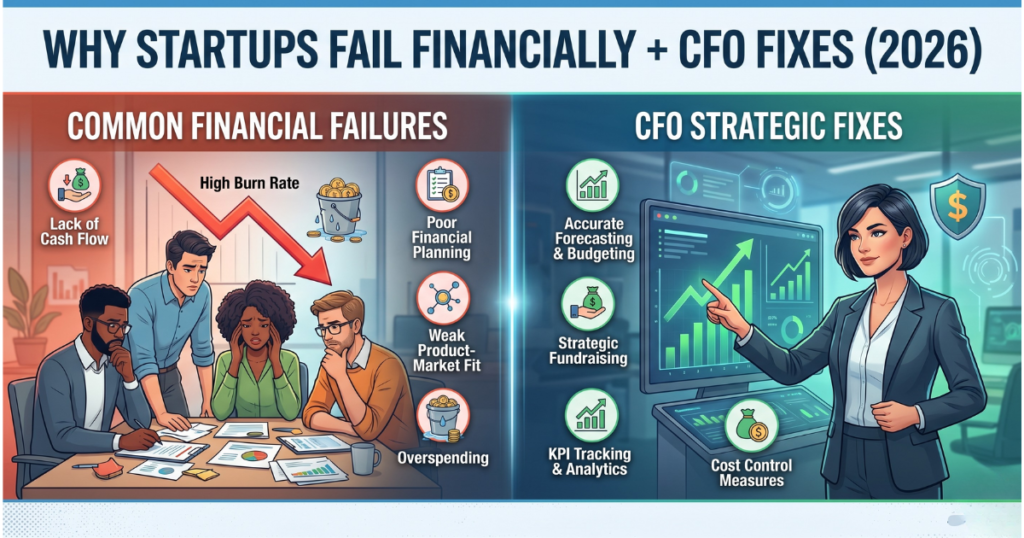
TL;DR Most Indian startups don’t fail because of bad ideas — they fail due to poor financial management. The solution lies in ROI-driven accounting, disciplined cash flow control, and strategic CFO-level decision-making. The Reality: Startup Failure in India India is one of the fastest-growing startup ecosystems, yet: A majority of startups shut down within 3–5 years Financial mismanagement is a top 3 reason Founders prioritize growth over sustainability Key Insight:Revenue growth without financial discipline leads to collapse. Top Financial Reasons Startups Fail 1. Poor Cash Flow Management Startups often confuse profit with cash flow. Common issues: Delayed receivables High upfront expenses No cash reserve planning 2. No Unit Economics Clarity Many founders scale without understanding: Customer Acquisition Cost (CAC) Lifetime Value (LTV) Contribution margin This leads to scaling losses instead of profits. 3. Overspending on Growth Heavy spending on: Marketing Hiring Office infrastructure Without ROI tracking results in unsustainable burn rate. 4. Lack of Financial Systems Startups often operate without: Proper accounting systems Financial dashboards Budget controls This creates decision-making blind spots. What Winning Startups Do Differently Successful startups: Track every rupee spent Focus on profitability early Use data-driven decision making Implement strong financial controls ROI-Driven Accounting Explained ROI-driven accounting focuses on: Linking every expense to measurable returns Tracking profitability at micro levels Eliminating wasteful spending Example: Instead of asking:“How much did we spend on marketing?” Ask:“What revenue did each campaign generate?” CFO Strategies That Actually Work 1. Cash Flow Forecasting Maintain a 3–6 month rolling forecast. 2. Burn Rate Control Calculate: Monthly burn rate Runway (months left before cash runs out) 3. Unit Economics Optimization Focus on: Increasing LTV Reducing CAC Improving margins 4. Budget Discipline Create strict budgets for: Marketing Hiring Operations 5. Financial Dashboarding Use tools to track: Revenue trends Expenses Profitability Step-by-Step Financial Framework for Startups Step 1: Set Financial KPIs Revenue Gross margin Burn rate Step 2: Build a Budget Allocate resources strategically. Step 3: Track Weekly Metrics Avoid monthly-only reviews. Step 4: Optimize Costs Cut non-performing expenses. Step 5: Review & Adjust Continuously improve financial strategy. Case Study: Turning Loss into Profit Startup Type: D2C brand Before: High marketing spend Negative margins No tracking After CFO intervention: Reduced CAC by 35% Optimized pricing Cut unnecessary costs Result: Achieved profitability in 6 months Common Founder Mistakes Ignoring financial reports Scaling too early Not hiring financial experts Mixing personal & business finances When to Hire a CFO or CA Firm You should consider expert help when: Revenue crosses ₹50L Burn rate is high Financial clarity is low Investors demand reporting A CA firm provides: Strategic financial planning Compliance management ROI optimization Final Takeaway Startups don’t fail due to lack of ideas — they fail due to lack of financial discipline. Implementing: ROI-driven accounting Strong CFO strategies Data-backed decision making can dramatically increase your chances of success. Conclusion If you want to build a sustainable startup, finance must be your core function — not an afterthought. CTA: Partner with CA Arihant Lodha & Associates for expert accounting and virtual CFO services to scale your startup profitably. 6. FAQ SECTION 1. Why do startups fail financially? Due to poor cash flow management, lack of financial planning, and uncontrolled spending. 2. What is burn rate in startups? The rate at which a startup spends its capital monthly. 3. How can startups improve cash flow? By managing receivables, reducing expenses, and planning finances strategically. 4. What does a startup CFO do? Manages financial strategy, forecasting, budgeting, and profitability. 5. When should startups hire a CFO? When financial complexity increases or scaling begins. Blog By : CA Arihant Lodha