
Oil prices today: Crude jumps as Houthis enter Iran war; US boosts troop presence in Middle East

Oil prices surged sharply on Monday, with Brent crude crossing the $110 mark and West Texas Intermediate (WTI) climbing past $100 a barrel, as the Middle East conflict completed its one month. Markets remained on edge as Houthis enter the Iran war and US plans to extend onground presence in the region, further fueling uncertainty over the trajectory of the war.Around 7 am IST, Brent Crude stood at $116.4 per barrel, up 3.84 or 3.41%, after gaining over 4% in its previous session on Friday. WTI Crude followed the rally, jumping to $103.1, up 3.44 or 3.45%, after recording a gain of 5.5% last week. Watch ‘Petrol, Diesel Crisis Developing Worldwide’: PM Modi Urges Unity Amid West Asia Conflict So far this month, Brent has climbed 59%, marking its steepest monthly rise and exceeding gains seen during the 1990 Gulf War. The surge comes after Iran tightened its noose on the Strait of Hormuz effectively disrupting the strategically crucial route that sees around one-fifth of global oil and gas supplies pass.The conflict, which began on February 28 with US and Israeli strikes on Iran, has expanded across the Middle East. Over the weekend, Yemen’s Iran-aligned Houthis carried out their first attacks on Israel since the start of the war, raising further concern over key shipping lanes in the Arabian Peninsula and the Red Sea. The US also stepped up its military footprint in the Middle East, with around 3,500 Marines and sailors aboard the USS Tripoli deployed to the region. The move, described as potentially the largest US buildup there in nearly two decades, was confirmed by US Central Command. It comes after almost a month of conflict involving Iran and is being viewed as part of Washington’s effort to expand its operational options in the region.Meanwhile, according to data from Kpler, cited by Reuters, Saudi crude exports redirected from the Strait of Hormuz to the Yanbu port in the Red Sea reached 4.658 million barrels per day last week.JP Morgan analysts said that if exports from Yanbu were disrupted, Saudi oil flows could be forced to shift towards Egypt’s Suez-Mediterranean (SUMED) pipeline to the Mediterranean.Tensions in the region intensified further over the weekend after attacks damaged Oman’s Salalah terminal, despite ongoing attempts to advance ceasefire discussions.Iran has said it is prepared to respond to a US ground offensive, accusing Washington of planning a land attack while simultaneously pursuing negotiations. Poll Which factor do you think is most responsible for the recent spike in oil prices? Meanwhile, Pakistan’s foreign minister Ishaq Dar said that efforts had been discussed on possible ways to achieve an early and lasting end to the conflict, along with potential US-Iran talks in Islamabad.
Bank account portability RBI’s priority for ‘Vision 2028’
MUMBAI: RBI has placed consumer empowerment through portable bank accounts and cross-border efficiency at the centre of its Payments Vision 2028, signalling a new focus to improving user experience and reducing friction in money movement.While customers can freely open accounts with any bank, savings accounts are considered ‘sticky’ because of multiple standing instruction to send and receive money into the specified account. RBI’s work around this stickiness is a Payments Switching Service where all standing instructions are centralised. This centralised interface will allow customers to view and migrate all payment mandates, both incoming and outgoingreducing dependence on individual banks making accounts portable.A key thrust is on making cross-border payments faster, cheaper and more accessible. The central bank plans a comprehensive review of the ecosystem to identify regulatory, operational and technological bottlenecks, aligning domestic systems with global standards shaped by the G20.Proposed changes aim to lower entry barriers for firms, promote innovation and reduce delays in cross-border fund transfers, even as India has been signing agreements with other countries to link domestic fast payments systems and enable CBDC acceptance.
WTO talks stuck over e-commerce moratorium
NEW DELHI: WTO talks in Cameroon are deadlocked over a moratorium on e-commerce with the US seeking a long freeze on countries for levying tax on digital downloads and streaming, while India is so far unwilling to agree to this period.Starting from two years, India has indicated its willingness to go up to four, with the WTO draft proposing a moratorium until June 2031, two persons familiar with the ministerial level talks told TOI.But before ministers move to that the US and Brazil have to reach common ground on farm sector liberalisation. Talks between the US and Brazil are currently underway before ministers move to the issue of e-commerce. Here, the African countries have also demanded support and technical assistance before a final text can be agreed to.For over 25 years, members of the WTO have upheld a rule — no customs duties on electronic transmissions. While India has used it as a bargaining chip at every ministerial meeting.For India, the big win is managing to keep investment facilitation for development out of the WTO framework despite standing alone at the end. It has demanded “guardrails” against using plurilaterals, which are agreements between a select group of member nations. India has indicated its willingness to support discussions on reforms but it is the US which is stalling issues despite in the past signalling that WTO wasn’t moving anywhere.Talks are expected to conclude in the next few hours as ministers have started leaving Cameroon and the ministerial meeting is not going into extra time.
Govt eyes flexible-fuel vehicles’ faster rollout

NEW DELHI: The ongoing West Asia conflict and concerns over energy supplies have prompted govt to explore faster rollout of flexible-fuel vehicles (FFVs), which can run on blended petrol as well as 100% ethanol. At a meeting called by the petroleum ministry on Saturday, original equipment manufacturers (OEMs) flagged the need to address consumer concerns, particularly regarding the need to lower fuel costs as vehicle mileage decreases when using ethanol, for faster adoption.People aware of the developments said since major car and two-wheeler manufacturers have their prototype FFV models ready, now govt needs to create the ecosystem for adoption of these vehicles. Govt has maintained that 20% ethanol blending in petrol has helped India save imports of around 4.5 crore barrels (700 crore litres) of crude annually. Watch Big Fuel Tax Cut By Centre, But No Price Relief: Why Petrol And Diesel Still Cost The Same In India Crude crisis: A ‘visible option’ Officials and industry sources said that FFVs are more viable option than increasing ethanol blending in petrol, as higher blending levels would impact performance of existing vehicles. A person aware of the discussions said, the meeting focused on enabling conditions for FFVs. TOI has learnt that the industry sought clear road map about the fuel stations that would dispense ethanol, compensation for mileage loss, which is around 27%-30% less than petrol. “Industry made a clear point that consumers should not feel ‘cheated’ for buying such vehicles on account of less mileage ,” said a person who attended the meeting. Last year, petroleum minister Hardeep Singh Puri had written to FM Nirmala Sitharaman seeking GST parity of FFVs with EV. Currently, the GST for FFVs is 28% compared to 5% for EVs.
CII tells cos to work with govt, build reserves

NEW DELHI: Confederation of Indian Industry (CII) on Sunday called upon companies to work with govt to build reserves of raw material, fuel and strengthen supply chains amid disruptions from the West Asia crisis.“The present situation represents a supply side disruption, with pressures transmitted through energy costs, logistics and working capital cycles,” it said in a statement, while advising firms to ensure benefits of stable fuel and logistics costs are passed on to consumers to help manage inflation.The industry body suggested accelerating investments in renewable energy, green hydrogen and energy efficiency to reduce dependence on conventional fuels and to explore switching from LPG to natural gas where feasible.
Indian Stock Markets: Stock market holidays: Dalal Street heads for holiday-shortened week amid Mahavir Jayanti, Good Friday
Indian stock markets will remain closed on Tuesday, March 31, for Mahavir Jayanti and again on Friday, April 3, for Good Friday, giving investors a holiday-shortened trading week.Trading on the NSE and BSE will be suspended on both days across segments, including equity, equity derivatives, currency derivatives, securities lending and borrowing (SLB) and other market-linked instruments. The week will therefore have only three full trading sessions on Dalal Street. Two market holidays next week The National Stock Exchange of India and BSE have both listed March 31 and April 3 as official trading holidays for Mahavir Jayanti and Good Friday, respectively.The timing is also notable because March 31 marks the end of the financial year 2025-26, which means the holiday will fall on the final day of the fiscal year. MCX open only in evening on Mahavir Jayanti, fully shut on Good Friday Commodity traders will see a slightly different schedule.The Multi Commodity Exchange of India (MCX) will remain closed during the morning session (9 am to 5 pm) on Mahavir Jayanti, but trading will resume in the evening session from 5 pm to 11:30 pm.On Good Friday, however, MCX will remain shut for both the morning and evening sessions, in line with several global markets that also close for the occasion.The National Commodity & Derivatives Exchange (NCDEX), meanwhile, will remain closed in both sessions on these holidays.There are 16 stock market holidays scheduled for 2026. With the two next week, several more closures are still lined up across the rest of the year.The next market holiday after Good Friday will be Dr Baba Saheb Ambedkar Jayanti on April 14, followed by Maharashtra Day on May 1 and Bakri Id on May 28, as per the report.
Airlines must offer 60% seats free from April 20, DGCA says amid row over seat selection charges

Passengers flying within India will be able to choose a larger share of seats without paying extra from April 20, after aviation regulator DGCA directed airlines to offer at least 60 per cent of seats on every flight free of charge.The move follows concerns over airlines charging steep fees for seat selection, with the civil aviation ministry announcing on March 18 that it had asked the regulator to ensure fairer access for passengers. New rule raises free seat quota from 20% to 60% Acting on the ministry’s direction, the Directorate General of Civil Aviation (DGCA) issued an amended Air Transport Circular on March 20, which will come into force 30 days later, effectively from April 20.Under the revised rules, airlines must ensure that at least 60 per cent of seats on any flight are available for selection without any additional charge. At present, only around 20 per cent of seats are generally offered free, while the rest attract a fee.The DGCA has also told airlines to keep their seat allocation policies transparent and clearly show the availability of free seats, along with any applicable conditions, on their booking platforms.“Airlines should maintain transparent seat allocation policies and clearly communicate the availability of free seats and applicable conditions on their booking interfaces,” the regulator said in the revised circular dated March 20. Families on same booking should be seated together where possible The regulator has further said that passengers travelling on the same PNR (Passenger Name Record) should, as far as practicable, be seated close to one another, which would ordinarily mean adjacent seats in the same row.An official cited by news agency PTI said that airlines are now preparing to implement the new directive.Seat selection charges currently range from Rs 200 to Rs 2,100, depending on factors such as front-row placement and extra legroom. Airlines object, warn of possible fare hikes The new rule comes against the backdrop of growing criticism over airlines levying hefty charges for add-on services, especially seat selection.However, the move has faced strong resistance from carriers. As per PTI, IndiGo, Air India and SpiceJet objected to the decision last week, arguing that forcing airlines to make at least 60 per cent of seats free would hurt revenues and could eventually push up airfares.In a letter sent to the civil aviation ministry on March 20, the Federation of Indian Airlines (FIA), which represents the three carriers, urged the government to withdraw the decision. Other optional service charges must also be clearly shown Apart from seat selection, the DGCA has also directed airlines to display all charges for optional services such as carrying sports equipment or musical instruments in a clear and unambiguous manner on websites and booking portals.The regulator said airlines must also disclose any liability conditions in case of damage linked to such items.The change comes at a time when Indian airports are handling more than five lakh passengers daily, underlining the wide impact the new rule could have across the country’s fast-growing aviation market.DGCA chief Faiz Ahmed Kidwai recently said the regulator is trying to simplify rules for airlines while also protecting passenger rights. Speaking at the Indian Chamber of Commerce Aviation and Tourism Summit, he said the aim is to strike a balance between supporting airline growth and safeguarding travellers.“India’s aviation market is one of the fastest-growing in the world, but airlines are currently dealing with several operational hurdles,” Kidwai said, as quoted by news agency IANS.
Gold, silver outlook: Bullion markets brace for volatile week as Middle East tensions and Fed cues weigh

Precious metals are likely to remain in a corrective phase in the coming week, with investors expected to closely track developments in the Middle East and a packed calendar of global economic data for fresh cues.Analysts cited by news agency PTI said that speeches by US Federal Reserve Chair Jerome Powell on Monday, along with comments from other Fed officials later in the week, will be watched closely for signals on interest rates, which could shape demand for gold and silver. Middle East tensions and macro data to set the tone Pranav Mer, vice president, EBG – commodity & currency research at JM Financial Services Ltd, told PTI that geopolitical developments will remain central to market sentiment.“In the week ahead, focus will remain on developments in the Middle East — any sign of escalation and de-escalation may drive the financial market lower or higher,” Mer said.He added that investors will also keep an eye on manufacturing PMI data from major economies, CPI readings from Germany and the Eurozone, as well as key US indicators including consumer confidence, nonfarm payrolls and broader employment data due later in the week.Trading volumes may also stay muted as domestic commodity markets will remain shut on March 31 for Shri Mahavir Jayanti and April 3 for Good Friday, resulting in a shortened trading week. Gold slips, silver rises in domestic market In the domestic market, gold futures ended marginally lower at Rs 1.44 lakh per 10 grams over the past week, while silver closed higher by Rs 1,182, or 0.52 per cent, at Rs 2.27 lakh per kilogram on the Multi Commodity Exchange.Mer said domestic bullion continued to find support from the rupee’s weakness against the dollar.“The bullion prices in the domestic market have remained supported by persistent weakness in the Indian rupee against the dollar. Last week, the rupee fell more than 1 per cent to close near 94.80,” he said.He also noted that the recent decline in bullion was driven by ETF liquidation, soft physical demand, a stronger dollar, and elevated US Treasury yields. Global gold falls nearly 2%; silver rebounds In international markets, gold settled nearly 2 per cent lower at $4,492.5 per ounce, while silver edged higher to $69.79 per ounce by the end of the week.Choice Broking said silver staged a notable weekly recovery after a long spell of weakness, tracking a sharp rebound in global prices.“Silver posted a strong weekly recovery after a prolonged decline, tracking gains in the global markets where prices rebounded sharply”.“Weakness in US equity markets boosted safe-haven demand, though gold’s traditional appeal showed signs of moderation amid rising Treasury yields and elevated oil prices,” Choice Broking said.Analysts told PTI that geopolitical tensions remained a major driver, with the worsening conflict in the Middle East adding to volatility in bullion prices.They added that while there was temporary relief after US President Donald Trump signalled a 10-day pause on Iran’s energy infrastructure attacks, the dollar index stayed near 100, limiting gains in precious metals.For the week ahead, Choice Broking said gold is likely to remain sideways-to-bullish during the shortened Easter week as traders assess key US economic data.Silver, meanwhile, is also drawing support from strong Chinese physical demand. China’s silver imports rose to an eight-year high of 206.76 metric tonnes in the first two months of 2026, up 49 per cent month-on-month and a sharp 5,910 per cent year-on-year, tightening global supply and lending support to prices.
NSE to launch Brent Crude futures from April after Sebi nod
The National Stock Exchange (NSE) has announced that launching Dated Brent Crude Oil (Platts) futures contracts in its commodity derivatives segment after receiving approval from Sebi. Trading in these contracts will begin on April 13, 2026.According to an NSE circular, the contracts will be introduced with monthly expiries extending up to 2027. They will be based on the S&P Global Energy (Platts) Dated Brent assessment and will trade under the symbol “BRCRUDEOIL”.The exchange said that the launch is aimed at expanding its commodity derivatives offerings and giving market participants a tool linked to a global crude oil benchmark. The Platts Dated Brent assessment tracks international crude oil prices, and the contracts are expected to help improve price discovery and support hedging in line with global markets.Each contract will have a trading unit of 100 barrels, with a maximum limit of 10,000 barrels. A 6% daily price limit will apply at first. If this limit is crossed, trading will pause for 15 minutes, after which the limit can be widened to 9%.“In case price movement in international markets is more than the maximum daily price limit (currently 9%), or if the international price is beyond the maximum daily price limit range (after appropriate currency conversion) when compared with the previous day’s closing price on the domestic exchange, the same may be further relaxed in steps of 3% beyond the maximum permitted limit, by giving appropriate notice to the market,” the circular noted.The contracts will be cash-settled. The final settlement price will be based on the monthly simple average of the Platts Dated Brent assessments in rupee terms.The NSE circular states, “Final Settlement Price shall be the monthly simple average price, in Indian rupees, of the S&P Global Energy’s (Platts) Dated Brent assessments (midpoint of the high and low) for the respective contract month. The monthly simple average RBI USD/INR reference rate of the respective contract month will be used for conversion. The price so arrived at will be rounded off to the nearest tick.”The NSE said the move will help Indian market participants access global crude benchmarks, improve hedging for refiners, importers and institutional traders, and strengthen price discovery by linking domestic markets with international prices. It is also expected to increase liquidity and participation in the segment.Further details on risk management, clearing and settlement will be issued separately by NSE Clearing Ltd.
India opposes China-led IFD pact’s inclusion; flags risks to WTO framework and core principles
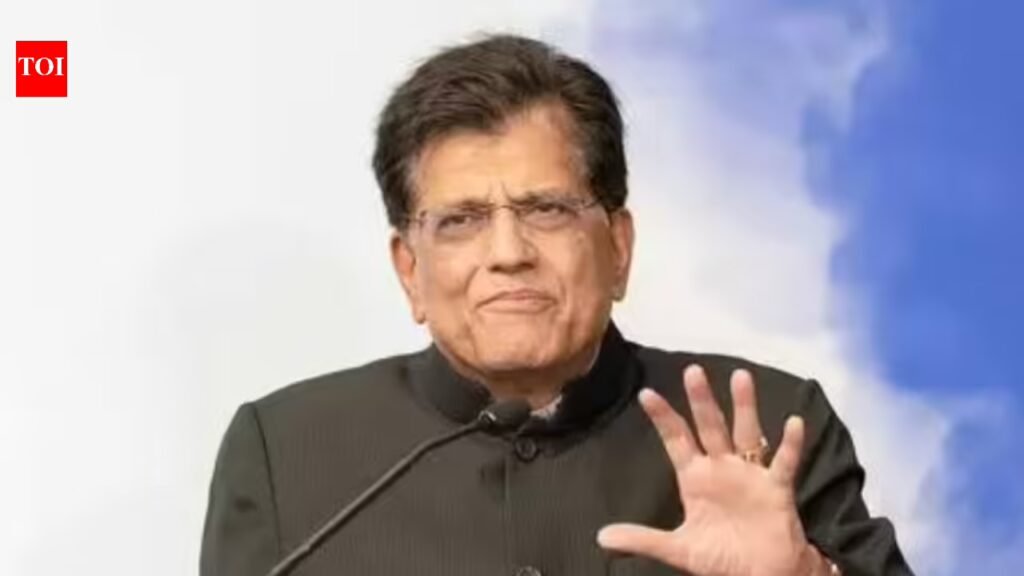
India on Saturday said it has strongly opposed the China-led Investment Facilitation for Development (IFD) Agreement being incorporated into the World Trade Organisation (WTO) framework, flagging concerns over its systemic implications, PTI reported.The issue was raised at the ongoing 14th ministerial conference (MC14) of the WTO in Yaounde, Cameroon, where Commerce and Industry Minister Piyush Goyal said such a move could weaken the institution’s foundational structure.“Incorporation of the IFD agreement risks eroding the functional limits of the WTO and undermining its foundational principles,” Goyal said in a social media post.“At #WTOMC14, drawing inspiration from Mahatma Gandhi ji’s philosophy of Truth prevailing over conformity, India showed the courage to stand alone on the contentious issue of the IFD Agreement and did not agree to its incorporation into the WTO framework as an Annex 4 Agreement,” he said.Annex 4 of the WTO Agreement contains Plurilateral Trade Agreements that are binding only on members that have accepted them, unlike multilateral agreements which apply to all members.Goyal said that as part of WTO reform discussions, members are deliberating on guardrails and legal safeguards for plurilateral agreements before integrating any such outcomes into the framework.“In view of the systemic issue at hand, India showed openness to have good faith, comprehensive discussions and constructive engagement under the WTO Reform Agenda,” he added.India had also opposed the pact during the WTO’s 13th ministerial conference (MC13) in Abu Dhabi.The Investment Facilitation for Development proposal was first mooted in 2017 by China and a group of countries that rely significantly on Chinese investments, including those with sovereign wealth funds. The agreement, if adopted, would be binding only on signatory members.