
1 month on, Iran war leaves investors poorer by Rs 41.4 lakh crore

MUMBAI: The day the war in West Asia completed a month, Dalal Street witnessed one of its most brutal sell-offs since the conflict began on Feb 28. During Friday’s session, with sensex-heavyweight Reliance Industries tanking 4.6%, the index closed 1,690 points or 2.3% lower at 73,583 points.The crash in RIL’s stock price that came on the back of imposition of windfall tax on petro-product exporters by govt, the rupee’s slide to a record low level against the dollar, rising bond yields and strong foreign fund selling, all because of the war in West Asia, led to Friday’s slide in stocks, market players said. Sensex tanks 1690 points The sell-off left investors poorer by nearly Rs 9 lakh crore with BSE’s market capitalisation now at Rs 422.2 lakh crore, exchange data showed.Foreign funds were again the main sellers of stocks with the net outflow figure at Rs 4,367 crore, BSE data showed.Since the war between the US-Israel and Iran started, the sensex has lost a little over 7,700 points or 9.5% while investors are poorer by about Rs 41.4 lakh crore. During the same period, foreign portfolio investors (FPIs) have net taken out a little over Rs 1.1 lakh crore from the domestic stock market, data from NSDL and BSE showed. Poll How concerned are you about the impact of the war in West Asia on the Indian stock market? According to Vinod Nair of Geojit Investments, Indian equities ended lower after a volatile session as rising bond yields coupled with negative cues from western markets and mixed Asian performance kept investors on the edge. Nair feels that the near-term sentiment for market remained fragile amid geopolitical risks and potential earnings downgrades due to supply shocks.
RBI curbs net open positions of banks in forex markets
MUMBAI: For the first time in nearly 15 years, the RBI has placed curbs on the size of bets that banks can take in the currency markets, taking away powers, hitherto, vested with bank boards. The move comes at a time when the rupee is under pressure due to a combination of sales by foreign institutional investors, a rise in the oil import bill, and the overhang of tariffs and visa curbs on exports.RBI’s direction on Friday caps banks’ net open position in rupee at $100 million, effective April 10, 2026, citing “market conditions.” Hitherto, the net open position limit was fixed by the boards of banks.Bankers said that while speculation helps provide liquidity in the forex market, in volatile times, when markets are one-sided, such bets can be self-fulfilling.Post-2013, banks set their own Net Overnight Open Position Limits (NOOPL) up to 25% of Tier I/II capital, with RBI reserving discretion to impose market-driven caps. In Dec 2011, RBI had curbed net open position limits in currency trading by 75% for some banks and 50% for top banks. The move had come after the domestic currency weakened by as much as 20%. Poll What do you think is the primary reason for the RBI to impose these new betting limits? Incidentally, RBI had in Jan issued draft directions on calculating net open position and capital charge for foreign exchange risk, inviting comments from stakeholders. The central bank had proposed the new rules to come into effect from April 1, 2027. The new norms also seek to remove the separate calculation for offshore and onshore net open positions.
Steel, auto, chemicals to gain from more LPG flow
The govt on Friday moved to cushion key industries from the ongoing gas supply disruption, boosting commercial LPG allocations by 20% to reach 70% of pre-crisis levels. The extra supply will prioritise labour-intensive sectors such as steel, automobiles, textiles, dyes, chemicals, and plastics, which are critical for broader economic activity.The move is aimed at stabilising industrial operations, said Prashant Vasisht, senior vice president (corporate ratings) at ICRA, adding that increased domestic LPG production and alternative imports have “reduced the deficit, providing some comfort.” Watch Centre Pushes PNG: LPG Supply May Be Stopped Where Pipelines Are Available Pankaj Chadha, chairman of engineering exports body EEPC India, said the measure will help steel mills, particularly smaller units, maintain production. “Steel is a key segment of the engineering goods sector, and its shortage could severely impact the production chain. The additional LPG allocation should minimise supply bottlenecks and ensure steady output,” he added. To Reach 70% of Pre-Crisis Levels | Move To Prioritise Labour-Intensive Sectors The garment sector, however, sees the step as partial relief but doubts it will meet even half of its near-term demand. Yarn processing, crucial for garment production, is largely gas-powered. Supply to hundreds of units in Tiruppur has been cut for 10 days, affecting around 1 lakh employees. The shortage has disrupted the credit cycle and risks favouring well-capitalised buyers, while costs for raw materials, including polyester yarn, and transportation have increased. Alexander Neroth, director of NC John Garments, said, “Freight and raw materials costs have risen substantially, making it difficult to get yarns processed.”The gas shortage started with the West Asian conflict and the near-closure of the Strait of Hormuz to commercial shipping, prompting the government on March 12 to curtail commercial LPG allocations to 20%. Since then, allocations have gradually increased to 70% of pre-crisis levels.Access to the additional 20% is conditional. Industrial users must register with oil marketing companies such as Indian Oil Corporation, HPCL, and BPCL, and apply for piped natural gas connections with city gas distribution entities to qualify. Process industries and units relying on LPG for specialised heating needs, where natural gas cannot substitute, will get priority.Manufacturers across sectors are adapting to the shortage with various measures to maintain production. Ajay Singhania, MD of EPACK Durable, noted that LPG and piped gas shortages had cut production by nearly 50% over the past three weeks. “We have initiated interim measures like partial fuel-switching across processes, but these come with efficiency and cost trade-offs. For the consumer durables sector, where demand is seasonal, consistent energy availability is critical to ensure timely production,” he said.Auto component makers, particularly forging and casting units, continued production with some shifting to in-house solar powered electrical heating. A Chennai-based exporter said the transition to renewable energy helped in navigating the situation with relative ease, even as inventories have fallen from 15–20 days to 2–3 days. Smaller firms, he added, are feeling the strain due to heavier dependence on LPG.(With contributions from Reeba Zachariah, G Balachandar, Vaitheeswaran B and Asmita Dey)
Rupee breaches 94, worst fiscal year fall in over a decade

MUMBAI: The rupee breached the 94 level for the first time to close at 94.81 per dollar after hitting a record low of 94.84, declining about 4% since late Feb and 11% in the current fiscal year, marking its worst financial year performance in over a decade.Many analysts are forecasting that oil prices will remain above $100 per barrel for several weeks, pushing up the import bill and inflation. Dealers said that pressure on the rupee has been driven more by heavy foreign investor selloffs than by the West Asia conflict, with outflows crossing $13 billion this month, an all-time high. “More than the West Asia war the pressure on rupee is from heavy sell off by the FIIs, which has already crossed more than 13 billion dollars this month. Which itself is an all time record. In case of de-escalation there would be a correction of at least 2%. Also there is an expectation of $4.4 billion dollars inflows from the Mitsubishi-Shriram Finance deal . This will severely boost the falling Rupee,” said KN Dey, a forex consultant.Domestic equity markets declined sharply, while benchmark bond yields rose to multi-month highs, reflecting tightening financial conditions. Foreign investors accelerated outflows from domestic equities and bonds amid heightened concerns over inflation, currency weakness, and external imbalances.Growth forecasts have been revised downward, while expectations of interest rate hikes over the next year have strengthened. Govt has cut excise duty to keep fuel prices under check, but the move is expected to put pressure on the fiscal deficit and increase borrowing. Poll How concerned are you about the impact of rising inflation on the economy? Despite some signals of de-escalation, the currency remains under pressure amid sustained global uncertainty. “The rupee is expected to trade in a weak range of 93.25–94.25, with downside bias likely to persist until clear progress in Iran peace talks emerges,” said Jateen Trivedi, analyst with LKP Securities.
E-cheques coming soon? RBI unveils Payments Vision 2028, plans wider oversight of digital players
The Reserve Bank of India (RBI) on Friday unveiled its ‘Payments Vision 2028’ document, outlining a roadmap that includes exploring electronic cheques, expanding regulatory oversight to digital platforms, and strengthening safeguards in the fast-growing payments ecosystem, PTI reported.The central bank said it will examine the introduction of e-cheques to combine the advantages of paper instruments with the speed and reliability of digital payments. “To leverage the unique benefits of paper-based instruments and the speed and reliability of electronic payments, and cater to new business use cases, the introduction of electronic cheques in India shall be explored,” the RBI said.Alongside, the RBI is considering widening the regulatory ambit to include entities such as e-commerce marketplaces and centralised platforms that play a growing role in facilitating digital transactions.“In addition, e-commerce marketplaces and centralized platforms have been assuming significant responsibilities that could have implications on the orderly functioning of the payments ecosystem. These aspects shall be examined in detail and, if required, the scope of direct regulations shall be extended to cover such entities,” the document said.The vision document also proposes allowing users to enable or disable transactions across digital payment modes, similar to controls available for card transactions.To address fraud risks, the RBI is exploring a “shared responsibility framework” under which both the issuing bank and the beneficiary bank would share liability in cases of unauthorised digital transactions.The central bank also plans to review cheque design and security features, introduce a Domestic Legal Entity Identifier (DLEI) framework for better transaction traceability, and bring in a Cyber Key Risk Indicators (KRI) framework for non-bank payment system operators.Other initiatives include exploring white-label solutions in the Aadhaar Enabled Payment System (AePS), developing interoperability in the Trade Receivables e-Discounting System (TReDS), and introducing a ‘Payments Switching Service’ to ease customer migration across platforms.The RBI said it will also review the cross-border payments ecosystem to improve efficiency and streamline authorisation processes, alongside publishing periodic reports on global and domestic payment trends.Additionally, the central bank aims to enhance access to payment data and reimagine the card payments ecosystem by promoting secure tokenisation, improved transparency in pricing, and greater choice for users and merchants.
Hetero rolls out generic semaglutide exports to over 75 countries

Hyderabad: Pharma player Hetero on Friday said it has rolled out exports of its generic semaglutide injection portfolio as part of a multi-year plan to widen access to treatments for type 2 diabetes and obesity in more than 75 countries.The Hyderabad-based pharmaceutical company said initial rollouts are under way in Africa, Asia and the Middle East, with additional launches planned in other markets subject to regulatory approvals.The injectable therapies will be sold under the brand names Truglyx, Rolmodl and Moto G. Semaglutide belongs to the GLP-1 class of medicines, which are used in diabetes care and weight management.Hetero said the export launch is part of its broader strategy to improve access to advanced cardio-metabolic therapies, particularly in emerging markets.The company said the products will be offered in multi-dose disposable pen devices designed in line with innovator formats and will be available in several strengths, including 0.25 mg, 0.5 mg, 1 mg, 2 mg, 1.7 mg and 2.4 mg, allowing dosing flexibility for both diabetes and obesity treatment.Hetero said it is also awaiting approval from India’s Central Drugs Standard Control Organisation (CDSCO) after completing clinical trials in type 2 diabetes and obesity and plans an India launch after regulatory clearance.Hetero managing director Dr Vamsi Krishna Bandi said the company aims to provide high-quality, affordable generic semaglutide through a single global product platform backed by its manufacturing and development capabilities.He said Hetero would use its commercial networks across Asia, the Middle East, Africa and Latin America to support supply and access. The Hyderabad-headquartered Hetero operates in more than 145 countries and employs over 30,000 people.
Borrowing plan: Centre to raise Rs 8.2 lakh crore in H1 FY27; weekly auctions, green bonds in focus

The Centre plans to raise Rs 8.20 lakh crore from the market in the first half of FY27 through dated securities, accounting for over half of its revised annual borrowing programme, the finance ministry said on Friday, PTI reported.The borrowing, scheduled for April–September 2026-27, is aimed at funding the fiscal deficit and bridging the revenue gap. It includes Rs 15,000 crore through Sovereign Green Bonds (SGrBs).The government had budgeted gross market borrowings at Rs 17.20 lakh crore for FY27, but after switches of government securities (G-Secs), the revised borrowing stands at Rs 16.09 lakh crore.“Of Rs 16.09 lakh crore, Rs 8.20 lakh crore (51 per cent) is planned to be borrowed in H1 through issuance of dated securities, including Rs 15,000 crore of Sovereign Green Bonds (SGrBs),” the ministry said.The borrowing will be completed through 26 weekly auctions, with amounts ranging between Rs 28,000 crore and Rs 34,000 crore. Securities will be issued across maturities of 3, 5, 7, 10, 15, 30, 40 and 50 years.The 10-year segment will account for the largest share at 29%, followed by 5-year (15.4%), 15-year (14.5%), and other tenures including 3-year (8.1%), 7-year (8.1%), 30-year (7.3%), 40-year (8%) and 50-year (9.6%).To improve participation, 5% of the notified amount in each auction will be reserved for retail investors under the non-competitive bidding route.The Centre will retain flexibility to modify the borrowing calendar, including changes in issuance size, maturities and instruments such as floating rate bonds (FRBs) and inflation indexed bonds (IIBs), depending on market conditions.Switch and buyback operations will continue to smoothen the redemption profile. “Switches of dated securities through auction will be conducted on the third Monday of every month or at more frequent intervals. In case the third Monday is a holiday, the switch auction will be conducted on the fourth Monday of the month,” the ministry said.The government will also retain the greenshoe option to accept an additional subscription of up to Rs 2,000 crore for each security.Separately, weekly Treasury Bill (T-Bill) borrowings in the first quarter are expected at Rs 24,000 crore for 12 weeks, including Rs 12,000 crore in 91-day T-Bills, and Rs 6,000 crore each in 182-day and 364-day instruments.To manage temporary cash mismatches, the Reserve Bank of India has fixed the Ways and Means Advances (WMA) limit for the first half of FY27 at Rs 2.50 lakh crore.In the Union Budget 2026-27, finance minister Nirmala Sitharaman had projected a fiscal deficit of 4.3% of GDP, amounting to Rs 16.9 lakh crore. “To finance the fiscal deficit, the net market borrowings from dated securities are estimated at Rs 11.7 lakh crore. The balance financing is expected to come from small savings and other sources. The gross market borrowings are estimated at Rs 17.2 lakh crore,” she had said.
India-US trade deal update: Piyush Goyal meets USTR Jamieson Greer, discusses next steps in BTA talks
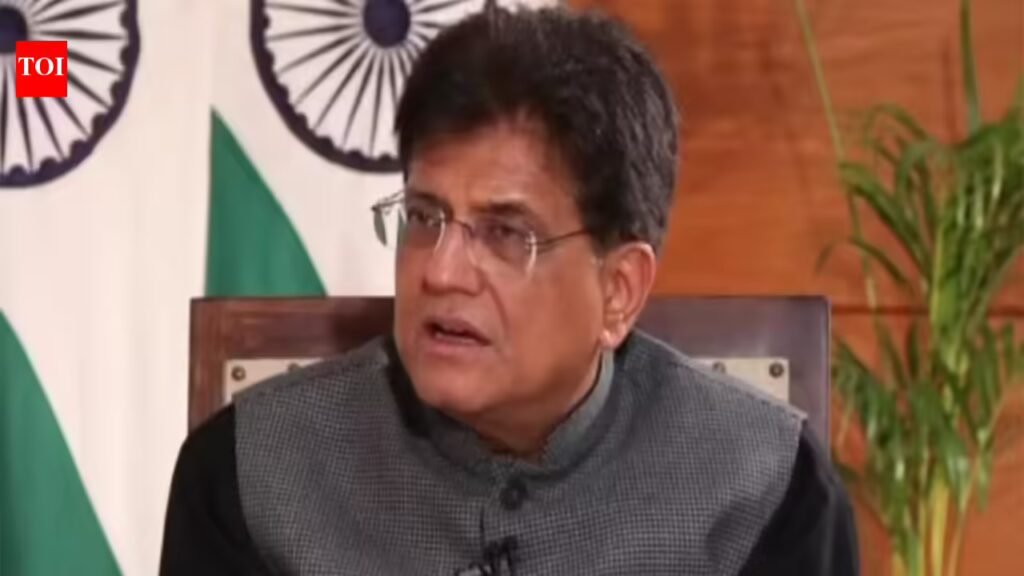
Commerce and industry minister Piyush Goyal on Friday met US Trade Representative Jamieson Greer and reviewed the next steps in negotiations for the proposed India-US bilateral trade agreement (BTA).The meeting took place on the sidelines of the 14th ministerial conference (MC14) of the World Trade Organisation in Yaounde, Cameroon, where both sides also exchanged views on issues related to the WTO agenda.“Had a very productive discussion with @USTradeRep Jamieson Greer on the sidelines of the WTO Ministerial Conference. Exchanged views on the #WTOMC14 agenda, next steps in the India-US BTA negotiations and explored ways to further deepen our economic cooperation and bilateral trade ties,” Goyal said in a social media post.The development comes amid ongoing efforts by both countries to finalise an interim trade pact. Last month, India and the US announced that they had finalised a framework for the first phase of the agreement, though it is yet to be signed.The two sides had earlier announced a trade deal on February 2, followed by a joint statement on February 7 outlining the contours of the agreement.As part of the framework, the US had agreed to reduce tariffs on Indian goods to 18%. However, the tariff structure has since undergone changes after the US Supreme Court struck down sweeping tariffs imposed under earlier measures.Following the ruling, US President Donald Trump introduced a 10% tariff on all countries for a period of 150 days starting February 24.In view of these developments, a planned meeting between chief negotiators of India and the US — aimed at finalising the legal text of the agreement — has been postponed. The pact was earlier expected to be signed this month.An official had earlier said that the interim trade agreement would be signed once the new global tariff framework of the US is fully in place.
Forex reserves drop $11.41 billion to $698.35 billion as gold holdings decline

India’s foreign exchange reserves declined by $11.413 billion to $698.346 billion in the week ended March 20, mainly due to a sharp fall in gold reserves, according to data released by the Reserve Bank of India (RBI) on Friday, PTI reported.In the previous reporting week, the reserves had dropped by $7.052 billion to $709.759 billion.The country’s forex kitty had earlier surged to an all-time high of $728.494 billion in the week ended February 27, before the onset of the West Asia conflict.During the latest reporting week, foreign currency assets (FCA) — the largest component of the reserves — increased by $2.127 billion to $557.695 billion, the RBI data showed.Expressed in dollar terms, FCAs include the effect of appreciation or depreciation of non-US currencies such as the euro, pound and yen held in the reserves.However, gold reserves saw a sharp decline, falling by $13.495 billion to $117.186 billion during the week, the central bank said.The Special Drawing Rights (SDRs) dipped by $65 million to $18.632 billion, according to the RBI.India’s reserve position with the International Monetary Fund (IMF) rose by $19 million to $4.833 billion in the reporting week, the data showed.
PM Modi to inaugurate Noida Jewar Airport: Project cost, facilities & more – all you need to know
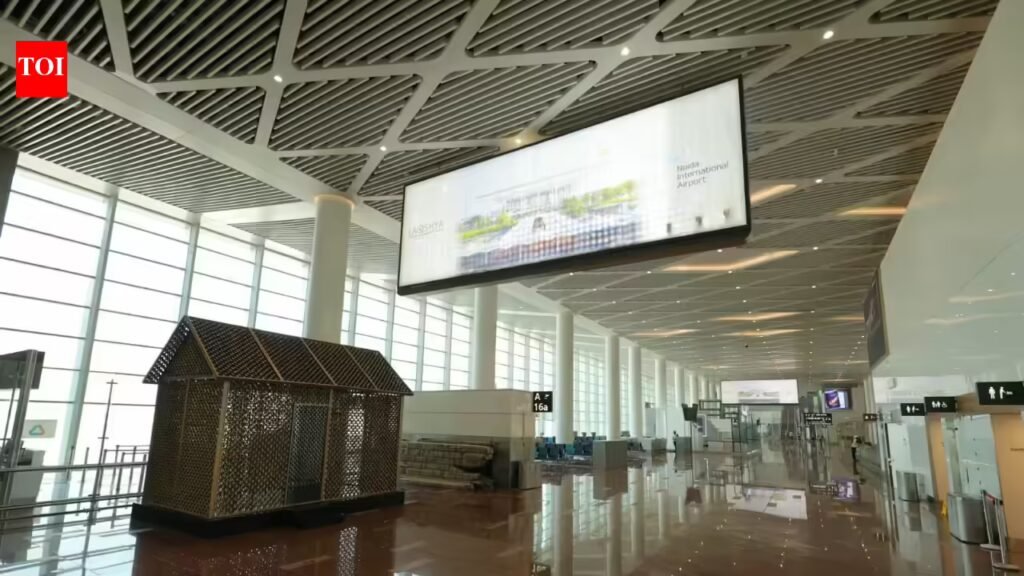
Glimpse of Noida International Airport (Shared by PM Modi on X) NEW DELHI: The Noida International Airport at Jewar in Uttar Pradesh will be inaugurated on Saturday, with Prime Minister Narendra Modiopening the first phase of the project that is set to add capacity to the National Capital Region’s aviation network.“Tomorrow, 28th March is a day of immense importance for the people of Uttar Pradesh and the NCR. Phase I of Noida International Airport will be inaugurated. This will boost commerce and connectivity. It will ease congestion at the IGI Airport in Delhi,” said the PM in a post on X. Watch PM Modi To Inaugurate Noida International Airport Phase 1 On March 28: All You Need To Know Located in Gautam Buddha Nagar district along the Yamuna Expressway, the airport has been developed as the second international gateway for Delhi-NCR, after the Indira Gandhi International Airport, which currently handles the bulk of the region’s air traffic.Project scope and costPhase I of the airport has been built at an investment of around Rs 11,200 crore under a public-private partnership model. It is designed to handle 12 million passengers per annum initially, with provision to scale up capacity to 70 million passengers annually in subsequent phases. Infrastructure and operationsThe airport has a 3,900-metre runway capable of handling wide-body aircraft. It is equipped with Instrument Landing System (ILS) and airfield lighting to support all-weather, round-the-clock operations.The project is among the largest greenfield airport developments in India.Cargo and support facilitiesApart from passenger operations, the airport includes cargo infrastructure with an integrated cargo terminal and logistics zones. The facility is designed to handle over 2.5 lakh metric tonnes of cargo annually in the first phase, expandable to around 18 lakh metric tonnes.A 40-acre maintenance, repair and overhaul (MRO) facility is also part of the project. Role in NCR aviation networkOnce operational, the Noida airport is expected to function in conjunction with Delhi’s IGI Airport to distribute passenger and cargo traffic, addressing capacity constraints in the region.Inauguration scheduleAccording to the official programme, PM Modi will visit the airport on March 28, undertake a walkthrough of the terminal building and then at around 12 noon, inaugurate Phase I before addressing a public gathering.The airport is expected to begin operations with its initial capacity, with further expansion planned in phases.