
NSE to launch Brent Crude futures from April after Sebi nod
The National Stock Exchange (NSE) has announced that launching Dated Brent Crude Oil (Platts) futures contracts in its commodity derivatives segment after receiving approval from Sebi. Trading in these contracts will begin on April 13, 2026.According to an NSE circular, the contracts will be introduced with monthly expiries extending up to 2027. They will be based on the S&P Global Energy (Platts) Dated Brent assessment and will trade under the symbol “BRCRUDEOIL”.The exchange said that the launch is aimed at expanding its commodity derivatives offerings and giving market participants a tool linked to a global crude oil benchmark. The Platts Dated Brent assessment tracks international crude oil prices, and the contracts are expected to help improve price discovery and support hedging in line with global markets.Each contract will have a trading unit of 100 barrels, with a maximum limit of 10,000 barrels. A 6% daily price limit will apply at first. If this limit is crossed, trading will pause for 15 minutes, after which the limit can be widened to 9%.“In case price movement in international markets is more than the maximum daily price limit (currently 9%), or if the international price is beyond the maximum daily price limit range (after appropriate currency conversion) when compared with the previous day’s closing price on the domestic exchange, the same may be further relaxed in steps of 3% beyond the maximum permitted limit, by giving appropriate notice to the market,” the circular noted.The contracts will be cash-settled. The final settlement price will be based on the monthly simple average of the Platts Dated Brent assessments in rupee terms.The NSE circular states, “Final Settlement Price shall be the monthly simple average price, in Indian rupees, of the S&P Global Energy’s (Platts) Dated Brent assessments (midpoint of the high and low) for the respective contract month. The monthly simple average RBI USD/INR reference rate of the respective contract month will be used for conversion. The price so arrived at will be rounded off to the nearest tick.”The NSE said the move will help Indian market participants access global crude benchmarks, improve hedging for refiners, importers and institutional traders, and strengthen price discovery by linking domestic markets with international prices. It is also expected to increase liquidity and participation in the segment.Further details on risk management, clearing and settlement will be issued separately by NSE Clearing Ltd.
India opposes China-led IFD pact’s inclusion; flags risks to WTO framework and core principles
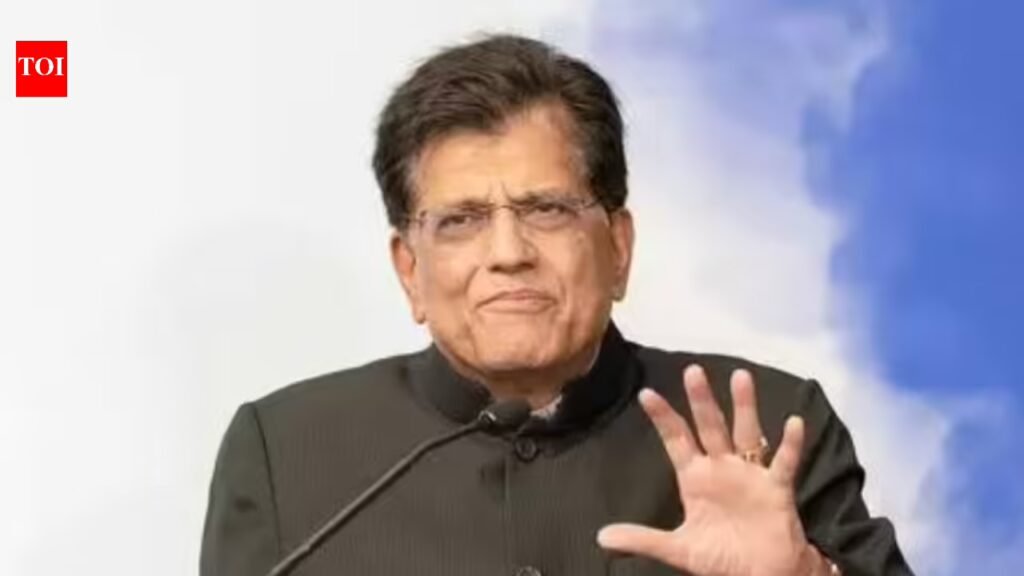
India on Saturday said it has strongly opposed the China-led Investment Facilitation for Development (IFD) Agreement being incorporated into the World Trade Organisation (WTO) framework, flagging concerns over its systemic implications, PTI reported.The issue was raised at the ongoing 14th ministerial conference (MC14) of the WTO in Yaounde, Cameroon, where Commerce and Industry Minister Piyush Goyal said such a move could weaken the institution’s foundational structure.“Incorporation of the IFD agreement risks eroding the functional limits of the WTO and undermining its foundational principles,” Goyal said in a social media post.“At #WTOMC14, drawing inspiration from Mahatma Gandhi ji’s philosophy of Truth prevailing over conformity, India showed the courage to stand alone on the contentious issue of the IFD Agreement and did not agree to its incorporation into the WTO framework as an Annex 4 Agreement,” he said.Annex 4 of the WTO Agreement contains Plurilateral Trade Agreements that are binding only on members that have accepted them, unlike multilateral agreements which apply to all members.Goyal said that as part of WTO reform discussions, members are deliberating on guardrails and legal safeguards for plurilateral agreements before integrating any such outcomes into the framework.“In view of the systemic issue at hand, India showed openness to have good faith, comprehensive discussions and constructive engagement under the WTO Reform Agenda,” he added.India had also opposed the pact during the WTO’s 13th ministerial conference (MC13) in Abu Dhabi.The Investment Facilitation for Development proposal was first mooted in 2017 by China and a group of countries that rely significantly on Chinese investments, including those with sovereign wealth funds. The agreement, if adopted, would be binding only on signatory members.
Vijaypat Singhania, former Raymond chairman, dies at 87 in Mumbai

Vijaypat Singhania, former Raymond chairman, Padma Bhushan awardee and noted aviator, has passed away.He died in Mumbai at the age of 87.His son Gautam Singhania, chairman and managing director of the Raymond Group, announced the death on microblogging platform X.A company spokesperson said Singhania passed away “peacefully” and his last rites will be performed on Sunday, reported PTI.A recipient of the Padma Bhushan, Vijaypat Singhania was known not only for his leadership at Raymond but also for his passion for aviation. He held a world record for achieving the highest altitude in a hot air balloon.He led Raymond as chairman for around two decades until 2000, after which he handed over the reins of the company to Gautam Singhania. He had also transferred his entire 37 per cent stake in the company to his son.Vijaypat Singhania and Gautam Singhania were later involved in legal disputes, which were subsequently resolved.
Noida airport to start commercial flights in 45-60 days, says Aviation minister
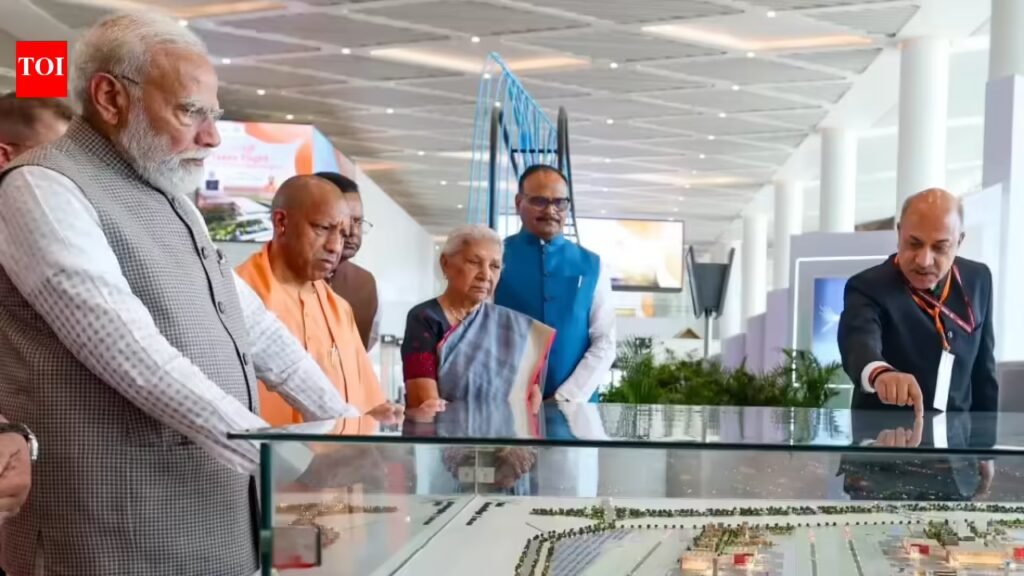
Commercial operations at the Noida International Airport are expected to begin within 45 to 60 days, Civil Aviation Minister K Rammohan Naidu said on Saturday, indicating that the final preparatory steps are underway, reported PTI.The greenfield airport at Jewar in Uttar Pradesh was inaugurated earlier in the day by Prime Minister Narendra Modi, marking a key milestone for one of the country’s largest aviation infrastructure projects.Naidu said services would commence in the next 45 to 60 days, adding that work on the airport’s security framework is currently in progress. He also noted that IndiGo has expressed interest in operating flights from the facility.The project, located in Gautam Buddh Nagar district, is designed to initially handle 12 million passengers annually. Once all four phases are completed, the capacity is expected to scale up to 70 million passengers per year.Developed at an investment of around Rs 11,200 crore in its first phase, the airport will be operated by Yamuna International Airport Pvt Ltd (YIAPL), a subsidiary of Zurich Airport International AG, under a public-private partnership model. The airport code assigned to it is ‘DXN’.The infrastructure includes a 3,900-metre runway capable of accommodating wide-body aircraft, along with modern navigation systems such as the Instrument Landing System (ILS) and advanced airfield lighting.Although passenger services were earlier slated to begin in September 2024, the rollout has been aligned with phased development. The airport received its aerodrome licence from aviation regulator DGCA earlier this month.In the initial phase, the airport will be able to handle up to 30 flights per hour and will have 28 aircraft stands. Cargo handling capacity is projected at around 2.5 lakh tonnes.Terminal 1 spans 1,37,985 square metres and includes 48 check-in counters. In addition, more than 40 acres have been allocated for Maintenance, Repair and Overhaul (MRO) facilities.As part of this, NIA has entered into a strategic partnership with Akasa Air to develop an MRO facility at the site.
Middle East crisis: Jubilant FoodWorks reports some Domino’s outlets affected by LPG shortage

Jubilant FoodWorks Ltd (JFL), which operates Domino’s Pizza and Dunkin Donuts in India, has reported constraints in LPG cylinder supplies across parts of its store network due to the ongoing West Asia war, according to ET.In a filing to the BSE, the company said, “Operational impact at this stage is limited and being actively managed. The company is taking several steps to conserve LPG and working overtime to move to alternate energy sources like electricity and piped natural gas (PNG).”It added that it is in continuous touch with oil marketing companies to track developments and respond to the evolving situation. “The company is in constant engagement with oil marketing companies (OMCs) to remain apprised of the latest developments and plan operational responses accordingly, given the rapidly evolving nature of the situation,” the filing said.The company noted that it is closely monitoring the situation as supply disruptions persist.The impact is being felt across the restaurant industry, with several chains facing similar challenges due to LPG shortages.On March 10, the National Restaurant Association of India (NRAI) had advised its five lakh members to consider shorter operating hours, reduce items requiring long cooking times or deep frying, and adopt fuel-saving measures such as using lids while cooking, in view of supply constraints linked to the Gulf war.
Russia sells reserve gold for first time in 25 years to fund Ukraine war deficit: Report

Russia has begun selling physical gold from its central bank reserves for the first time in 25 years, as the government seeks to plug a widening budget deficit driven by sustained military expenditure, according to a report by Berlin-based news outlet bne IntelliNews.Regulatory data show that between 2022 and 2025, Russia sold gold and foreign currency worth over RUB 15 trillion ($150 billion), followed by an additional RUB 3.5 trillion ($35 billion) in just the first two months of 2026, the report noted. In January alone, the Central Bank of Russia sold 300,000 ounces of gold, followed by another 200,000 ounces in February. Watch Drone Axis Exposed Iran’s SECRET BACKING To Russia’s War Against Ukraine The move marks a significant shift in reserve management. Earlier, gold transactions were largely notional, involving transfers between the Ministry of Finance and the central bank without physical movement of bullion. In recent months, however, the central bank has started selling actual gold bars into the market.As a result, Russia’s gold holdings have declined to 74.3 million ounces, the lowest level in four years. The disposal of 14 tonnes in January and February is the largest two-month sale since the second quarter of 2002, when 58 tonnes were offloaded in a single tranche.The sales come as Russia’s fiscal position comes under increasing strain. The government ended 2025 with a budget deficit of 2.6 per cent of GDP, compared to an initial projection of 0.5 per cent, Berlin-based bne IntelliNews report noted. Economists estimate the actual deficit could be closer to 3.4 per cent, with some payments deferred to 2026 to limit the reported gap.Pressure on the budget has intensified as oil prices weakened in the second half of the year and US sanctions tightened, reducing the contribution of oil and gas tax revenues to about 20 per cent of total revenues — roughly half of pre-war levels.The decision to sell gold has also been influenced by the sharp rise in bullion prices to above $5,000 per ounce. This surge has pushed Russia’s international reserves to over $809 billion as of February 28, including around $300 billion of assets frozen in the West, according to the Central Bank of Russia. Of this, gold reserves alone are valued at about $384 billion.Russia currently holds more than 2,000 tonnes of gold, making it the world’s fifth-largest sovereign holder, according to World Gold Council data. The country had built up these reserves over the years to reduce dependence on dollar-denominated assets, especially after sanctions imposed following the annexation of Crimea in 2014 and further tightened after the invasion of Ukraine in 2022.Since 2022, the Ministry of Finance has relied on multiple funding channels to manage budget pressures. These include drawing from the National Welfare Fund, which still holds around RUB 4 trillion, increasing issuance of domestic OFZ treasury bonds, and raising value-added tax rates, which account for about 40 per cent of government revenues.The shift to selling physical gold suggests that Russia is now tapping its liquid reserve buffers more directly, underlining the growing fiscal strain as the conflict in Ukraine continues into its fourth year.
How crude oil benchmark volatility, refinery economics and a broken supply chain are testing India’s energy resilience

“Energy can never be created, nor destroyed; it can only be changed from one form to another.”The first law of thermodynamics remains a quiet scientific truth despite a broken supply of crude oil due to the ongoing Middle East crisis. As geopolitical disruption tightens its grip around the Strait of Hormuz, that law reads less like classroom physics and more like a warning. The oil is still there, in the reservoirs beneath Kuwait, Iraq and the Emirates. What has changed is whether the crude oil can move without disruption.The disruption in the Middle East has exposed a deeper fault line in global oil markets. For India, it’s significant because the country imports nearly 90 per cent of its crude oil requirement. With roughly 50 per cent of its crude imports transiting the Strait of Hormuz, according to S&P Global Commodities at Sea data, India now finds itself at the intersection of simultaneous pressures: a disrupted supply route, a changing import mix since it began unwinding Russian crude purchases. According to the government, the supply is sufficient to cover 60 days of consumption. Watch ‘West Asia Crisis Poses New Challenges For India’: PM Modi Warns On Economy Energy And Security In a telephone call on March 21, 2026, Vinay, a professional working in NAPESCO, Kuwait-based upstream drilling support services, originally from eastern Uttar Pradesh described conditions on the Kuwait’s coast. “Operations are disrupted. Only about 30 per cent of employees are coming to the office. Offices have taken all safety measures, including fire safety, after the missile attack. The fire safety team can reach any office within 2-3 minutes ,”he told TOI. This disruption has changed the language of the market. The focus is no longer limited to supply and demand. It is about resilience, rerouting and the ability to sustain flows through disruption. In that recalibration, pricing benchmarks, refining systems and national strategies are being tested simultaneously.In March 2026, global crude flows through the Strait of Hormuz – the world’s most critical oil transit chokepoint–collapsed dramatically, triggering a chain reaction across markets. According to the International Energy Agency (IEA), nearly 20 million barrels per day (mb/d) of crude and petroleum product flows have been disrupted, while global oil supply is projected to fall by around 8 mb/d in the same month. Not all oil is the same: The chemistry that sets the price The first thing to understand about crude oil is that it is not a single substance. It is a complex mixture of hydrocarbons, and where a crude sits on that spectrum determines who buys it, at what price, and what can be made from it.Two measurements define any crude at the wellhead. The first is API gravity, a density scale developed by the American Petroleum Institute. Light crude, above 31 degrees API, flows easily and naturally yields a high proportion of petrol and jet fuel when refined. Heavy crude, below 22 degrees API, is viscous, requires more processing energy and tends to produce larger quantities of lower-value residues unless the refinery is specifically built to upgrade them. The second is sulphur content. Crude with less than 0.5 per cent sulphur is called sweet; it meets clean-fuel standards at a lower refining cost and commands a price premium. Crude above that threshold is called sour; it requires an additional desulphurisation stage before it can meet Euro-VI standards, and it trades at a discount. That discount has historically ranged from three to fifteen dollars per barrel depending on market conditions, according to S&P Global Commodity Insights.The Middle East produces primarily sour, medium-density crude. North Sea and North American shale formations tend to yield light, sweet grades. This is a geological fact that no trade agreement can change, and it explains much of why the global oil market is structured the way it is. The Three Benchmarks: Brent, WTI and Dubai/Oman With hundreds of crude grades traded globally, markets need reference prices. Benchmarks serve this function: widely traded, transparent contracts whose prices become the starting point for pricing almost every other grade as a premium or discount.Brent Crude, produced from a blend of North Sea fields known as BFOET (Brent, Forties, Oseberg, Ekofisk, Troll) and traded on the Intercontinental Exchange in London, is the world’s primary benchmark. ICE data indicates that Brent underlies the pricing of approximately two thirds of globally traded crude. Its authority rests on a structural quality: Brent cargoes are seaborne. Oil loaded at a North Sea terminal can reach any refinery in the world, making its price a genuine reflection of global supply and demand rather than regional logistics. West Texas Intermediate (WTI), traded on the NYMEX at Cushing, Oklahoma, is the primary US benchmark. It is marginally lighter and sweeter than Brent. But WTI is landlocked, its price reflects pipeline capacity and storage constraints at Cushing as much as global market conditions. When US shale output surged between 2012 and 2019, Cushing storage repeatedly filled, pushing WTI prices well below Brent even as world demand climbed. The US Energy Information Administration reports American crude production now exceeds 13 million barrels per day, making the United States the world’s largest producer, yet WTI’s geographic constraint has not fundamentally changed.Less visible in Western financial coverage but essential to Asia is the Dubai/Oman average, the benchmark for the sour, medium-density crude that flows east from the Gulf. It is the price marker against which more than three quarters of India’s imported crude is contracted. The Brent-WTI spread and the Brent-Dubai differential are among the most closely tracked numbers in the global energy trade, each reflecting a different kind of market signal. How oil travels: Upstream, Midstream, Downstream Every barrel of crude passes through three stages before it becomes a usable fuel. Understanding which stage is currently under the most stress is essential to understanding what is happening to prices in March 2026. Upstream is exploration and production. It covers geological surveys, drilling rigs and wellheads. In India, ONGC and Oil India are the principal domestic producers, but
Rubber industry seeks govt intervention amid rising costs in wake of West Asia war

Hyderabad: India’s rubber industry has sought urgent govt intervention as global supply disruptions linked to the West Asia conflict have pushed up raw material and freight costs, threatening thousands of small manufacturers and exporters across the country.In a representation to the commerce ministry, the All-India Rubber Industries Association said SMEs are facing severe stress as prices of natural rubber, synthetic rubber and rubber chemicals have shot up amid shipping delays, insurance hikes and uncertainty in crude-linked inputs.The industry body has urged the govt to ensure equitable raw material access for MSMEs, provide credit support, waive duties on certain synthetic rubbers, and speed up port clearances to protect jobs and export commitments. It has also urged the govt to facilitate alternative sourcing by granting temporary exemptions or easing imports from China and Southeast Asian countries.“The impact on the rubber industry is huge because all the raw materials we use to produce rubber components are oil-based, mainly carbon black, synthetic rubber oils. So anytime oil prices go up, everything goes up,” said Anay Gupta, president of the association.“At present there’s about 30% to 40% increase in raw material prices if we compare with before the war started,” Gupta said, adding that the sharpest increases have been seen in carbon black, synthetic rubber and processing oils, while natural rubber has also become costlier.“For natural rubber, increase is about 10% because though it’s not oil-based but demand-driven, about 40% of natural rubber used in India is being imported. Freight charges and insurance costs have gone up due to the conflict.”The association said shipping lines have imposed steep surcharges, worsening the burden on manufacturers. Gupta said, “Shipping lines have put $2,000 surcharge on 20ft containers and $3,000 on 40ft containers. Insurance costs also have increased and freight charges have nearly doubled.”He said India’s dependence on imports has made the sector especially vulnerable. Gupta said India produces only about 60% of the natural rubber it consumes, while synthetic rubber imports account for a very large share of domestic demand.Industry data shows India consumed 8,56,900 metric tonnes of synthetic rubber in FY25, of which 4,13,627 metric tonnes, or nearly 48%, was imported.The impact of the conflict is expected to be significant for export-oriented segments such as automotive components, belting, footwear and sports goods. “Anybody and everybody who uses rubber and these inputs is affected badly,” Gupta said.In Telangana, the rubber industry largely comprises around 800 units, mostly MSMEs, with an annual turnover of around Rs 3,000 crore, contributing 0.5% to 1% of manufacturing output and less than 1% of GSDP.Clusters around Hyderabad and Mahabubnagar produce hoses, tubes, sheets and profiles, while reclaimed rubber units process waste tyres.
WTO talks: Sharp divide over e-commerce duty moratorium as India opposes permanent extension
A sharp divide has emerged at the ongoing World Trade Organisation (WTO) ministerial conference in Cameroon over the continuation of the e-commerce moratorium on customs duties, think tank Global Trade Research Initiative (GTRI) said on Saturday, reported PTI.It noted that while the US is pushing for a permanent extension of the moratorium, India and several developing countries are opposing the move, citing concerns over revenue loss and policy constraints.“The sharpest divide is there over the e-commerce moratorium on customs duties. A temporary compromise of 2-4 years appears the most likely outcome,” GTRI said.The third day of the WTO’s 14th Ministerial Conference (MC14) in Yaounde is emerging as crucial, with discussions taking place across four key tracks — fisheries subsidies, investment facilitation, e-commerce and agriculture.On the China-led Investment Facilitation for Development (IFD) pact, pressure on India is expected to intensify during small-group “green room” meetings, GTRI founder Ajay Srivastava said.“India’s concern is less about the pact itself than the precedent it sets, opening the door to plurilateral deals that once embedded within the WTO, act as Trojan horses gradually reshaping the institution’s multilateral character,” he said.He added that limited progress is likely on fisheries subsidies as divisions among members continue to persist.“With tensions spanning digital trade, IFD and plurilateral agreements, today’s discussions are set to determine whether MC14 ends in a modest compromise or exposes deeper fractures within the WTO,” Srivastava said.
Who is Ashok Kumar Panda? PESB recommends SAIL finance director for CMD post; top PSU role awaits ACC nod

Government head-hunter Public Enterprises Selection Board (PESB) has recommended Ashok Kumar Panda, Director (Finance) at Steel Authority of India Ltd (SAIL), for the post of Chairman and Managing Director (CMD) at the state-run steel major, PTI reported.Panda was among 10 shortlisted candidates interviewed for the top post at India’s largest public-sector steel-making entity.The position will fall vacant after the tenure of the current CMD, Amarendu Prakash, ends on April 2, 2026. Prakash had assumed charge as SAIL Chairman on May 31, 2023.In a notification dated March 28, PESB said it has recommended Ashok Kumar Panda for the CMD position. He is currently serving as Director (Finance) in the company.The final appointment, however, will be subject to approval by the Appointments Committee of the Cabinet (ACC), headed by Prime Minister Narendra Modi, which clears all top-level PSU appointments.Alongside Panda, several senior executives appeared for the interview process, including Manish Raj Gupta, Director (Mining) at SAIL; Alok Verma, Director In Charge of SAIL’s Rourkela Steel Plant; Bipin Kumar Giri, ED Mines Development; and Anish Sengupta, ED Projects.Other candidates included Krishna Gopal Agarwal, Director (Finance) at Rites; Anup Kumar Satpathy of South East Central Railway; Pui Hari Prasad; and Chetan Prakash Jain.PESB had invited applications for the SAIL CMD post in the first week of February.Panda is a seasoned finance professional with over three decades of experience across accounting, costing and budgeting, annual business planning, project commercial activities, treasury operations, superannuation trusts, taxation and strategic management.He began his career with SAIL as a Management Trainee after completing his B.E. in Electrical Engineering.