
Govt imposes import curbs on gold, silver jewellery to check misuse of FTAs

The government on Wednesday announced curbs on imports of gold, platinum and silver jewellery with immediate effect, a move aimed at checking misuse of free trade agreements (FTAs). These restrictions will operate irrespective of any prior contract, irrevocable letter of credit, advance payment, shipment status, or any other commitment, the Directorate General of Foreign Trade (DGFT) said in a notification.Accordingly, it said, the benefit of transitional arrangements shall not be available. “The Import Policy of items under CTH (customs tariff heading) 7113 is revised from ‘Free’ to ‘Restricted’ with immediate effect,” it said. Articles of gold, silver and platinum jewellery are covered under this heading. Importers of these goods would now need permission or a license from the DGFT. With this, now there are restrictions on all gold, silver and platinum jewellery imports.However, it added that imports by 100 per cent Export Oriented Units and units located in Special Economic Zones (SEZS) shall not be subject to these restrictions. Further, imports under the schemes for export of Gems and Jewellery under a chapter of the foreign grade policy will also be exempt from these restrictions. An industry official said that some importers were misusing the India-Asean FTA. The official urged the government to make the licensing procedure easy so that genuine players do not suffer from the move. India has a free trade pact in goods with the 10-nation South East Asian nation bloc Asean since 2010.In November last year, the government imposed import curbs on certain types of platinum jewellery till April this year. In September 2025, similar curbs were there on silver jewellery till March this year. Some traders were trying to use the FTA to make a quick buck by exploiting duty differentials and circumventing tariffs, the official said, adding the move was aimed at curbing imports of these precious metals in the name of unstudded jewellery from countries like Thailand.
Currency guardrails: RBI tightens forex derivatives rules for banks amid rupee volatility
The Reserve Bank of India on Wednesday announced fresh restrictions on authorised dealers (ADs) in the foreign exchange market following a “review of evolving market conditions”, as the rupee remains under pressure, according to PTI.In a late-evening notification, the central bank said ADs — banks authorised to deal in foreign exchange — will not be allowed to offer non-deliverable derivative contracts involving the Indian rupee to resident or non-resident users with immediate effect.However, banks can continue to offer deliverable foreign exchange derivative contracts to users for hedging purposes, provided users do not take offsetting non-deliverable derivative positions.The RBI also barred rebooking of derivative contracts after cancellation.“The ADs should not permit a user to rebook any foreign exchange derivative contract, whether deliverable or non-deliverable, which is cancelled after the date of issuance of these instructions,” the notification said.Banks have been asked to seek necessary documents or information from users to ensure compliance with the new rules.Further tightening norms, the RBI said ADs should not undertake any foreign exchange derivative contract with their related parties, clarifying that the definition of related parties will follow accounting standards such as Ind AS 24 or IAS 24.The measures come after the rupee breached the key Rs 95 per US dollar mark in intra-day trade earlier this week, highlighting rising volatility in the currency market.Over the weekend, the RBI had also capped net open positions of ADs in the rupee at USD 100 million, effective April 10, a move that briefly supported the currency in early trade before it pared gains.The forex market is set to reopen on Thursday after a two-day break.
Tax reform rollout: New Income Tax Act 2025 comes into force, CBDT calls it a shift towards simpler compliance

The Income Tax Act, 2025 came into force from April 1, marking a major overhaul of India’s tax framework, with the Central Board of Direct Taxes (CBDT) describing it as a step towards simplified compliance and a “new chapter” in tax administration, according to PTI.The new law replaces the six-decade-old Income Tax Act, 1961, and significantly reduces the volume of legislation while retaining the underlying tax policy.“It marks a shift towards greater clarity and ease of compliance through simple language, a streamlined structure and a reader-friendly presentation, without altering the underlying tax policy,” the CBDT said in a statement.“With its coming into force from April 1, 2026, the Income-Tax Act 2025 marks a new chapter in India’s tax administration and an important step towards Viksit Bharat,” it added.The new framework introduces a single “tax year” system, eliminating the earlier distinction between assessment year and previous year, aimed at simplifying tax timelines.It also allows taxpayers to claim TDS refunds even if income tax returns are filed after the deadline, without any penal charges.The Income Tax Department said its e-filing portal will support compliance under both the old and new laws during the transition phase. Assessments, appeals and other proceedings related to earlier years will continue under the old Act until completion.Taxpayers filing returns for assessment year 2026-27 in July 2026 will continue to use forms under the old Act, while advance tax payments for the tax year 2026-27, beginning June 2026, will be governed by the new law.The CBDT said the changes aim to make the tax system more accessible and efficient, while maintaining continuity during the transition period.
Road & railway ministries utilise 100% Capex in FY 26
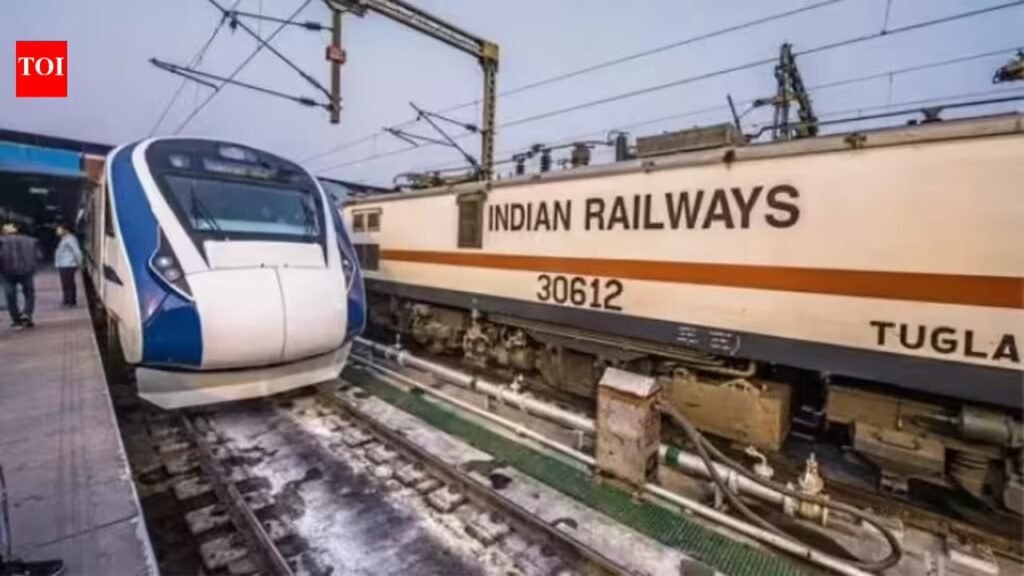
New Delhi: The earnings of Indian Railways from passenger movement rose 6% to around Rs 80,000 crore in 2025-26, while freight revenue lagged, clocking a 1.4% rise to Rs 17.8 lakh crore.Data showed that the national transporter carried a record 741 crore passengers during the last financial year and freight loading was at an all-time high of 1,670 million tonnes, although it was lower than the target of 1,700 MT.Separate data also showed that railways and road transport ministries utilised their entire capex for FY26 of around Rs 5.5 lakh crore.Road transport ministry officials said highway construction touched 9,100 km and the award of new works stood at 6,500 km. NHAI, which is responsible for construction and maintenance of wider highways, said it constructed 5,313 km of NHs, about 15% higher than the target of 4,640 km for the year.“The capital expenditure by NHAI in 2025-26 was at Rs 2.4 lakh crore. This is about 2.5% higher than the budgetary support. The differential amount has been met through NHAI’s own resources,” it said.On Wednesday, railway minister Ashwini Vaishnaw informed Rajya Sabha that the national transporter operated 76,352 special trains in the last financial year and cargo loading also increased. In a statement, railways said freight growth was driven by a 13% increase in fertiliser, pig iron and finished steel transport. Iron ore loading increased 6.7%, while cement volume went up 3.4%, reflecting steady activity in the infrastructure and construction sectors.
Parliament passes insolvency law amendments to speed up resolutions; Sitharaman says aim is revival, not liquidation
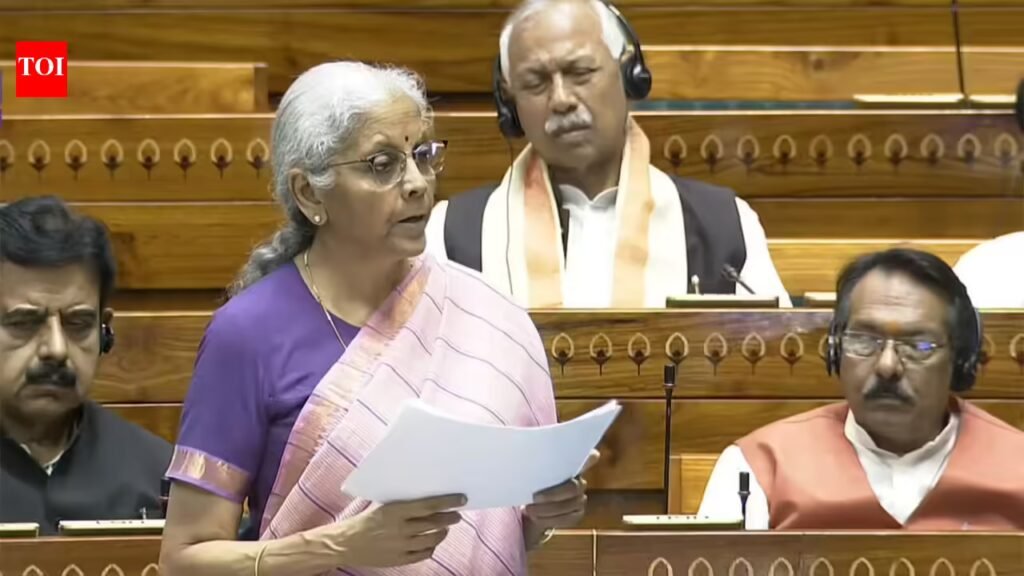
Parliament on Wednesday passed amendments to the Insolvency and Bankruptcy Code (IBC) aimed at expediting resolution of stressed companies and reducing case backlogs, with Finance Minister Nirmala Sitharaman underlining that the objective is to revive firms rather than liquidate them, according to PTI.The Rajya Sabha cleared the Insolvency and Bankruptcy Code (Amendment) Bill, 2026 by voice vote, after it was passed by the Lok Sabha on March 30.Replying to a discussion in the Upper House, Sitharaman said the IBC is designed to preserve enterprise value and resolve financial stress in a market-driven manner.“It (IBC) was never intended to be a debt recovery tool. Recovery values are incidentally a by-product. The IBC process is market-driven.“Recoveries are reflective of underlying asset quality and commercial viability of the distressed enterprise,” she said, responding to concerns over haircuts and recovery rates.As of December 2025, the IBC has facilitated resolution of 1,376 companies, enabling recovery of Rs 4.11 lakh crore, with financial creditors recovering over 34 per cent of their claims.Sitharaman said recoveries depend on sectoral conditions and asset quality, adding that the code realises 94.95 per cent of fair value at admission, while recoveries exceeding 171.54 per cent of liquidation value reflect the distressed nature of firms entering the process rather than shortcomings of the framework.She said the IBC has strengthened the banking sector by enabling asset recovery and improving balance sheets.“One concrete thing that I can say for India is that the Code actually has contributed to improving the health of our banking sector. One of the reasons why India’s banking sector has actually gotten better in itself is because of the way in which IBC has recovered assets and gone through the process and given back money to the banks,” PTI quoted her as saying.Banks have recovered Rs 1,04,099 crore through various channels, of which Rs 54,528 crore, or 52.3 per cent, came via the IBC route.Citing a World Bank report, Sitharaman said reforms in India’s insolvency regime improved creditor recovery rates from 26.5 cents to 71.6 cents per dollar.“Even just after a few years of its introduction, it has been recognised world over,” she said.The minister said the amendments are aimed at making the law more responsive to evolving economic needs.“IBC was not brought with the intention of liquidating companies. It was brought in to address the stress that the companies are facing and give a resolution which will make them come back to some form and then attain the status that they were earlier running with quite a few guardrails,” she said.Key changes include faster admission of insolvency applications, with adjudication limited to establishing default and increased reliance on information utilities.Applications will need to be admitted within 14 days if default is established, while appeals before the National Company Law Appellate Tribunal (NCLAT) must be resolved within three months.The amendments also aim to strengthen the liquidation process through greater creditor oversight, ensure independence of liquidators and remove procedural overlaps.An enabling framework for group insolvency and cross-border insolvency has been introduced to improve investor confidence and align with global best practices.The bill replaces the underutilised fast-track process with a creditor-initiated insolvency framework that allows out-of-court initiation and follows a debtor-in-possession and creditor-in-control model, with safeguards.Stricter timelines and penalties have also been proposed to deter frivolous litigation and delays.Sitharaman noted that MSMEs have been exempted from disqualification under Sections 29A, 29AC and 29AH, allowing promoters to participate in the resolution process and helping preserve smaller businesses.The Insolvency and Bankruptcy Code, enacted in 2016, has undergone seven amendments so far as the government seeks to refine the framework in line with industry requirements.
UPI transactions hit record Rs 29.53 lakh crore in March; volumes cross 22.6 billion

Unified Payments Interface (UPI) transactions touched a record high in March, with both value and volume hitting new peaks, driven by festive spending and financial year-end activity, according to PTI.Data released by the National Payments Corporation of India (NPCI) showed that UPI transactions totalled Rs 29.53 lakh crore in value during March, up 19 per cent from Rs 24.77 lakh crore in the same month last year.On a month-on-month basis, transaction value rose 10 per cent from Rs 26.84 lakh crore recorded in February.In volume terms, UPI registered 22.64 billion transactions during the month, marking a 24 per cent increase from 18.3 billion transactions a year ago. The volume was 20.39 billion in February.Average daily transactions stood at 730 million, with an average daily value of Rs 95,243 crore, as spending picked up during festivals such as Holi and Eid.“The sustained growth in the digital payment ecosystem in India is an affirmation of the penetration of real-time payment systems in the day-to-day life of the people. UPI processed 22.64 billion transactions worth 29.53 lakh crore in March 2026, marking its emergence as one of the trusted payment systems in the country,” said Anand Kumar Bajaj, MD & CEO of PayNearby.UPI now accounts for around 85 per cent of all digital transactions in India and contributes nearly 50 per cent of global real-time digital payments.The platform is operational in seven countries, including the UAE, Singapore, Bhutan, Nepal, Sri Lanka, France and Mauritius, with its entry into France marking its first expansion into Europe.NPCI, an initiative of the Reserve Bank of India and the Indian Banks’ Association, operates UPI, enabling real-time peer-to-peer and merchant payments across the country.
US stock markets today (April 1, 2026): Wall Street gains on Iran ceasefire hopes; S&P 500 rises 0.6% as oil eases
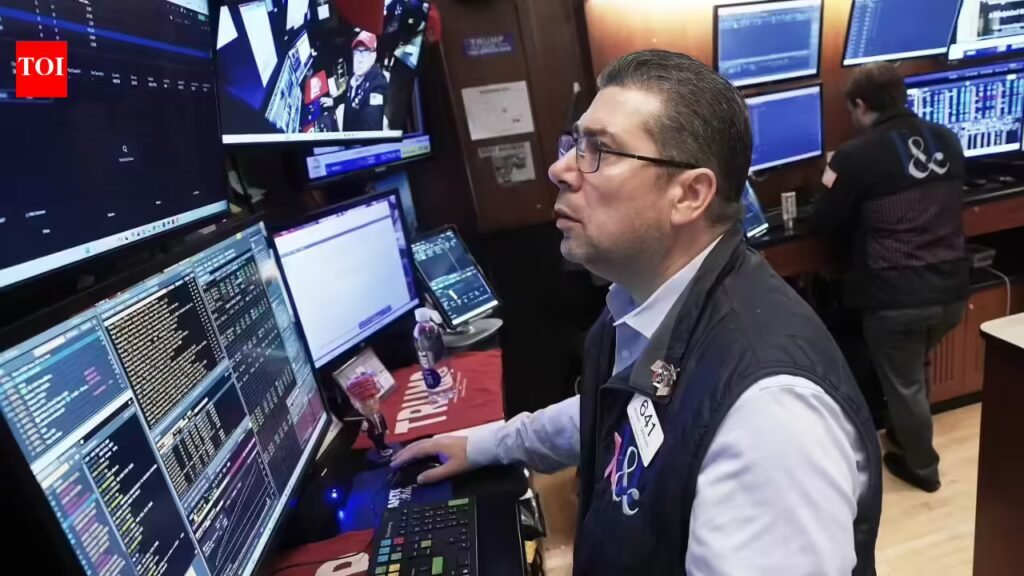
US stock markets traded higher on Wednesday, tracking a global rally as easing oil prices and hopes of a potential end to the Iran war lifted investor sentiment, according to AP.The S&P 500 rose 0.6%, adding to its sharp gains from the previous session, while the Dow Jones Industrial Average was up 292 points, or 0.6%, as of 10 a.m. Eastern time. The Nasdaq Composite advanced 1%, led by gains in technology stocks.The rally followed strong gains across global markets, with South Korea’s Kospi surging 8.4% and Japan’s Nikkei 225 jumping 5.2%, while key European indices in France, Germany and the United Kingdom rose more than 1%.Investor optimism was driven by comments from US President Donald Trump, who said Iran had “just asked the United States of America for a CEASEFIRE!” shortly before markets opened. “We will consider when Hormuz Strait is open, free, and clear. Until then, we are blasting Iran into oblivion or, as they say, back to the Stone Ages!!!”Trump had also said earlier that the US military campaign could end within two to three weeks, adding to hopes of de-escalation. These remarks followed earlier signals, including a report quoting Iran’s president as saying the country has “the necessary will to end the war” under certain conditions, including guarantees against future aggression.Oil prices eased on these developments, with Brent crude trading at around $101.16 per barrel, down from recent highs but still significantly above pre-war levels of about $70.Despite the gains, markets remain volatile as the conflict continues to disrupt energy supplies. Iran maintains control over the Strait of Hormuz, a critical route through which about one-fifth of global oil flows during peacetime.US gasoline prices also rose further, with the national average reaching $4.06 per gallon, according to AAA.“The worry on Wall Street has been that the war may last a long time and keep oil and natural gas from the Persian Gulf out of global markets, which could create a brutal blast of inflation,” the report said.Analysts cautioned that the impact of the conflict may persist even if hostilities ease.“De-escalation hopes have given markets a lift, but we think the effects of the war would, in many cases, persist even if the war did end soon,” said Thomas Mathews, head of markets, Asia Pacific at Capital Economics, AP quoted.“It’s worth thinking through how markets might fare if the war were to end ‘very soon’… Do markets have further to recover if sentiment continues to improve? The answer is almost certainly yes,” he added.On Wall Street, most stocks traded higher, with Big Tech leading gains. Alphabet rose 2.8% and Nvidia gained 0.8%, providing strong support to the S&P 500.Among other stocks, Nike dropped 13.1% despite reporting better-than-expected quarterly profit, as weak financial forecasts weighed on investor sentiment. Hasbro declined 3.6% after reporting unauthorised access to its computer network.In the bond market, US Treasury yields were largely stable. The 10-year yield edged up to 4.32% from 4.30% late Tuesday, supported by stronger-than-expected data on retail sales and manufacturing activity.The White House said President Trump is expected to address the public later in the day on the Iran war, a key event that markets will closely monitor for further direction.While equities have responded positively to ceasefire hopes, continued geopolitical tensions and elevated oil prices remain key risks for global markets and inflation outlook.
IndiGo revises fuel surcharge on domestic tickets from April 2 after govt hikes jet fuel price

IndiGo on Wednesday announced that it will start levying revised fuel charges ranging from Rs 275 to Rs 10,000 on domestic and international flights from April 2, following the rise in jet fuel prices.The move comes as jet fuel prices for scheduled Indian airlines have risen by around 8.5% in April, though the increase has been lower than initially feared. The central government on Wednesday issued a clarification on the jet fuel price hike and capped the increase in ATF prices for domestic airlines at 25%.Citing tensions in the Middle East and closure of the Strait of Hormuz triggered by US-Israeli strike on Iran, the Centre called it “only a partial and staggered increase”.With the higher fuel charges, airfares are set to rise for various domestic and international flights. The revised charges will be applicable from 0001 hours on April 2.The announcement from the country’s largest airline came on a day when aviation turbine fuel (ATF) prices were revised.For domestic flights, depending on the distance, the revised fuel charges will range from Rs 275 to Rs 950.“With this clarity, IndiGo has also recalibrated its domestic fuel charge to vary by different travel distances,” the airline said in a statement.In the case of international flights, the fuel charges will vary from Rs 900 to Rs 10,000 depending on the distance.“For international operations, ATF prices have more than doubled in the last month, consequentially driving a significant impact on the airline’s operating costs on these routes,” the statement said.Although fully offsetting the fuel price increase would require substantial fare revisions, IndiGo said it has passed on a relatively smaller amount to customers, keeping in mind the consequential burden on them.From March 14, the airline has already been levying fuel charges ranging from Rs 425 to Rs 2,300 on domestic and international flight tickets.In Delhi, ATF now costs Rs 1,04,927 per kilolitre, up from Rs 96,638.14 last month. At the country’s second-busiest hub, the price has increased to Rs 98,247 from Rs 90,451.87.The relatively moderate hike is expected to help avoid a sharp increase in airfares for most passengers and comes as a relief for financially strained airlines as well as flyers.However, the impact has been far more severe for non-scheduled, ad hoc, and charter operators. For domestic flights in this segment, ATF prices have surged by about 115%, while international operations have seen an increase of roughly 107%.
US retail sales rise 0.6% in February; Iran war fuel spike threatens consumer spending outlook

US retail sales rose 0.6 per cent in February after a slight decline in January, signalling cautious consumer activity even before a sharp surge in fuel prices triggered by the Iran war, according to AP.Data released by the Commerce Department showed retail sales rebounded from a 0.1 per cent drop in January, beating expectations. However, economists have flagged concerns that rising energy costs could weigh on consumer spending in the coming months.Gasoline prices crossed USD 4 per gallon this week for the first time since 2022, with the national average reaching USD 4.06 on Wednesday–about USD 1 higher than before the conflict began.Retail activity was mixed across categories. Sales at clothing and accessories stores rose 2 per cent, while electronics and appliance stores saw a 0.5 per cent increase. Online retail sales grew 0.7 per cent.The data excludes services such as travel and hotels, but restaurant spending–the only services category included –rose 0.4 per cent.The Iran war, which began on February 28, has disrupted global oil supplies by shutting down the Strait of Hormuz, through which around one-fifth of global oil typically flows. Brent crude prices have risen more than 45 per cent since the start of the conflict.Diesel prices have increased faster than gasoline, raising transportation costs for businesses and adding to inflationary pressures.Economists had expected higher tax refunds to boost spending early in the year, but rising fuel costs are likely to offset that benefit.“The hit to real incomes from higher gas prices is especially regressive, hurting lower-income households disproportionately, while the lift from tax refunds is more evenly spread,” said Samuel Tombs, chief economist at Pantheon Economics. “Moreover, refunds will slow to a trickle by late April, providing little protection if high prices persist.”Tombs estimated that higher fuel prices could reduce real household incomes by about USD 15 billion per month.Patrick De Haan, an analyst at GasBuddy, said gas prices are approaching 3 per cent of median household income, a level that could start affecting discretionary spending.“When that gets up to about 4, 4 1/2, 5%, that’s really when people really start trimming back on some of their discretionary purchases,” he said.Retailers have also begun warning about the potential impact. Daniel Erver, CEO of Hennes & Mauritz, said rising energy costs are expected to have a “significant impact on the consumer behavior.”Darren Rebelez, CEO of Casey’s General Store, said a sharp pullback in spending is unlikely unless gasoline prices approach USD 5 per gallon.
Stock market today (April 1, 2026): Which are the top gainers and losers in Nifty50 and BSE Sensex today? Check list

Benchmark equity indices Sensex and Nifty ended nearly 2 per cent higher on Wednesday, starting the new financial year on a firm footing as global markets rallied on hopes of a potential de-escalation in the ongoing West Asia conflict.The 30-share BSE Sensex jumped 1,186.77 points or 1.65 per cent to settle at 73,134.32. During intra-day trade, it surged 2,017.03 points or 2.80 per cent to 73,964.58.The broader NSE Nifty rose 348 points or 1.56 per cent to close at 22,679.40. A decline in crude oil prices also supported investor sentiment. Nifty50 top gainers Trent (+7.00%) InterGlobe Aviation (+6.02%) Kwality Wall’s (+5.79%) Adani Ports SEZ (+5.55%) BEL (+4.51%) SBI (+3.93%) Eicher Motors (+3.64%) Jio Financial Services (+3.50%) Eternal (+3.30%) Nifty50 top losers Dr Reddy’s (-3.61%) HDFC Life (-2.99%) Cipla (-2.32%) Sun Pharma (-1.64%) NTPC (-1.62%) Apollo Hospitals (-1.53%) Power Grid (-1.12%) Max Healthcare (-0.36%) UltraTech Cement (-0.29%) Sensex top gainers Trent (+7.00%) InterGlobe Aviation (+6.02%) Adani Ports SEZ (+5.55%) BEL (+4.51%) SBI (+3.93%) Eternal (+3.30%) L&T (+2.96%) Titan Company (+2.89%) Sensex top losers Sun Pharma (-1.64%) NTPC (-1.62%) Power Grid (-1.12%) UltraTech Cement (-0.29%) Bharti Airtel (-0.03%) “Indian equity markets opened the new financial year on a positive note, with stocks soaring on fresh optimism surrounding a potential de-escalation of the Middle East conflict and easing of energy supply disruptions,” said Ponmudi R, CEO of Enrich Money.He added that US President Donald Trump’s remarks suggesting the US could withdraw from Iran “whether we have a deal or not” within the next two to three weeks provided the trigger for a broad rally in global risk assets.“Indian equity markets opened FY27 on a strong note, driven by improving risk appetite following US President Donald Trump’s remarks hinting at a potential resolution to the West Asia conflict,” said Vinod Nair, Head of Research at Geojit Investments Limited.In the US, markets ended significantly higher on Tuesday, with the Nasdaq Composite surging 3.83 per cent, the S&P 500 rising 2.91 per cent and the Dow Jones Industrial Average gaining 2.49 per cent.Brent crude, the global oil benchmark, declined 0.22 per cent to USD 103.7 per barrel.Stock markets were closed on Tuesday on account of Shri Mahavir Jayanti.Foreign Institutional Investors (FIIs) offloaded equities worth Rs 11,163.06 crore on Monday, while Domestic Institutional Investors (DIIs) bought shares worth Rs 14,894.72 crore, according to exchange data.