TL;DR
AI in Accounting is transforming accounting from a compliance function into a strategic business tool. In 2026, businesses using AI-powered accounting and virtual CFO services are achieving higher ROI, faster decision-making, and better scalability compared to traditional CA models.
The Evolution of AI in Accounting in India
Accounting has moved through three phases:
- Manual bookkeeping
- Software-based accounting
- AI-driven financial intelligence
In 2026, the shift is clear:
From data entry → to data-driven decision making
What is AI in Accounting?
AI in accounting refers to:
- Automated bookkeeping
- Real-time financial analysis
- Predictive cash flow forecasting
- Error detection and anomaly tracking
Core Capabilities:
- Invoice processing automation
- Expense categorization
- Financial reporting dashboards
- Compliance alerts
Limitations of Traditional CA Models
Traditional accounting models focus on:
- Historical data
- Periodic reporting
- Compliance-only mindset
Key Limitations:
- Delayed insights
- Manual errors
- Limited scalability
- Reactive decision-making
Rise of Virtual CFO Services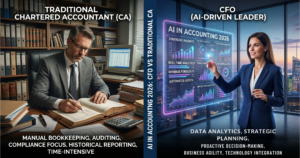
Virtual CFOs combine:
- Financial expertise
- Technology
- Strategic planning
Services Include:
- Financial forecasting
- Budgeting & cost control
- Investor reporting
- Profitability optimization
Shift:
From “accounting” → to “financial strategy”
AI vs Traditional Accounting: Key Differences
| Factor | Traditional CA | AI + CFO Model |
|---|---|---|
| Data Processing | Manual | Automated |
| Reporting | Monthly | Real-time |
| Decision Support | Limited | Advanced |
| Error Rate | High | Low |
| Cost Efficiency | Moderate | High ROI |
ROI Impact of AI Accounting
Businesses adopting AI accounting see:
- 40–60% reduction in accounting costs
- Faster financial reporting (real-time vs monthly)
- Improved decision accuracy
- Reduced compliance penalties
Insight:
AI doesn’t just reduce cost — it improves profitability.
Real Use Cases in Indian Businesses
1. Startup Scaling
- Automated dashboards track burn rate
- CFO insights optimize spend
2. E-commerce Brands
- Real-time inventory & revenue tracking
- GST automation
3. SMEs
- Reduced dependency on manual accounting
- Improved compliance
Tools Powering AI Accounting
Popular tools include:
- Cloud accounting software
- AI-driven analytics platforms
- Automation tools for invoicing & payroll
These tools enable:
- Seamless integration
- Real-time visibility
- Scalable operations
Will AI Replace Chartered Accountants?
No — but it will redefine their role.
Future Role of CAs:
- Strategic advisors
- Financial planners
- Business consultants
Routine tasks like:
- Data entry
- Reconciliation
will be fully automated.
How to Transition to AI-Driven Accounting
Step 1: Move to Cloud Accounting
Adopt modern platforms.
Step 2: Automate Routine Tasks
Invoices, payroll, reporting.
Step 3: Implement Dashboards
Track real-time financial metrics.
Step 4: Hire Virtual CFO
For strategic decision-making.
Final Verdict
The future of accounting is not about replacing humans — it’s about enhancing decision-making through technology.
Businesses that adopt AI + CFO models gain:
- Competitive advantage
- Better financial control
- Faster growth
Conclusion
In 2026, accounting is no longer just compliance — it is a growth engine.
If your business still relies on traditional models, you risk:
- Slower decisions
- Higher costs
- Missed opportunities
CTA:
Upgrade to AI-powered accounting and virtual CFO services with CA Arihant Lodha to drive smarter financial decisions and scalable growth.
6. FAQ SECTION
1. How is AI used in accounting?
AI automates bookkeeping, analyzes financial data, and provides real-time insights.
2. Will AI replace accountants?
No, it will automate routine tasks while accountants focus on strategy.
3. What is a virtual CFO?
A financial expert who provides strategic guidance without being a full-time employee.
4. Is AI accounting safe?
Yes, with proper systems and security protocols, it is highly reliable.
5. What are benefits of AI in accounting?
Cost reduction, accuracy, real-time insights, and better decision-making.