
AIS vs Form 26AS in 2026: What You Must Verify Before Filing Your ITR
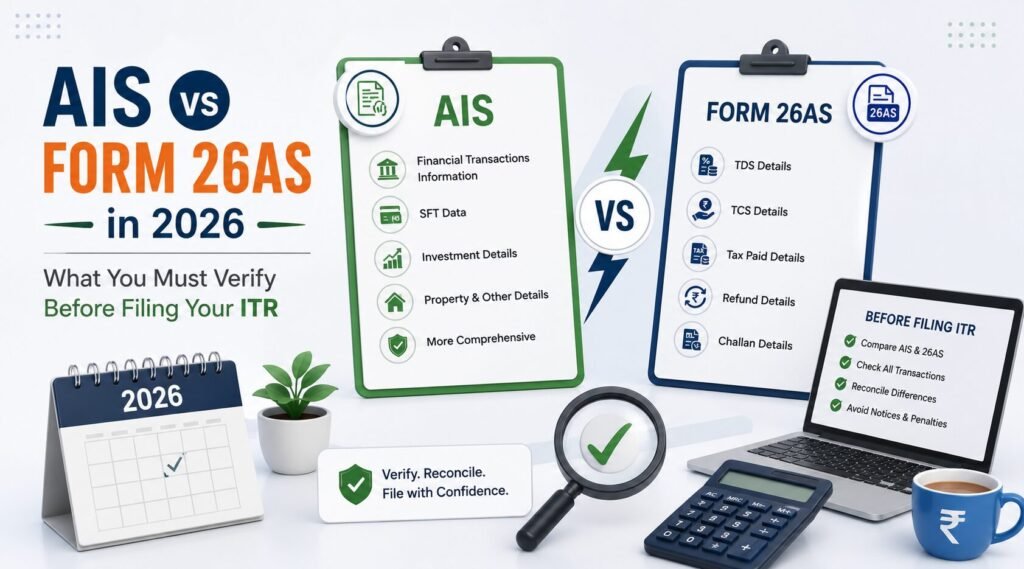
TL;DR Before filing your Income Tax Return (ITR) for AY 2027–28, reviewing both the Annual Information Statement (AIS) and Form 26AS is essential. While Form 26AS primarily reflects tax-related information such as TDS, TCS, and advance tax payments, AIS provides a broader view of your financial transactions, including interest income, dividends, securities transactions, mutual fund investments, and other reported information. Reconciling both documents helps taxpayers report income accurately, reduce the chances of receiving notices, and avoid delays in refund processing. Why Verifying Your Tax Information Before Filing Matters Income Tax Return filing is no longer limited to reporting salary income and claiming deductions. With the increasing use of data analytics and digital reporting, the Income Tax Department now receives financial information from banks, employers, financial institutions, registrars, mutual funds, stock exchanges, and other reporting entities. As a result, taxpayers should ensure that the information declared in their ITR matches the data available with the Income Tax Department. Reviewing AIS and Form 26AS before filing helps: Report all taxable income accurately. Verify TDS credits. Identify missing or incorrect entries. Prevent refund delays. Reduce the likelihood of receiving compliance-related notices. Improve the accuracy of the Income Tax Return. What is AIS (Annual Information Statement)? The Annual Information Statement (AIS) is a comprehensive statement available on the Income Tax e-Filing Portal that provides taxpayers with detailed information about various financial transactions reported against their Permanent Account Number (PAN). Unlike traditional tax statements, AIS presents a broader picture of an individual’s financial activities during the financial year. AIS may include information relating to: Salary income Savings account interest Fixed deposit interest Dividend income Securities transactions Mutual fund transactions Purchase and sale of shares Tax Deducted at Source (TDS) Tax Collected at Source (TCS) Advance tax payments Self-assessment tax Foreign remittances (where reported) High-value financial transactions reported by specified entities The purpose of AIS is to improve transparency and help taxpayers verify the information available with the Income Tax Department before filing their returns. What is Form 26AS? Form 26AS is a consolidated tax statement that primarily reflects taxes deducted or collected against a taxpayer’s PAN. It serves as an important document for verifying tax credits before filing an Income Tax Return. Form 26AS generally includes: Tax Deducted at Source (TDS) Tax Collected at Source (TCS) Advance tax payments Self-assessment tax payments Refund details Certain specified financial transaction information, as applicable Taxpayers should reconcile the tax credits appearing in Form 26AS with their salary records, bank statements, and tax payment challans to ensure that all eligible credits are correctly reflected before filing their return. AIS vs Form 26AS: Understanding the Difference Although both documents are available through the Income Tax system and are used during return filing, they serve different purposes. Feature AIS Form 26AS Purpose Comprehensive financial information Tax credit statement Income Coverage Wider range of reported financial transactions Primarily tax deductions and tax payments Salary Information Included if reported Reflected through TDS entries where applicable Bank Interest Generally available Limited relevance unless linked to tax deductions Dividend Information Included where reported May only reflect associated TDS Securities Transactions Included where reported Generally not detailed Mutual Fund Transactions Included where reported Limited information Tax Payments Included Included TDS Verification Available Primary source for verification Rather than choosing one document over the other, taxpayers should review both before filing their Income Tax Return. Why Should You Verify Both AIS and Form 26AS? Many taxpayers mistakenly assume that checking Form 26AS alone is sufficient before filing their ITR. However, AIS provides additional financial information that may not be fully reflected in Form 26AS. Reviewing both documents helps taxpayers: Report Complete Income Income from bank interest, dividends, capital gains, and other sources may appear in AIS and should be considered while preparing the return. Verify Tax Credits Form 26AS helps ensure that TDS, TCS, advance tax, and self-assessment tax payments have been correctly credited. Detect Reporting Errors Occasionally, incorrect or duplicate information may appear due to reporting issues. Identifying these discrepancies before filing helps reduce future complications. Reduce the Risk of Notices If the Income Tax Department’s records differ significantly from the information declared in the return, taxpayers may receive notices requesting clarification. Reviewing AIS and Form 26AS carefully helps minimise this risk. Income Details You Must Verify Before Filing Your ITR Before submitting your Income Tax Return, review the following information carefully: Salary income Interest from savings accounts Fixed deposit interest Dividend income Capital gains from shares and mutual funds Rental income Business or professional income TDS deducted by employers TDS deducted by banks Advance tax payments Self-assessment tax Refund details High-value financial transactions reported against your PAN Comparing these records with your own financial documents ensures greater accuracy during ITR filing. Common Reasons for Mismatches Discrepancies between AIS, Form 26AS, and your financial records can occur for several reasons, including: Delayed reporting by financial institutions. Incorrect PAN quoted by the deductor. Missing TDS entries. Duplicate reporting of transactions. Incorrect interest calculations. Omitted dividend income. Errors in reporting high-value transactions. Timing differences in reporting by banks or other institutions. Identifying these issues before filing allows taxpayers to take corrective action and prepare an accurate return. How to Reconcile AIS and Form 26AS Before Filing Your ITR Reviewing both AIS and Form 26AS should be an essential part of your Income Tax Return (ITR) preparation. Instead of relying on only one document, taxpayers should compare the information available in both statements with their own financial records. Following a systematic reconciliation process can help identify discrepancies early and reduce the chances of notices, refund delays, or incorrect tax reporting. Step 1: Download Both Documents Before preparing your ITR, download the latest versions of: Annual Information Statement (AIS) Form 26AS Since financial information may be updated periodically, ensure you are using the most recent available statements. Step 2: Verify Your Personal Details Check that your: PAN Name Assessment Year Financial Year are correctly reflected in both documents. Even minor discrepancies should be investigated before filing your return. Step