
Professional Tax Planning for Business Profitability
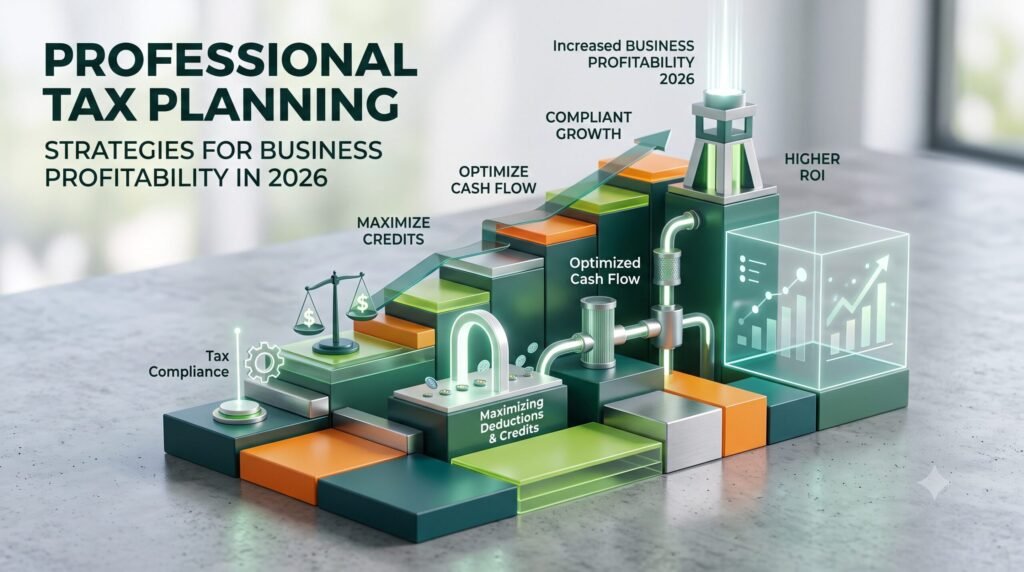
TL;DR Professional Tax Planning helps businesses improve profitability by legally reducing avoidable tax leakage, improving cash-flow planning, optimising expenses, managing GST input tax credit, planning advance tax, avoiding penalties, and making better financial decisions throughout the year. Tax planning is not only about saving tax at the end of the financial year. For growing businesses, it should be a year-round financial strategy. The businesses that plan taxes early usually manage cash better, reduce compliance risk, and retain more profit. Why Tax Planning Matters for Profitability Many business owners think tax planning means finding last-minute deductions before filing returns. That is only a small part of the process. Real business tax planning is much broader. It connects taxation with: Cash flow Profit margins Business structure GST input tax credit Expense planning Advance tax Investment decisions Compliance timelines Audit readiness Owner remuneration Expansion strategy A business may earn good revenue but still lose money through poor tax planning. This happens when taxes are paid late, deductions are missed, GST credits are not claimed correctly, expenses are poorly documented, or financial decisions are made without understanding tax impact. In 2026, businesses need professional tax planning not just to reduce tax but to protect profit. What Is Professional Tax Planning? Professional Tax Planning is the process of legally arranging business income, expenses, investments, compliance, entity structure, GST credits, tax payments, and documentation to reduce avoidable tax costs and improve financial efficiency. It involves reviewing: Business income Expense eligibility Tax deductions Depreciation GST input tax credit TDS compliance Advance tax Owner remuneration Business structure Capital expenditure Related-party transactions Cash flow impact Compliance deadlines The objective is simple: Pay the right tax legally, avoid unnecessary leakage, and improve business profitability. Tax Planning vs Tax Saving vs Tax Evasion Business owners must understand the difference. Term Meaning Legal Status Tax Planning Legal arrangement of business finances to optimise tax Legal Tax Saving Using eligible deductions, exemptions and benefits Legal Tax Avoidance Aggressive arrangements exploiting loopholes Risky Tax Evasion Hiding income or false reporting Illegal Professional Tax Planning is legal, documented, and based on real business activity. It does not involve hiding income, fake bills, inflated expenses, or artificial transactions. How Professional Tax Planning Improves Profitability 1. Better Cash Flow Management Taxes affect cash flow. If a business does not plan tax payments in advance, it may face sudden cash pressure near due dates. Common examples include: Advance tax payments GST liability TDS payments Income tax payments Tax audit-related adjustments Interest due to delayed payments Professional tax planning helps businesses forecast tax outflows in advance. This allows owners to plan working capital, vendor payments, salaries, inventory purchases, and expansion decisions more confidently. Example A business that estimates tax liability quarterly can set aside funds each month instead of facing a large tax payment at the last moment. This improves cash control and reduces stress. 2. Lower Avoidable Tax Leakage Tax leakage happens when a business pays more tax than necessary because of poor planning or weak documentation. Common causes include: Missed deductions Incorrect expense classification Unclaimed depreciation Ineligible tax positions Lost GST input tax credit Late filing penalties Interest on delayed payments Poor TDS compliance Incomplete records Professional tax planning identifies these leakages before they become costly. Profitability improves not only by increasing revenue but also by reducing avoidable loss. 3. Optimised Business Expenses Not every expense is automatically allowed as a business deduction. Expenses should be: Genuine Business-related Properly documented Paid through traceable channels Supported by invoices or agreements Compliant with TDS and GST rules where applicable Professional review helps businesses classify expenses correctly and maintain evidence. Common expense areas requiring review include: Consultancy fees Professional charges Marketing expenses Travel Software subscriptions Rent Repairs Interest Director remuneration Employee benefits When expenses are planned and documented properly, tax positions become stronger. 4. Improved GST and ITC Control GST input tax credit has a direct impact on cash flow. If ITC is missed, blocked, reversed, or incorrectly claimed, profitability suffers. Professional tax planning includes GST review to ensure: Eligible ITC is claimed Ineligible ITC is not claimed GSTR-2B is reconciled Vendor compliance is monitored GST returns match books Credit notes are tracked Reverse charge is reviewed GST liability is planned A business that manages ITC well can reduce unnecessary cash blockage. 5. Better Advance Tax Planning Advance tax is often ignored until due dates approach. This creates two risks: Cash-flow pressure Interest liability Professional tax planning helps estimate tax liability throughout the year. Businesses should review profits quarterly and plan advance tax accordingly. This is especially important for businesses with: Seasonal income Large contracts High profits Capital gains New branches Rapid growth Variable margins Advance tax planning avoids last-minute surprises. 6. Stronger Entity and Salary Structuring Business structure affects tax efficiency. The tax impact may differ depending on whether the business operates as: Proprietorship Partnership LLP Private Limited Company Professional firm Group entity Professional planning helps evaluate: Founder remuneration Partner remuneration Director salary Dividend policy Profit retention Loan structure Related-party transactions Business expansion structure The right structure can support long-term profitability and compliance. 7. Fewer Penalties and Interest Costs Penalties and interest are avoidable costs. They usually arise due to: Late GST filing Late TDS payment Incorrect TDS deduction Delayed income tax filing Incorrect advance tax payment Wrong GST reporting Tax audit delays ROC compliance gaps Professional tax planning creates a compliance calendar and review process. This reduces avoidable costs that directly reduce business profit. 8. Better Investment and Expansion Decisions Tax planning also helps with business decisions. Before making major decisions, owners should review tax impact. Examples: Buying machinery Hiring senior employees Opening a new branch Raising funds Taking business loans Purchasing commercial property Launching a new product Entering export markets Giving discounts Changing pricing models A business decision that looks profitable before tax may look different after tax. Professional advice helps owners evaluate the real financial impact. Tax Planning Checklist for Businesses in 2026 Area What to Review Frequency Profit Projection Estimated annual profit Quarterly Advance