
Financial Red Flags Every Business Owner Should Monitor Before They Become Costly
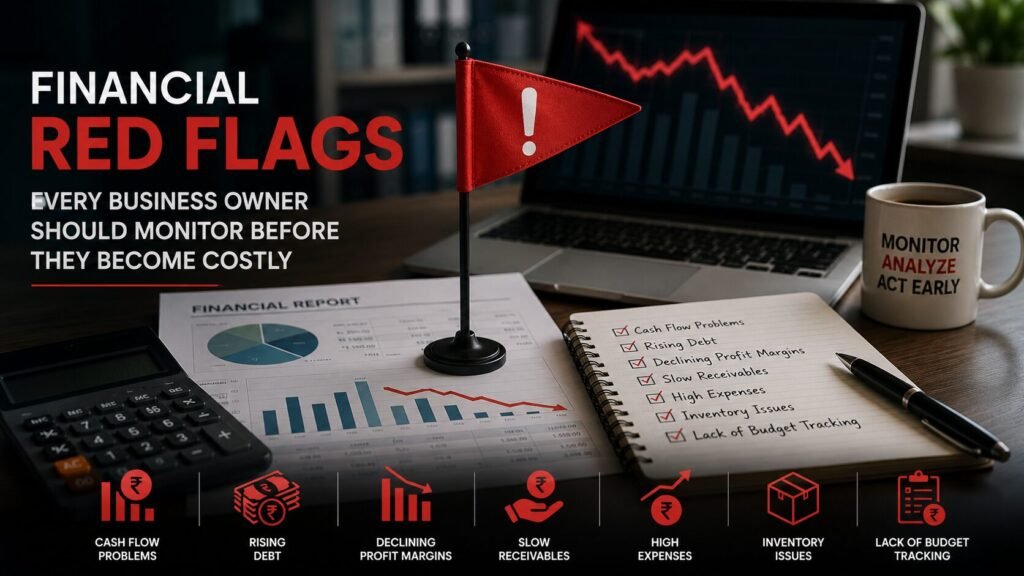
TL;DR Financial red flags are early warning signs that a business may face cash flow stress, declining profitability, tax issues, compliance problems, rising debt, or poor financial control. The most common red flags include profits not converting into cash, rising receivables, falling margins, uncontrolled expenses, delayed tax payments, excessive borrowing, poor reconciliation, slow inventory movement, and unclear financial reporting. Business owners should not wait for year-end accounts to identify these problems. A monthly financial review can help detect issues early and prevent costly damage. Why Financial Red Flags Should Never Be Ignored Most business problems do not appear suddenly. They build slowly. A business may look stable from the outside while financial pressure develops inside. Sales may be growing, but collections may be delayed. Profit may appear healthy, but cash may be stuck in receivables. GST or TDS payments may be postponed once, then repeatedly. Expenses may rise month after month without proper review. By the time these problems become visible, the business may already be under pressure. That is why business owners must monitor financial red flags before they become costly. Financial discipline is not only for large companies. SMEs, startups, traders, manufacturers, consultants, agencies, and service businesses all need regular financial visibility. What Are Financial Red Flags? Financial red flags are warning signs that indicate possible weakness in business performance, accounting quality, cash flow, compliance, profitability, or internal controls. They do not always mean the business is failing. However, they signal that something requires attention. For example: Sales are rising but bank balance is falling Profit margins are shrinking Customers are taking longer to pay Tax payments are being delayed Inventory is not moving Expenses are increasing without explanation Loans are used for daily operations Financial reports are not ready on time These signs should be investigated early. 12 Financial Red Flags Every Business Owner Should Monitor 1. Profit Is Growing but Cash Is Not This is one of the most dangerous financial red flags. A business may show profit in the Profit & Loss Statement but still struggle with cash. This usually happens when: Customers delay payments Inventory blocks working capital Expenses are paid before collections Revenue is booked but cash is not received Loans and EMIs consume cash Tax liabilities are not planned Example A business shows ₹20 lakh monthly sales and healthy profit, but ₹12 lakh remains unpaid by customers every month. The P&L may look good, but cash flow becomes weak. What to Monitor Operating cash flow Bank balance trend Receivable ageing Cash conversion cycle Monthly cash surplus or deficit Profit is important, but cash keeps the business running. 2. Receivables Are Increasing Faster Than Sales If customers are taking longer to pay, the business effectively finances its customers. This creates pressure on: Vendor payments Salary payments Tax payments Loan repayments Working capital Warning Signs Debtors older than 60 or 90 days No follow-up system Credit sales without policy Large unpaid invoices Repeated payment delays from key clients What to Do Prepare debtor ageing monthly Set credit limits Follow up before due dates Stop extending credit to risky customers Link sales incentives to collections, not just billing High sales with poor collections can quietly damage cash flow. 3. Gross Margins Are Falling Gross margin shows whether your core business is profitable before overheads. Falling gross margins may indicate: Rising purchase costs Poor pricing Discounts given too frequently Product mix issues Wastage Vendor cost increases Underbilling Operational inefficiency What to Monitor Gross margin by product or service Cost of goods sold Purchase price changes Discount levels Client-wise profitability Project-wise profitability If margins fall for multiple months, the business must review pricing and costs immediately. 4. Expenses Are Rising Without Revenue Growth Every business has expenses. The problem starts when expenses grow faster than revenue. Common uncontrolled expenses include: Marketing costs Rent Salaries Travel Software subscriptions Consultant payments Business promotion expenses Interest costs Admin expenses Warning Signs Monthly expenses increase but sales remain flat Multiple small expenses go unchecked Subscription costs are not reviewed Personal and business expenses mix No budget approval process What to Do Create a monthly expense variance report. Compare: Budget vs actual Current month vs previous month Current year vs previous year Expense as percentage of revenue Cost control does not mean cutting essential expenses. It means spending with visibility. 5. Business Depends Too Much on Short-Term Borrowing Loans are not always bad. Borrowing can support growth. But if short-term borrowing is regularly used to cover daily expenses, it is a red flag. Warning Signs Overdraft limit always fully used Credit card used for business expenses Vendor payments delayed due to cash shortage Loans used to pay taxes or salaries New borrowing used to repay old borrowing Interest cost increasing every month What to Monitor Debt-to-equity ratio Interest coverage EMI schedule Working capital cycle Borrowing purpose Cash flow forecast Borrowing should support growth, not hide poor cash flow. 6. GST, TDS or Tax Dues Are Getting Delayed Tax delays are not only compliance issues. They are also cash-flow warning signs. If a business repeatedly delays GST, TDS, income tax, advance tax, PF, professional tax, or ROC payments, it may indicate poor planning. Risks Interest Penalties Notices Blocked credits Audit issues Reputation concerns Funding due diligence problems What to Do Maintain a statutory dues calendar. Review tax liabilities before the due date, not on the due date. 7. Inventory Is Moving Slowly For trading, manufacturing, retail, and D2C businesses, slow inventory is a serious red flag. Inventory blocks cash. Warning Signs Old stock remains unsold High inventory but low cash Frequent stock write-offs Dead stock not identified Purchase decisions made without demand planning Inventory records do not match physical stock What to Monitor Inventory ageing Stock turnover ratio Dead stock value Fast-moving vs slow-moving products Purchase-to-sales ratio A business can be profitable on paper but cash-starved because too much money is sitting in stock. 8. Bank Reconciliation Is Not Updated Bank reconciliation is basic but critical. If bank reconciliation is not updated