
Income Tax Scrutiny India 2026: Avoid Notices
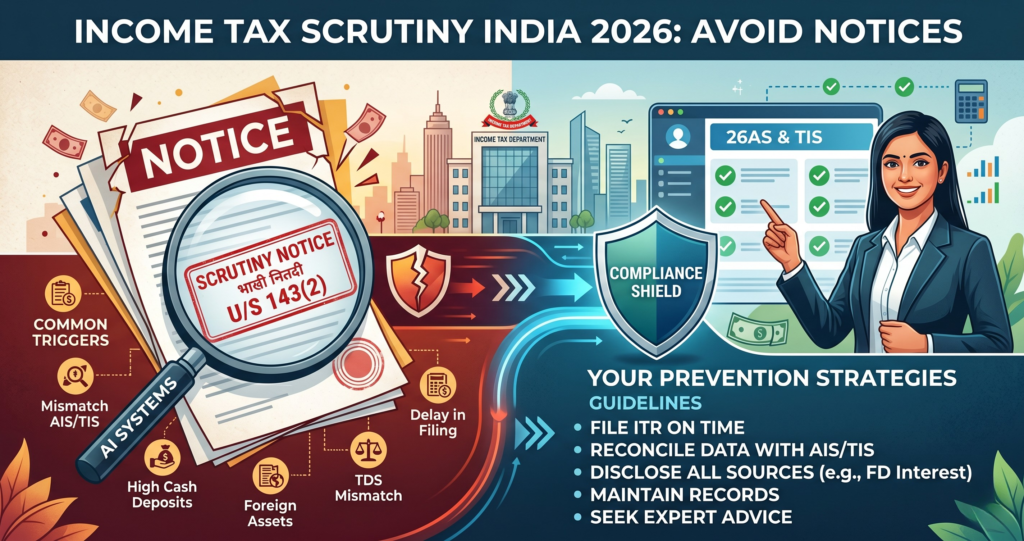
TL;DR Income tax scrutiny in India is triggered by mismatches, high-value transactions, or suspicious filings. Businesses can avoid notices and penalties by maintaining accurate records, ensuring compliance, and using expert tax advisory. Proactive planning is the key to staying audit-proof. What is Income Tax Scrutiny? Income tax scrutiny is a detailed examination of a taxpayer’s financial records by the Income Tax Department to verify: Income accuracy Tax payments Deductions claimed It ensures that businesses are not underreporting income or evading taxes. Types of Scrutiny Cases 1. Limited Scrutiny Focuses on specific issues like: High-value transactions Mismatched data 2. Complete Scrutiny Full examination of financial records. 3. Manual Scrutiny Selected based on risk parameters or red flags. Why Businesses Receive Tax Notices Tax notices are not random. They are triggered due to: Data mismatches Unusual financial activity Non-compliance Common Triggers for Scrutiny 1. Mismatch in Returns Differences between: GST filings Income tax returns TDS records 2. High-Value Transactions Large cash deposits Property purchases Foreign transactions 3. Abnormal Profit Margins Extremely low or high profits compared to industry 4. Frequent Loss Reporting Repeated losses raise suspicion. 5. Incorrect Deductions Claiming ineligible tax benefits. Step-by-Step Scrutiny Process Notice issued under Income Tax Act Submission of documents Clarification and hearings Assessment order issued Penalties & Consequences If discrepancies are found: Tax demand raised Penalty (50%–200% of tax) Interest charges Legal proceedings in severe cases How to Respond to a Tax Notice Step 1: Understand the Notice Identify: Section Issue raised Step 2: Gather Documents Financial statements Bank records Invoices Step 3: File Response Online Via income tax portal. Step 4: Consult a CA Avoid errors in response. How to Avoid Scrutiny Legally 1. Maintain Accurate Records Proper bookkeeping Updated financial data 2. Ensure Data Consistency Match: GST TDS incometax filings 3. Avoid Cash Transactions Prefer digital transactions. 4. Claim Deductions Carefully Only valid and documented claims. 5. Conduct Regular Tax Reviews Quarterly financial audits reduce risk. Compliance Checklist for 2026 Timely ITR filing GST reconciliation TDS compliance Proper invoicing Audit readiness Common Mistakes to Avoid Ignoring notices Late responses Poor documentation Incorrect filings DIY tax handling without expertise Final Thoughts Income tax scrutiny is not a problem if your compliance is strong. Businesses that proactively manage their finances: Reduce risk Avoid penalties Build credibility Conclusion In 2026, tax compliance is becoming more data-driven and strict. The best strategy is not reacting to notices—but preventing them. CTA: Work with CA Arihant Lodha to ensure complete tax compliance, avoid scrutiny risks, and safeguard your business from penalties. 6. FAQ SECTION 1. What triggers income tax scrutiny in India? Mismatched data, high-value transactions, and abnormal financial patterns. 2. How do I respond to an income tax notice? Understand the issue, gather documents, and respond via the income tax portal. 3. Can scrutiny lead to penalties? Yes, penalties can range from 50% to 200% of tax due. 4. How to avoid income tax notices legally? Maintain accurate records, ensure compliance, and file correct returns. 5. What happens in tax scrutiny cases? Authorities review financial records and verify tax accuracy. Blog By – CA Arihant Lodha