D2C Tax Saving Guide India (2026): Save 30% Legally
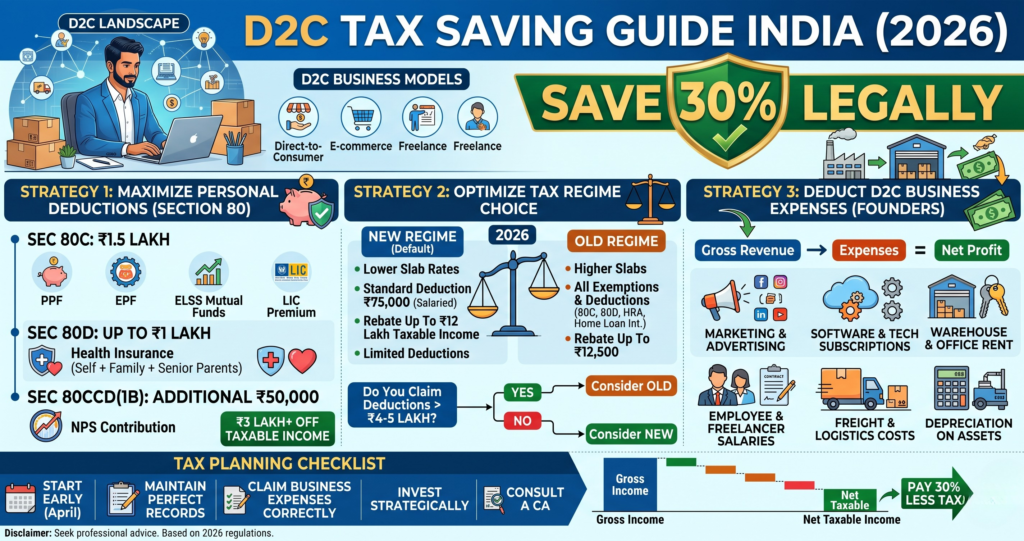
TL;DR D2C Tax Saving and e-commerce brands in India often overpay taxes due to poor structuring. By choosing the right business entity, optimizing GST, structuring income streams, and leveraging deductions, brands can legally reduce tax liability by up to 30%. Why Most D2C Brands Overpay Taxes Saving Most founders focus heavily on revenue growth but ignore tax architecture. As a result: Wrong business structure leads to higher tax slabs No GST optimization increases cash outflow Poor expense tracking reduces deductions No strategic planning = reactive tax filing This results in 10–30% unnecessary tax leakage annually. Understanding Business Structures for Tax Efficiency Sole Proprietorship vs LLP vs Pvt Ltd Structure Tax Rate Best For Limitation Sole Proprietor Up to 30% Small sellers High tax burden LLP 30% flat Service-based D2C Limited funding Pvt Ltd 22–25% Scalable brands Compliance-heavy Insight:Most serious D2C brands benefit from Private Limited Company with 22% tax regime, especially post-2020 reforms. Smart Income Structuring Strategies Instead of showing all income as direct profit: Pay founders via salary + dividends Allocate profits strategically across stakeholders Use family members (legally) for tax distribution Defer income where possible This reduces taxable income at the entity level. GST Optimization for E-commerce Brands GST is where most cash leakage happens. Key Strategies: Claim Input Tax Credit (ITC) aggressively Avoid wrong GST classifications Optimize interstate vs intrastate supply Use proper invoicing systems Example:A brand paying ₹10L GST annually can reduce ₹1.5–2L through ITC corrections alone. Expense Maximization & Deductions Most founders miss 20–40% of eligible deductions. Common deductible expenses: Digital marketing (Meta, Google Ads) Warehousing & logistics SaaS tools (Shopify, Razorpay, Zoho) Salaries & freelancer payments Office rent & utilities Pro Tip:Maintain clean bookkeeping to ensure maximum claimable deductions. Multi-Entity Structuring (Advanced Strategy) Top-performing brands use multi-entity setups: One entity for brand/IP ownership One for operations/sales One for marketing or consulting Benefits: Profit shifting Expense allocation Risk separation Tax optimization This alone can reduce overall tax liability by 5–10%. Case Study: How a D2C Brand Tax Saving 28% Scenario: Mumbai-based skincare brand (₹3 Cr revenue) Before: Proprietorship No GST optimization Tax paid: ~₹42L After restructuring: Converted to Pvt Ltd Implemented ITC strategy Structured salary + dividends Result: Tax reduced to ~₹30L Savings: ₹12L (≈28%) Common Mistakes to Avoid Choosing structure based on cost, not tax efficiency Ignoring GST compliance Mixing personal & business expenses No advance tax planning DIY accounting without expert review When to Hire a CA Firm You should consult a CA firm when: Revenue crosses ₹50L You sell across multiple states You plan to scale or raise funding Tax outflow feels disproportionately high A specialized CA firm helps in: Strategic structuring Compliance automation Tax planning (not just filing) Conclusion Tax saving is not about loopholes — it’s about smart structuring and compliance-driven strategy. D2C and e-commerce brands that proactively manage tax planning gain: Higher profit margins Better cash flow Stronger scalability If you’re serious about scaling your brand, tax strategy must become a core business function. CTA: Looking to reduce your tax burden legally? Consult CA Arihant Lodha & Associates for customized D2C tax structuring and compliance strategies. 6. FAQ SECTION 1. How can D2C brands save tax in India?By choosing the right business structure, optimizing GST, claiming deductions, and structuring income efficiently. 2. Is Pvt Ltd better than LLP for tax saving?Yes, for scalable brands, Pvt Ltd offers lower effective tax rates and better funding opportunities. 3. Can GST be reduced legally?Yes, through Input Tax Credit and proper classification of goods/services. 4. What expenses are deductible for e-commerce businesses?Marketing, logistics, SaaS tools, salaries, rent, and operational costs. 5. What is the biggest tax mistake founders make?Operating under the wrong business structure. Blog By : CA Arihant Lodha