
Why is stock market up today? Nifty50 above 22,900; BSE Sensex up over 2,000 points – top reasons for rally

Stock market today (AI image) Stock market today: Nifty50 and BSE Sensex rallied strongly on Wednesday on hopes of an end to the US-Iran war. While Nifty50 went above 22,900, BSE Sensex was up 2,000 points. At 12:06 PM, Nifty50 was trading at 22,836.85, up 508 points or 2.26%. BSE Sensex was at 73,679.76, up 1,732 points or 2.41%.Improving sentiment around a possible easing of tensions in the Iran-US-Israel conflict, among other factors, boosted investor confidence.The sharp rebound at the start of the new financial year lifted the total market capitalisation of BSE-listed firms by close to Rs 10 lakh crore, taking it above Rs 425 lakh crore, according to an ET report.Dr. VK Vijayakumar, Chief Investment Strategist, Geojit Investments Limited says, “There are indications of de-escalation of the war from the statements issued by the Iranian authorities. Iranian president’s ‘openness to ending the war’ and confirmation from the Iranian foreign minister that ‘messages were exchanged with the US’’ indicate that the war might end soon. This view is getting reflected in declines in crude prices and US bond yields. The market might start discounting de-escalation earlier than the event. In the March series, the Bank Nifty suffered the worst cut with crash of around 17 %. This segment holds the promise of sharp recovery when the market bounces back. Leading private sector bank has been beaten down on non-fundamental issues. For long-term investors, this presents a buying opportunity. Many stocks across sectors were marked sharply down on March 30th due to selling triggered by tax harvesting. These stocks are due for a rebound today.“ Why is stock market up today? Top reasons Expectations of easing US-Iran war endingInvestor sentiment improved on growing expectations that the ongoing conflict could de-escalate soon. US President Donald Trump indicated that military operations against Iran could conclude within two to three weeks and suggested that Tehran need not reach a formal agreement for the situation to ease. “We’ll be leaving very soon,” Trump told reporters at the White House on Tuesday.At the same time, Iranian President Masoud Pezeshkian said the country was willing to bring the conflict to an end, provided certain conditions are met, including assurances to prevent future hostilities. Global markets advanceGlobal equities moved higher on improving sentiment around a possible easing of tensions. The rally followed a Wall Street Journal report stating that US President Donald Trump had indicated to aides his willingness to halt military operations against Iran, even if the Strait of Hormuz remained largely shut.All three major US indices posted strong gains, marking their biggest single-day rise since May 2025. The S&P 500 climbed nearly 3% on Tuesday, while the Nasdaq surged about 4%, and the Dow Jones Industrial Average advanced 2.5%.Asian markets followed suit on Wednesday. Japan’s Nikkei jumped over 4%, and South Korea’s Kospi rallied nearly 7%. Taiwan’s benchmark index rose more than 4%, while China’s Shanghai Composite added over 1%. Hong Kong’s Hang Seng also gained upwards of 2%.Valuations turn more reasonableThe sharp rebound comes after a steep decline in March that eroded significant market value. The Nifty dropped around 11% during the month, as escalating tensions in the Middle East and the extended disruption in the Strait of Hormuz pushed oil prices higher and raised concerns over India’s macroeconomic outlook.Following this correction, some analysts believe valuations have become more attractive. The Nifty has slipped below its historical averages, indicating relatively more reasonable pricing compared to earlier elevated levels. Elara Securities noted that past trends point to limited downside from current levels.Bond yields easeUS bond yields declined after a sharp rise earlier. The benchmark 10-year Treasury yield, which moves inversely to prices, fell to around 4.3%, marking its second consecutive session of decline.(Disclaimer: Recommendations and views on the stock market, other asset classes or personal finance management tips given by experts are their own. These opinions do not represent the views of The Times of India)
Gold, Silver Rate Today Live Updates: Gold prices rise after worst monthly fall since 2008; what’s the outlook?

Gold prices edged higher on Wednesday, while silver declined, as a softer dollar supported bullion amid growing investor optimism that the ongoing conflict involving Iran and the US-Israel bloc — which has unsettled global markets and driven a sharp surge in oil prices — may be nearing resolution. On the Multi Commodity Exchange (MCX), gold futures for June delivery rose by about Rs 712 per 10 grams, or roughly 0.5%, to trade at Rs 1,51,473 per 10 grams. Contracts for August delivery also recorded gains of around 0.5% during morning trade. In contrast, silver futures for May delivery slipped by approximately Rs 1,300 per kilogram, or over 0.5%, to Rs 2,39,604 per kg. July contracts also registered a decline of about 0.6%.
Sammaan eyes `1.5L cr book, 1,500 branches in three years

MUMBAI: Sammaan Capital, formerly Indiabulls Housing Finance, will pivot to a multi-asset lender spanning personal/gold/MSME loans after its acquisition by Abu Dhabi-based International Holding Company for about Rs 8,850 crore, making it a multinational NBFC.IHC’s affiliate Avenir Investment RSC will take a 41.5% stake via preferential shares/warrants, with scope to cross 63% through a mandatory tender offer. The firm will sit as a core investment under Judan Financial, anchoring India presence while tapping its parent to build an India-focused private-credit platform. Built as an AI-enabled platform, UAE-based Judan Financial is positioned as a diversified global financial services investment platform.Managing director and chief executive Gagan Banga said the deal is the largest so far and Rs 5,600 crore has already come in, with Rs 3,200 crore due in three tranches over 18 months, taking total inflow to Rs 8,850 crore.He said the capital will fuel balance-sheet expansion, with up to 4x leverage translating into Rs 50,000–60,000 crore asset growth. He said the firm is funded for five years and targets a Rs 1.3–1.5 lakh crore loan book by 2029, implying about 25% CAGR.Expansion will widen city reach from about 200 to 500 and scale branches to 1,500. On ownership, he said the stake will start at 41.5% and may rise to 63% after the open offer, though he expects limited tendering and a 41–45% holding.
Magicbricks, SPA tie up for research

NEW DELHI: Magicbricks has announced a strategic partnership with the School of Planning and Architecture (SPA Delhi) to bring sharper, research-led clarity to the country’s evolving real estate landscape. “By combining large-scale consumer demand signals with academic and spatial planning frameworks, the partnership seeks to create insights that are not just data-rich, but contextually meaningful,” Magicbricks said. The partnership seeks to develop joint research reports, thematic white papers, and in-depth studies on housing and urban trends. “While not directly influencing policy, the insights are expected to contribute meaningfully to broader urban planning and development conversations in India,” it said.The one-year engagement will follow a continuous knowledge series format, with a sustained focus on housing and urban development.
Study abroad plans? Falling rupee might pinch pockets

MUMBAI: The depreciation of the rupee has pushed up the cost of funding overseas education for middle class Indian households, nudging many students to defer their higher education plans by a couple of years or opt for shorter duration courses; some students looking for undergraduate courses are also actively evaluating the prospect of getting enrolled in local institutions, consultants said. The total cost of the more popular courses, for instance, has jumped by about Rs 3.5-4 lakh over the last year, squeezing budgets and increasing the projected burden for families, said Arnav Kumar, co-founder at study abroad platform Leap, adding that competition for scholarships will intensify.“Indian students are adjusting their strategies by either deferring their plans by a year or two or by finding the right financial strategy, be it through loans, scholarships etc,” said Piyush Kumar, regional director, South Asia, Canada and Latin America (LATAM), IDP Education. Foreign education loans taken from Indian banks are sanctioned in Indian rupees based on the exchange rates prevalent at the time. Although there is an option to take loans from foreign banks, most people tend to take it from India as overseas loans need a local co-signor or a collateral, experts said. The rupee has depreciated 4.9% against the US dollar, nearly 2.5% against euro and 3.3% against the pound so far this year, data from ETIG showed. The rupee has weakened by about 5%-6% against USD in FY2024-25 but when combined with global tuition (fees) inflation, the actual cost increase is about 7%-11% annually in rupee terms. In absolute terms, students may be paying Rs 5 lakh-10 lakh more per year compared to 2023 depending on the programme and the country they choose, said Pankaj Kapoor, assistant professor, School of Commerce at NMIMS. “Middle class households are most affected, with long-term savings getting diverted towards education expenses,” Kapoor said.Overall, there’s been a dip in the number of students choosing to go abroad for higher education this year over the last year, said study abroad consultant Meenal Damani. Besides, many students who want to go abroad are instead opting for Europe over the US. “The broader issue is that earlier students were getting ROI (return on investment). Now, there is job uncertainty across markets but in India, options for specialised masters are limited which is why students prefer to go abroad,” said Damani.Remittances are being aligned more deliberately with fee milestones, and loan structures are being chosen not just for access, but for predictability over a multi-year horizon, said Akshay Chaturvedi, founder & CEO at Leverage Edu, adding that Indian students are looking beyond traditional markets towards destinations such as Germany, Italy, France, Ireland, and other parts of continental Europe. For students, focus has completely shifted from chasing big-name university brands to ROI.
Gold loans lead new credit, retail book hits 16L cr

MUMBAI: Gold loans have emerged as the top product in new originations and the second-largest retail credit book in India at Rs 16 lakh crore, trailing only home loans at Rs 44 lakh crore, according to credit bureau TransUnion Cibil, even as consumer durable loans, largely for mobile phones, have become the main entry point for first-time borrowers, replacing two-wheelers and priority sector loans.According to TransUnion Cibil’s credit market indicator report, credit markets improved in the third quarter of FY26. Demand rose on the back of GST rate cuts and festive season spending, while a sharp increase in gold loans boosted credit supply as gold prices surged. Lenders improved asset quality through a shift towards higher ticket loans, seasoned borrowers and those with stronger credit scores, resulting in lower delinquencies.Delinquencies declined across most retail segments. Unsecured categories including credit cards, personal loans and consumer durables saw improvement, while secured segments such as home loans and auto loans also reported lower delinquencies. Personal loan delinquencies have declined steadily since Sept 2025, while home loan delinquencies remained stable at low levels of 0.7% to 0.8%.Some segments continue to show relatively higher stress levels. Commercial vehicles recorded delinquency levels of around 2%, construction equipment stood at 1.2%, and micro loan against property remained elevated at around 3%, although these levels have remained stable.Commenting on the outlook for the fourth quarter of FY26, Jain said that after the festive season, demand has “normalised” in Jan and Feb 2026. Early indicators for Jan show continued improvement in delinquency rates, suggesting that the credit market indicator may strengthen further in the final quarter of the fiscal year.In retail credit market, gold loans account for nearly one-third of all new loan originations. As gold prices doubled, ticket sizes for gold loans increased by 1.8 times.
India’s biologics dream hits Chinese wall
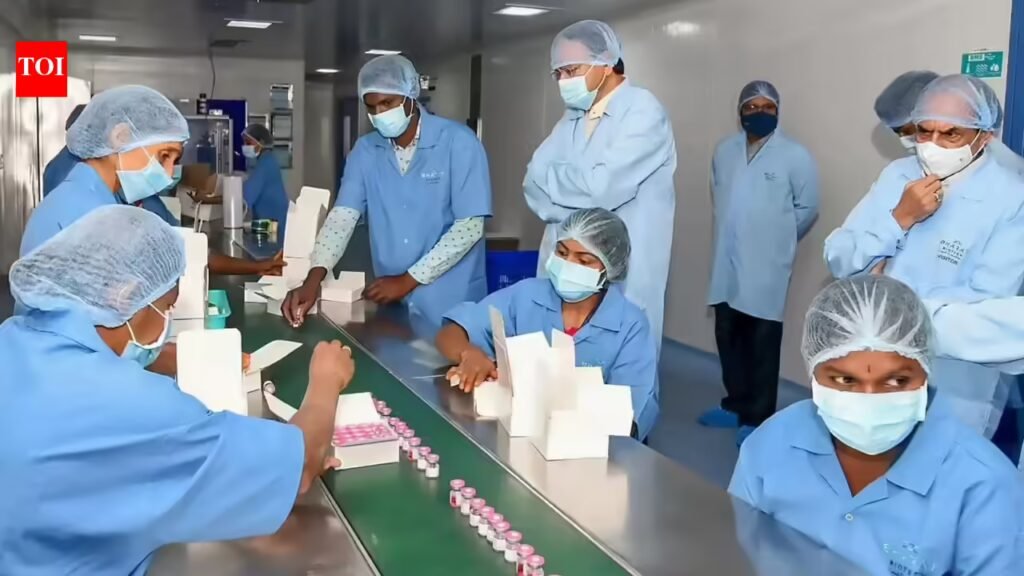
NEW DELHI: Indian firms hoping to ride the global biologics boom are finding the path far tougher than expected, as China tightens its grip further on biotech supply chains. Recent data suggests Chinese companies have bagged more than half of several recent project deals from US biotech companies, underscoring the challenge for Indian players trying to break into complex biologics.Unlike generics, where India leveraged cost efficiency and scale to capture global markets, biologics demand deep R&D capabilities, sophisticated manufacturing infrastructure and specialised talent, raising both entry barriers and financial risks, analysts say. . Over the last few years, China has rapidly emerged as a major force in biotech, with biologics accounting for about 42% of its new drug approvals in 2023, up from 9% in 2015, cementing its position in global supply chains for complex niche biologics. Against this backdrop, Indian companies will need to recalibrate strategy if they are to carve out a meaningful share in advanced therapies.K V Subramaniam, president, Reliance Life Sciences, said: “In last seven years, China has come from behind and forged way ahead of India in biopharmaceuticals, driven by mission-driven govt policy, fast-track regulatory approvals and clearance of a huge drug approval backlog.”“Recent project flows suggest Chinese companies have been able to secure more than half of their new orders from US-biotech companies, indicating Chinese companies’ operational scale, cost competitiveness and established capabilities remain unmatched,’’ said Tausif Shaikh, India analyst pharma and healthcare at BNP Paribas.Market research firm, IQVIA estimates 118 biologics are losing patent protection in the US (2025–2034), representing a ~$232B global biosimilar market. India’s biosimilar exports, currently around $0.8 billion, are projected to grow five-fold to $4.2 billion by 2030, and then potentially to $30–35 billion by 2047.Shreehas Tambe, CEO & MD, Biocon says, said, “India’s biosimilars industry is at a pivotal stage — the early years were defined by cost efficiency and established India as a reliable producer of high-quality generic medicines at scale. The next phase will evolve from cost leadership to capability leadership.’’“Though India has the broad capability, it has to address gaps such as cell line engineering depth, legal/IP plus market access firepower in the US, manufacturing at commercial scale of newer modalities from hybrid science like cell and gene therapies,’’ said Suresh Subramanian, national lifesciences leader, EY-Parthenon India.
War weighs on IPO-led investor exits

MUMBAI: A prolonged West Asia war is slowing down the pace of IPOs, delaying exits for investors as companies rethink timelines to launch public issues amid a volatile market. In 2025, IPOs drove nearly 40% of public market exits for venture capital (VC) and private equity (PE) growth investors (covers select PE investments), helped by a higher number of listings worth more than $100 million, a joint report by Bain & Company and The Indian Venture and Alternate Capital Association (IVCA) said. In all, public markets led about 67% of total exits worth $7 billion last year while non-IPO public market exits declined by about 22% in value as investors prioritised liquidity events with better price discovery. “There will be a slowdown in the pace of exits. Hold periods will start to get a bit longer as there will be a mismatch (in terms of market pricing and valuations) between what buyers and sellers are expecting,” Prabhav Kashyap, partner at Bain & Company told TOI.Walmart’s PhonePe that was all set for a $1.3 billion IPO sometime in April has postponed its listing as war-jittered investors, it is understood, seemed reluctant to ascribe it a valuation of $15 billion the firm had been targeting.Earlier in the week, XED Executive Development, India’s first gift city IPO withdrew the issue due to weak markets. “Timing of exit through IPOs will be revisited,” Kashyap said. With markets taking a beating since the war, India’s IPO market has taken a hit after a stellar run last year. Sensex and Nifty ended FY26, down 5.4% and 3.6% respectively.After a lacklustre 2025 that saw overall VC-PE funding drop by 18% year-on-year, the war has cast a cloud over deal making this year too as investors turn cautious with capital deployment despite sitting on a substantial pool of funds.Fundraising by investors touched nearly $5.4 billion in 2025, roughly double of that of 2024 levels, mainly driven by a surge in funds worth over $100 million and a 35% increase in average fund size.“There is always some slowdown that happens with respect to deal making during any volatility,” Kashyap said, adding that there could be some amount of distress deals and down rounds. “Investors are currently prioritising risk assessment for portfolio companies (impacted by war) and figuring out action plans,” Kashyap said.
RBI extends US tariff relief as Iran strife disrupts trade
MUMBAI: In a move that will buy more time for exporters, the Reserve Bank of India extended a pandemic-style leniency on trade finance, allowing pre- and post-shipment export credit to run for up to 450 days for all disbursements made until June 30, 2026. The measure, effective immediately, is meant to cushion firms grappling with snarled logistics and delayed payments as conflict in West Asia disrupts global shipping arteries.The decision builds on relief measures unveiled in Nov 2025, when the RBI first stretched the credit window from 270 to 450 days for loans sanctioned up to March 31, 2026. That earlier intervention responded chiefly to a sudden spike in American tariffs, which squeezed exporters’ margins. The latest extension reflects a shift in the nature of the shock. Where tariffs threatened to dent competitiveness, war is dislocating trade itself. The confrontation involving America, Israel and Iran has forced vessels to reroute, inflated freight costs and lengthened transit times, leaving consignments stranded and payments deferred. Bankers said that the relief measures were crucial as bulk of the exporting entities are MSMEs, the main drivers of employment and investment. Breathing Room For Exporters: Credit Tenure Runs Till June 30 For exporters, the consequences are acute. Industries such as textiles, engineering goods and chemicals which are deeply reliant on West Asian corridors, face elongated working-capital cycles and uncertain cash flows. By allowing lenders to extend credit tenors, the RBI is smoothing a liquidity crunch that might otherwise choke viable firms. The circular applies across banks, non-bank financiers and other regulated institutions, which may grant the longer tenor subject to their own risk controls. It also permits lenders to square off existing packing-credit facilities, where goods are yet to be shipped, using alternative sources, including domestic sales or proceeds from substitute export orders. Such flexibility acknowledges a reality in which shipments are delayed or cancelled outright.The central bank has, however, stopped short of forbearance. Prudential norms remain in place, and lenders are expected to monitor exposures . The relief is temporary and targeted, not an opportunity to evergreen stressed loans. Alongside this, the RBI has retained an earlier concession allowing exporters 15 months, rather than nine, to realise and repatriate export proceeds. Together, these aim to keep trade flowing and balance sheets intact until geopolitics loosens its grip on supply chains. Watch India Holds Off On US Trade Deal Signing As Washington Resets Global Tariff Architecture