
‘Profound implications’: Oil at $40 or $150? BlackRock’s Larry Fink explains two scenarios amid US-Iran war

The ongoing Iran war, now nearing four weeks with no clear resolution, is already pushing oil prices above $100 per barrel, with visible impact on fuel and household costs. Against this backdrop, Larry Fink, chairman and CEO of BlackRock, has outlined two sharply divergent paths for oil markets and the global economy.Speaking to the BBC, Fink said the conflict could either ease, leading to a sharp fall in oil prices, or persist, keeping crude elevated for years. “I could paint a scenario where I could see, a year from now, oil at $40 a barrel… I could see it above $150. We have two very extreme outcomes,” he said.The impact is already being felt in the US, where the national average price of gasoline has climbed to nearly $4 per gallon, up more than $1 in March alone and 27% higher year-on-year, according to AAA.Best-case scenario: Oil collapse if conflict easesIn the more optimistic scenario, the war would end, Iran would reintegrate into global markets, and the Strait of Hormuz — a critical oil transit route — would reopen. This could release significant oil supply into global markets.Using estimates from the US Energy Information Administration, where every $1 change in oil prices translates to about 2.4 cents per gallon in fuel prices, a fall to $40 per barrel could push gasoline prices down to around $2.40 per gallon — levels last seen during the post-pandemic phase.The closure of the Strait of Hormuz, which carries about 20% of global oil supply, has already caused what the International Energy Agency describes as the largest supply disruption in oil market history. Reopening it remains central to easing global price pressures.Fink suggested that if Iran becomes part of the global economic system again, combined with increased supply from countries like Venezuela, oil prices could fall even below pre-war levels. Worst-case scenario: Prolonged high oil, inflation shock In contrast, if the conflict continues and geopolitical tensions remain elevated, oil prices could stay above $100 and even move toward $150 per barrel.Fink warned that such a scenario would have wide-ranging consequences. “I would argue that we could have years… above $100, closer to $150 oil which has profound implications in the economy,” he said.At those levels, US gasoline prices could exceed $5 per gallon, significantly raising transportation and logistics costs. Higher diesel and energy prices would also feed into food inflation, given their role in supply chains and fertiliser production.He added that the divergence between the two scenarios is stark: “The $40 oil implication is one of abundance and growth and the other one is an outcome of probably a stark and steep recession”. Market implications and investor outlook The uncertainty around oil prices is also influencing financial markets. Rising yields and inflation expectations have already shifted expectations around interest rate cuts.In his annual letter to investors, Fink noted that market volatility often coincides with strong long-term returns. “Over time, staying invested has mattered far more than getting the timing right… Miss just the ten best days, and you would have earned less than half,” he wrote.As the conflict continues, the trajectory of oil prices– and by extension inflation, growth and financial markets – will hinge on whether geopolitical tensions ease or deepen further.(With inputs from agencies)
Air Canada CEO Michael Rousseau to step down by Q3 over English-only message controversy

Air Canada on Monday said CEO Michael Rousseau will retire by the end of the third quarter, with the announcement coming against the backdrop of criticism over his handling of communications after a fatal accident, Reuters reported.The controversy stemmed from a condolence message issued following a collision involving an Air Canada Express aircraft and a fire truck at New York’s LaGuardia Airport, which killed both pilots and left dozens injured. The message, delivered largely in English, drew sharp reactions in bilingual Canada.Prime Minister Mark Carney said last week the episode reflected poor judgment by the airline’s top executive.The development has fast-tracked an already planned leadership transition, with the carrier confirming that the process to identify a successor is underway.Rousseau, 68, has been with Air Canada for nearly two decades and oversaw its recovery from the disruptions caused by the COVID-19 pandemic. However, his tenure also saw criticism over operational issues, including a four-day strike by flight attendants last year that disrupted hundreds of flights.The latest backlash also revived earlier concerns around language use. In 2021, Rousseau had apologised after delivering a speech primarily in English in Montreal, despite the city being in French-speaking Quebec.Language remains a politically sensitive issue in Quebec, where concerns over English dominance have historically influenced regional politics, including support for the separatist Parti Quebecois.Air Canada, though a listed company, operates under the Official Languages Act, which mandates that it provide services in both English and French.The Quebec provincial legislature last week passed a non-binding motion urging Rousseau to step down, citing what lawmakers described as a lack of respect for the French language. Elections in the province are due later this year.The episode also comes at a time when airline chiefs globally are expected to directly address the public following fatal incidents. In January 2025, American Airlines CEO Robert Isom issued a video statement expressing “deep sorrow” after a midair collision involving one of its regional jets and a US Army Black Hawk helicopter near Ronald Reagan Washington National Airport killed 67 people.
Why rupee breached 95 versus dollar mark despite RBI’s move to stem fall

The Indian rupee has been battered since the start of the US-Iran war, and continues to depreciate versus the US dollar driven by a multitude of factors. (AI image) The Indian rupee on Monday breached the 95 mark for the first time versus the US dollar. In fact, in this financial year, the rupee has depreciated by a record 9.88 per cent, the steepest fall seen in 14 years. The currency closed at 94.78 against the dollar. Incidentally, today’s intraday low of 95 came after a smart recovery in morning trade, when the rupee appreciated 128 paise versus the dollar. The recovery came despite global crude oil prices rising. Usually, higher global crude oil prices increase import bill, which in turn raises demand for US dollars, hence putting downward pressure on the rupee. At the same time, higher oil prices fuel inflation, which in turn widens the current account deficit, further weakening the currency.The Indian rupee has been battered since the start of the US-Iran war, and continues to depreciate versus the US dollar driven by a multitude of factors. Market participants noted that the domestic currency opened on a stronger footing as banks, which typically hold long positions, are now expected to pare these exposures in line with the central bank’s directive. RBI Moves To Protect Rupee The Reserve Bank of India moved to limit the overnight net open position that banks can maintain to $100 million.Under a circular issued on March 27, 2026, the Reserve Bank capped the Net Open Position (NOP-INR) for banks at $100 million, with compliance mandated by April 10.“As banks begin adjusting their positions, they are likely to sell dollars in the market, which can temporarily support the rupee. This creates a phase of relief, driven by position unwinding, not by a major shift in fundamentals, but still meaningful in the near term,” CR Forex Advisors MD Amit Pabari said.The Reserve Bank of India’s decision to stabilise the rupee by directing banks to reduce their foreign exchange exposures beyond $100 million was expected to check the currency’s slide towards the 95 level. The measure is also likely to result in losses for banks holding large open positions. Over the weekend, lenders approached the central bank seeking either relaxation of the rule or an extension of the timeline. However, with the RBI maintaining its stance, banks are now required to begin trimming their positions from Monday in order to comply with the April 10 deadline.Previously, banks were allowed to maintain net open positions of up to 25% of their net worth. In reality, several large institutions had built substantial long dollar exposures, in some cases exceeding $1 billion, anticipating further depreciation of the rupee. The revised cap now necessitates a swift reduction in these positions. By April 10, 2026, banks must scale down their exposures to $100 million, effectively forcing them to offload dollars and purchase rupees to rebalance their books.Uday Kotak described the step as “an unconventional policy action” prompted by a West Asia crisis that has moved into “uncharted territory”. “Reminds me of Bimal Jalan play book as RBI Governor in 1998 when the rupee was depreciating sharply post Asian crisis. If things get worse geo politically, is there an opportunity for a new version of FCNR (B) scheme?” he said.Some bankers, however, remain doubtful about the effectiveness of special measures aimed at attracting dollar inflows. Why rupee declined despite RBI move The central bank’s action initially triggered a sharp appreciation in the rupee during early trade on Monday. However, much of these gains were later erased as strong demand for the US dollar from oil companies weighed on the currency, according to market participants.Forex traders noted significant volatility in the USD/INR pair, which fluctuated within a wide range of 165 paise during intra-day trading, as the West Asia conflict entered its 31st day and continued to unsettle energy markets.“Rupee rose, but again fell due to some big corporate buying, squaring up of position in NDF, Nationalised banks buying and oil companies buying,” said Anil Kumar Bhansali, head of treasury and executive director at Finrex Treasury Advisors LLP.Analysts indicated that the rupee is likely to move within a broad range of 92 to 97 against the US dollar in the near term.“Outlook depends on three variables: oil, flows, and global rates. The new normal is higher volatility plus gradual depreciation, not stability around a fixed band. In FY27, for the USD/INR pair, 92-97 remains the broader range play,” said Sunal Sodhani, head of treasury in India at South Korean lender Shinhan Bank.According to forex market participants, the domestic unit remains under pressure due to persistent outflows by foreign investors and the strengthening of the US dollar, driven by ongoing uncertainty linked to the West Asia conflict. Traders noted that sustained demand for the dollar, coupled with inflation risks stemming from elevated energy prices, continues to weigh heavily on the rupee. They added that the overall trend is likely to stay weak unless there is a meaningful correction in crude oil prices.Earlier initiatives to mobilise foreign currency relied on offering assured returns to non-resident Indians, who would borrow at lower rates overseas and invest in India. Such approaches may have limited appeal now, given the broader availability of structured investment options. Bankers noted that raising dollars through rupee-dollar swap mechanisms may prove more cost-effective for the RBI.
No design, no subsidy: Government draws red line for electronics firms

NEW DELHI: The government has drawn a hard line under its electronics push, pairing fresh approvals worth thousands of crores with a blunt warning: subsidies will not flow to companies that treat India as a factory floor without building design muscle. Signalling a shift from scale to strategic value, Union IT minister Ashwini Vaishnaw on Monday said firms under the Electronics Components Manufacturing Scheme (ECMS) must embed design, quality and engineering in India or risk losing support. The warning comes alongside a fresh set of approvals that underline the scheme’s scale. The ministry has cleared 29 new projects involving Rs 7,104 crore investment, taking total approvals to Rs 61,671 crore—surpassing the initial Rs 59,350 crore target.Vaishnaw flagged gaps in industry response, saying the pace of strengthening design and quality capabilities has fallen short of expectations. “Real value gets captured only if design is done in India,” he said, making it clear that incentives will be tied to deeper technological capabilities.He issued a direct warning that approvals alone do not guarantee funding. “We are willing to stop any further disbursements or approvals if the industry doesn’t come up with the commensurate efforts,” he said, adding, “on applications that have been approved, we won’t even disburse if the asks aren’t met.”The scheme now spans 75 applications across 23 product categories and 12 states, with projected production of over Rs 4.5 lakh crore and employment potential exceeding 65,000 jobs, according to official data. The latest approvals include India’s first rare earth permanent magnet manufacturing unit, backed by Rs 700 crore investment and based on indigenous intellectual property, alongside projects in high-end PCBs, capacitors and connectors—segments aimed at building core electronics capabilities.Even as approvals gather pace, the government has tightened compliance. Companies have been given 15 days to submit plans addressing four key requirements—product design, Six Sigma quality standards, talent development and local sourcing.“Manufacturing is easier; translating design into a reliable product is far more complex,” Vaishnaw said, stressing that Six Sigma processes are “essential” for ensuring global-quality output.In a pointed message to industry, the minister said firms failing to align with the government’s integrated approach risk being “weeded out”, adding he may skip the next review meeting if progress remains inadequate. The ministry also indicated stricter monitoring of milestones, linking future incentives to measurable outcomes in design capability, localisation and quality benchmarks across the electronics value chain.
Lok Sabha passes Bill to amend Insolvency and Bankruptcy Code; here’s what it means
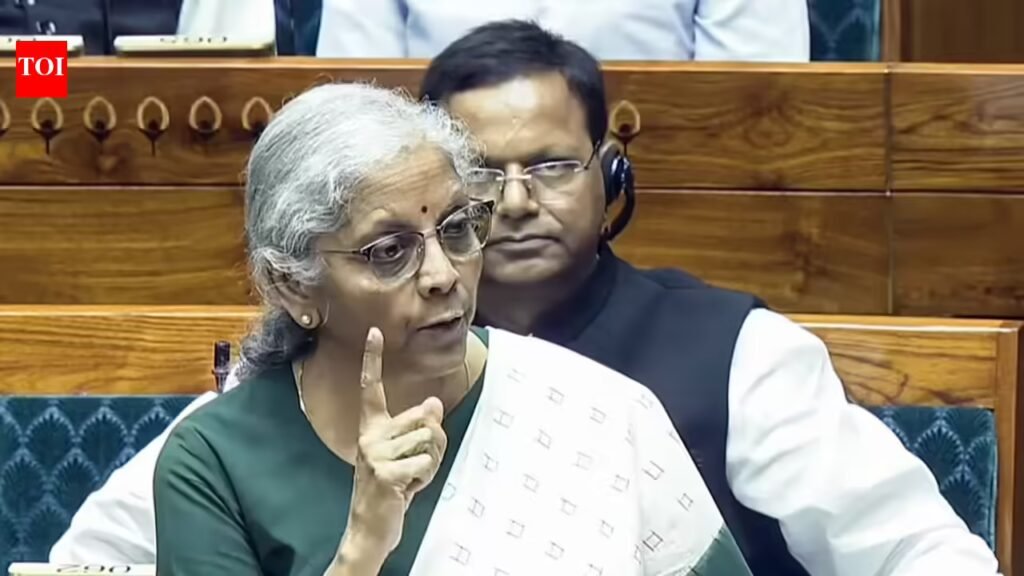
The Lok Sabha on Monday cleared the Insolvency and Bankruptcy Code (Amendment) Bill, 2025, as finance and corporate affairs minister Nirmala Sitharaman highlighted the law’s role in reshaping the country’s banking landscape. Speaking in the House, Sitharaman said that the Bill, introduced a decade back in 2016, has been instrumental in improving the health of the banking sector, particularly through the recovery of non-performing assets. She further stressed that more than half of such stressed assets have been resolved under the framework. The FM stated that the resolution process has also had a wider impact on companies, noting that firms coming out of insolvency have shown improved performance along with stronger corporate governance practices.The amendment Bill, which contains 12 proposed changes, was taken up after being examined by a Select Committee that submitted its report in December 2025. The legislation had originally been introduced in the Lok Sabha on August 12, 2025.Among the changes, the Bill seeks to streamline the admission of insolvency cases by making it mandatory for applications to be admitted within 14 days once a default is established. According to Sitharaman, prolonged litigation has been a key factor behind delays in the resolution process, and the amendments aim to address this by introducing penalties to curb misuse of the system.With this Bill, the IBC has now undergone seven amendments since it first came into force.
Less shower time, no elevators & more: How the Middle East war is seeping into daily life worldwide

The Middle East conflict has now crossed the one-month mark, with its effects causing ripples far beyond the region and into everyday life across the globe. What began as a confrontation between Iran and Israel is increasingly disrupting global supply chains, pushing up costs, and forcing governments and individuals to adjust.The war entered a new phase on Saturday as Yemen’s Houthi rebels launched their first strike on Israel since the conflict began, opening a fresh front in a crisis that has already spread across multiple countries and unsettled trade and energy markets. As the geopolitical situation intensifies, its impact is increasingly being felt across continents: from farmers scaling back production to governments enforcing energy-saving measures, highlighting how drastically the war is reshaping daily lives, not just in the Middle East but across the globe. Watch Strait of Hormuz Crisis Explained | Will Iran Challenge the West More Than Red Sea AustraliaAs fertiliser prices climb, farmers in Australia are forced to plant less wheat. Farmers further called on the federal government for tax relief and support in fertiliser purchases to cope with rising fuel costs, as the national cabinet prepares to consider further assistance for businesses. While details of the meeting remain undisclosed, state premiers have urged stronger national coordination. The government is not expected to support petrol rationing, with health minister Mark Butler favouring minimal intervention despite looming fuel supply concerns.Concerns have intensified as a third of the world’s fertiliser is shipped through the Strait of Hormuz, which is currently under Iran’s chokehold. In response, the United States has lifted sanctions on Venezuela to allow fertiliser exports. South KoreaSouth Korean citizens are forced to cut down bathing time, appliance usage as the country has rolled out a nationwide campaign to curb energy use, asking people to take shorter showers, opt for bicycles for short journeys, and avoid charging phones and electric vehicles at night.The push comes as concerns grow over oil and gas supply disruptions linked to the US-Israeli war on Iran. The country relies entirely on imports for its energy needs, with nearly 70% of its crude oil supply previously moving through the Strait of Hormuz, a route where tanker traffic has nearly come to a halt since the conflict began.This has intensified pressure on the economy, as surging oil prices and a weakening won against the dollar together weigh on South Korea’s energy-dependent manufacturing industries.ThailandIn Thailand, energy-saving measures are being reinforced both symbolically and practically. The prime minister has begun wearing short-sleeved shirts to work, encouraging the public to follow suit, while government offices have been told to cut back on air conditioning. Civil servants have also been instructed to use stairs instead of elevators and choose lighter attire over formal suits to help reduce overall energy use.Philippines Efforts to reduce energy consumption are being stepped up elsewhere as well. In the Philippines, civil servants have been asked to avoid using elevators, even as President Ferdinand Marcos declared a state of “national energy emergency”, warning that the Middle East war poses “an imminent danger of a critically low energy supply”.The emergency, set to last for an initial year, was announced hours after the country’s energy secretary said the Philippines would increase output from coal-fired power plants to keep electricity costs in check as the conflict disrupts gas shipments.EgyptEgypt has also moved to curb energy use, cutting shopping days to five a week as part of wider restrictions introduced amid rising fuel costs. Retail outlets, restaurants and cafes are now required to shut by 21:00 each night, alongside measures such as reduced street lighting and limits on remote working.The government has described these as “exceptional measures” to ease mounting pressure on energy supplies. Egyptian PM Mostafa Madbouly said that the country’s petrol expenditure has more than doubled in recent months. While tourism-related businesses have been exempted, the broader economy continues to feel the strain, particularly due to its reliance on imported fuel.BangladeshIn Bangladesh, cancelled flights have disrupted textile exports, causing a build-up of garments at airports. The country exports nearly $50 billion annually, with ready-made garments making up more than 80% of total shipments.The risks are especially high for Dhaka, as nearly 90% of its fuel imports come from the Middle East. At the same time, its biggest markets, the European Union and the United States, rely heavily on shipping routes that are now facing disruptions.UAE and QatarFears are mounting over delays in critical medical supplies, with cancer drugs at risk of missing delivery timelines as cargo movement slows in key hubs such as Dubai and Doha.At the same time, tightening fuel supplies are driving up the cost of everyday goods. Track suits made from petrochemicals could become more expensive, while party balloons may be harder to source as disruptions hit Qatar, which produces a third of the world’s helium as a by-product of natural gas.Bahrain and Saudi ArabiaThe conflict has also begun to disrupt global events, with Formula 1 races in Bahrain and Saudi Arabia scrapped due to missile threats targeting Gulf nations.United StatesIn the United States, rising oil prices are stoking fears of higher inflation, driving up mortgage rates and making home buying more expensive.Consumers are likely to feel the strain in multiple ways, both through domestic commerce and the interconnected nature of global trade. With supply chains stretching across regions, where raw materials are sourced in one place, manufactured in another, and then shipped to consumers, disruptions are expected to filter through to everyday goods and services.BrazilSugar prices are seeing mixed trends as Brazil’s mills adjust production. While high energy prices are pushing some towards biofuel, supply disruptions linked to the Strait of Hormuz are offering some support to sugar prices.However, prices fell on Friday due to higher production in Brazil, where mills are using more cane for sugar instead of ethanol. Data from Unica showed that 2025–26 Centre-South sugar output (October to mid-March) rose 0.7% year-on-year to 40.25 MMT, with 50.61% of cane used for sugar, up from 48.08% last year.Sri Lanka and LaosSome
LPG crisis eases: Operations back to normal in many factories as commercial LPG supplies improve; workers return
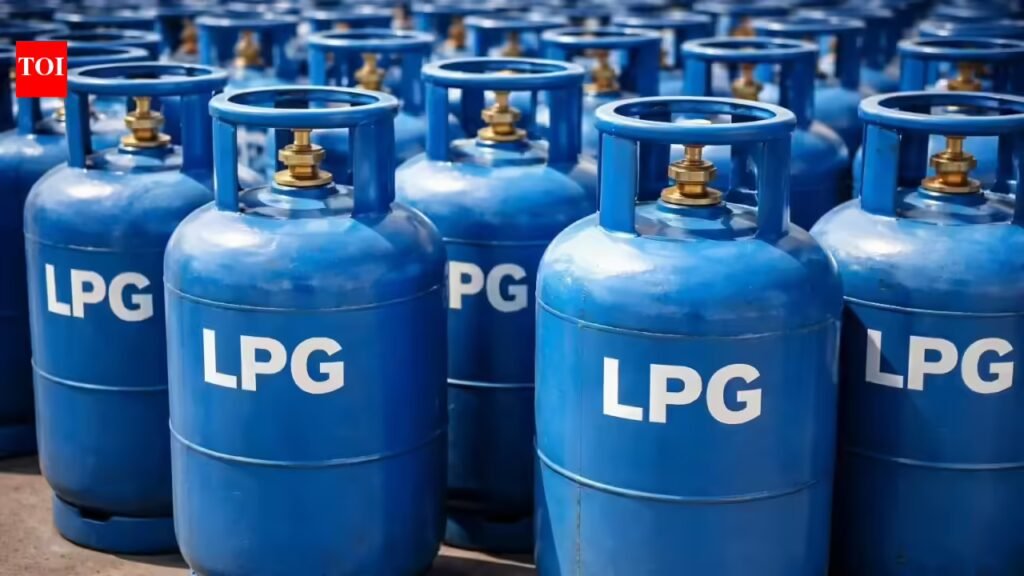
The Centre has designated sectors such as steel, automobiles, textiles, dyes, chemicals and plastics as priorities. (AI image) LPG crisis for factories across the country seems to be easing as the government steps up availability of commercial liquefied petroleum gas. Production disruptions are gradually subsiding as supplies of commercial LPG improve and migrant workers return to factories, supported by companies providing meals or alternative cooking solutions.This improvement follows the government’s move on Friday to raise the allocation of commercial LPG by an additional 20 percentage points, taking it to 70 per cent of pre-disruption levels that had been affected by the Gulf conflict and Iran’s near blockade of the Strait of Hormuz.The Centre has designated sectors such as steel, automobiles, textiles, dyes, chemicals and plastics as priorities, given their labour-intensive operations and strong interlinkages with other industries, according to an ET report.Companies operating in these sectors have started to see operations gradually stabilise.Liquefied petroleum gas is extensively used across industries such as automobiles and electronics, particularly in processes like brazing and paint shop operations, as well as in segments like food processing. Availability of Commercial LPG supplies Industry players indicated that LPG availability has become more stable.“Earlier we had visibility of one-two days; now it’s about a week,” said Kamal Nandi, head of the appliances business at Godrej Enterprises. “There are no issues with labour or raw materials, and production is running at full throttle,” he was quoted as saying.An executive from the automobile sector noted that supply constraints at smaller vendors are easing, while larger manufacturers have managed to limit disruptions by adopting alternative fuel options.“The higher allocation for non-domestic LPG and inclusion of automobiles as a priority sector is a big help,” he said.Mayank Shah, vice president at Parle Products, said improved LPG availability is enabling previously impacted plants to move back towards optimal production levels. He added that companies have urged the government to include packaged foods among the priority sectors.Ajay DD Singhania, chief executive of Epack Durable, noted that supplies have recovered to nearly 60 per cent of normal levels and are likely to rise to around 80 per cent this week. “The new normal is that we have to follow up daily to secure LPG supplies, but availability has improved,” Singhania said. “Workforce retention is no longer a challenge with us offering meals or cooking support. However, production losses over the past three-four weeks are not recoverable.”Attendance levels have also improved as several firms introduced canteen meals, reducing reliance on LPG for cooking. Earlier, supply disruptions had led to absenteeism among migrant workers and a temporary outflow, as higher black market prices and the shutdown of small eateries and mess facilities made food access difficult.A senior executive in the auto components sector said companies are now providing meals across shifts or offering incentives of up to Rs 5,000 to offset higher LPG costs and retain workers. “Attendance has returned to normal,” he said.Avneet Singh Marwah, chief executive of Super Plastronics, said the migrant workforce has returned as supply pressures have eased. The company produces televisions under the Kodak, Thomson and Blaupunkt brands.
Income tax overhaul: Key changes you should watch for from April 1, 2026

One of the most notable changes is the introduction of a unified ‘Tax Year’. (AI image) By Sunil BadalaAs we approach FY 2026-27, the country stands at the cusp of one of the most significant overhauls of its income-tax framework in decades. With the introduction of the new Income-tax Act, 2025 and the Income-tax Rules, 2026, the Government aims to make the system even further simplified, streamlined, transparent, and taxpayer-friendly.For salaried individuals, this transition marks more than just a procedural change. It signals quite a shift in how income is reported, assessed, and taxed. The reforms seek to simplify compliance, reduce ambiguity, and align India’s tax administration with global best practices.Some key changes that salaried individuals should look out for are mentioned below:A unified ‘Tax Year’ conceptOne of the most notable changes is the introduction of a unified ‘Tax Year’, replacing the long-standing distinction between Previous Year (PY) and Assessment Year (AY). This move is expected to eliminate confusion, particularly among individual taxpayers, by aligning income earnings, assessment periods and other aspects (like due dates, time limits etc.) with a single reference point.Expanded house rent allowance (HRA) benefits and disclosure normsThe HRA benefits have also been expanded. Salaried taxpayers residing in rented premises in cities such as Bengaluru, Hyderabad, Pune, and Ahmedabad may now be eligible for higher exemption limits (reference amount being increased from 40 per cent of basic salary to 50 per cent of basic salary), bringing them at par with traditionally classified metro cities like Mumbai, Delhi, Chennai, and Kolkata.Additionally, a stricter disclosure requirement has been introduced. Taxpayers must now declare their relationship with the landlord. This measure is aimed at curbing potential misuse and improving transparency in claims.Enhanced allowances for education and meal expensesIn a move likely to benefit middle-class households, the tax exemption limits for children’s education and hostel allowances have been significantly increased. Education allowance limits have been increased from Rs 100 per month to Rs 3,000 per month per child, while hostel allowance limits have been increased from Rs 300 to Rs 9,000 per month per child. While this may still be only a fraction of the cost of education in certain cities and towns it is a welcome move to enhance these age-old limits.Similarly, the tax-free limit for employer provided meals and non-alcoholic beverages as well as food coupons has been enhanced from Rs 50 per meal to Rs 200 per meal. This increase reflects inflationary trends and aims to improve employees’ take-home pay.Revised perquisite valuation for employer provided carsThe valuation of perquisites for employer provided cars has also been substantially revised and a valuation mechanism has been introduced for electric vehicles as well. Monthly taxable values range from Rs 2,000 to Rs 7,000 per month, with an additional Rs 3,000 per month where a chauffeur is provided. These updated slabs replace the earlier valuations of Rs 600 to Rs 2,400 (plus Rs 900 for chauffeur), potentially increasing the tax liability for employees availing such benefits.Broader changes to perquisites and exemptionsSeveral employee related exemptions and perquisite thresholds have been revised upward. These include higher transport allowances for differently abled employees, increased limits for tax-free employer provided gifts and vouchers, updated valuation rules for education benefits, and expanded exemptions for employer provided loans.Procedural overhaul and new compliance requirementsThe reforms are not just limited to tax computation, they also introduce procedural changes. Key tax forms have been replaced or consolidated, for instance, Form 130 has replaced Form 16 (popularly known as salary certificate), while Form 124 has taken the place of Form 12BB (employee declaration). Additionally, various TDS forms and PAN application processes have been streamlined.A new declaration requirement under Form 157 has been introduced for individuals leaving India, enhancing reporting obligations in cross-border scenarios where either no PAN or income below taxable limit. Furthermore, taxpayers claiming foreign tax credit exceeding Rs 100,000 would now need certification from a Chartered Accountant in Form 44 which is a replacement of Form 67 under the current law required when a taxpayer is claiming foreign tax credit.Additionally, certain Budget 2026 recommendations (which is yet to receive the Presidential assent) are also noteworthy, which are expected to impact the salaried taxpayers effective 1 April 2026:Extended timelines for filing ReturnsTo provide greater flexibility, revised tax returns filing deadline is proposed to be extended to March 31 of the next tax year, instead of the earlier December 31 deadline, subject to a nominal fee.Similarly, the due date for filing original returns for taxpayers with non-audit business income is proposed to be extended from July 31 to August 31, offering additional time for compliance.Rationalisation of TCS and relief measuresIt is also proposed that for overseas tour packages and education/ medical purposes remittances, TCS rates may be reduced to 2% from the current 5% or 20%. This change is expected to provide cash flow relief to families incurring such expenses.Foreign Assets Disclosure SchemeAnother noteworthy initiative is the proposed Foreign Assets Disclosure Scheme for small taxpayers. This would offer a six-month window for voluntary disclosure of previously unreported foreign assets, allowing taxpayers to regularise their filings upon payment of applicable taxes and levies.The proposed reforms signal a decisive shift toward simplification, transparency, and improved compliance. While the transition may require adjustment, these changes are aimed to reduce complexity and enhance efficiency, ultimately aimed at creating a more streamlined and taxpayer friendly system aligned with India’s evolving economic landscape.(Sunil Badala is Partner and National Head of Tax, KPMG in India)
Petrol, diesel price today: Global crude oil prices rise; what’s the situation in India?
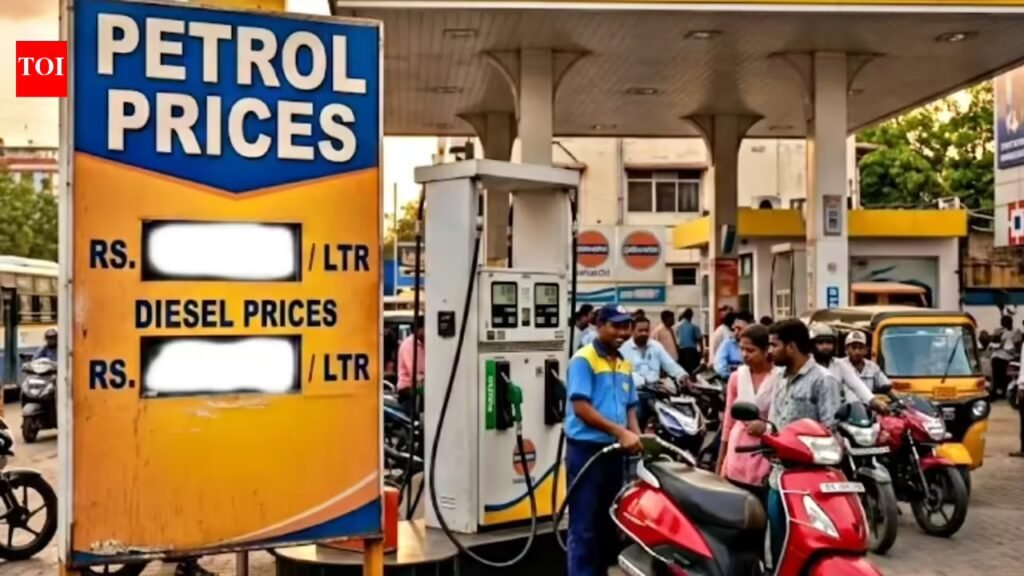
In the national capital, petrol continued to be priced at Rs 94.77 per litre, while diesel held steady at Rs 87.67 per litre. (AI image) Petrol, diesel prices today: Amid US-Iran war and continued transit issues via the Strait of Hormuz, countries around the world have been forced to either raise petrol, diesel, gas prices or announce rationing measures. In India, so far petrol and diesel prices have not been hiked by state-run refiners despite global crude oil prices climbing to around $120 per barrel.Last week, the government announced a big excise duty cut on petrol and diesel prices, in effect cushioning consumers from a hike, while also reducing the blow for oil marketing companies.To strengthen domestic supply, the government has reduced excise duty on petrol and diesel by Rs 10 per litre and introduced export duties of Rs 21.50 per litre on diesel and Rs 29.50 per litre on aviation turbine fuel. Petrol, diesel prices today Despite a rise in global oil prices on Monday amid growing concerns over escalating tensions in the Middle East, retail prices of petrol and diesel in major Indian cities remained unchanged on March 30, 2026. In the national capital, petrol continued to be priced at Rs 94.77 per litre, while diesel held steady at Rs 87.67 per litre. In Mumbai, petrol was unchanged at Rs 103.54 per litre and diesel at Rs 90.03 per litre.With the excise duty cut in place, retail prices of petrol and diesel will remain unchanged. The reduction is aimed at easing the financial burden on public sector oil marketing companies such as Indian Oil Corporation, Bharat Petroleum Corporation and Hindustan Petroleum Corporation. These companies have been selling fuel domestically at prices significantly below their cost of supply. At prevailing global crude levels, their losses are estimated at about Rs 26 per litre on petrol and Rs 81.90 per litre on diesel, translating into a combined daily under-recovery of nearly Rs 2,400 crore. The excise duty cut of Rs 10 per litre helps absorb part of these losses, allowing continued supply without altering pump prices.In comparison with global trends, the situation stands out. Fuel prices have climbed between 30 and 50 per cent across South and South-East Asia, risen by around 30 per cent in North America, and increased by about 20 per cent in Europe since the current crisis began. Meanwhile, the government has intensified efforts to ensure steady availability of fuel and gas following the disruption at the Strait of Hormuz, while appealing to the public not to engage in panic buying after isolated surges were reported at some fuel stations.In an official update on the evolving situation linked to the West Asia conflict, the oil ministry said on Sunday that domestic refineries are operating at elevated capacity levels with sufficient crude stocks, and supplies of petrol and diesel remain adequate across the country. Fuel outlets continue to function normally, although misinformation led to brief spikes in demand in certain regions.“There were certain rumours, which led to panic buying at some retail outlets in a few states, resulting in unusually high sales and heavy crowding at retail outlets. However, it is informed that there are adequate stocks of petrol and diesel available at all petrol pumps in the country,” the ministry said. LPG, LNG availability In the natural gas segment, priority allocation has been given to essential sectors, with full supply directed towards piped natural gas and CNG consumers, while industrial and commercial users are receiving around 80 per cent of their usual consumption. Fertiliser units are being supplied at 70 to 75 per cent levels, alongside efforts to procure additional LNG cargoes.The ministry also noted that expansion of city gas networks is being fast-tracked by simplifying approvals and encouraging a transition from LPG to piped natural gas. Over 2,90,000 new PNG connections were added in March, with companies such as Indraprastha Gas, Mahanagar Gas, GAIL Gas and BPCL offering incentives to accelerate adoption.While LPG supply has been affected by geopolitical developments, distribution continues without reported shortages. Daily refill deliveries have exceeded 55 lakh cylinders, and monitoring measures have been tightened to prevent diversion. Supply of commercial LPG has recovered to about 70 per cent of pre-crisis levels, with priority given to hospitality, food services and key industrial users.Additionally, kerosene allocations to states have been increased, and enforcement action against hoarding and black marketing has been stepped up, with nearly 2,900 inspections carried out and around 1,000 cylinders seized recently.State governments have been instructed to enhance oversight, conduct daily reviews, counter misinformation and expedite approvals for gas infrastructure.“The government reiterates its advice to the public not to believe rumours,” the statement said.“The government is making all efforts to ensure the availability of petrol, diesel and LPG. Avoid panic purchases of petrol, diesel and booking of LPG.”
Stocks to buy: What’s the outlook for Nifty for March 30-April 3 week? Check list of top stock recommendations

Top stocks to buy (AI image) Stock market recommendations: Aster DM Healthcare, and Karur Vysya Bank are the top stocks that have been recommended by Sudeep Shah, Head – Technical Research and Derivatives, SBI Securities for the week starting March 30, 2026. He also explains his outlook for Nifty and Bank Nifty:Nifty View:Since geopolitical tensions escalated, market behaviour has settled into a predictable yet deceptive rhythm. Periodic relief rallies lasting a couple of sessions have repeatedly surfaced, only to be abruptly negated by sharp downside gaps. These short recoveries have encouraged traders to prematurely assume a turnaround, drawing in participation driven by fear of missing out. However, each attempt at recovery has lacked durability, with sellers quickly regaining control and pushing markets lower once again. As a result, every bounce increasingly resembles a bull trap rather than a genuine opportunity.This pattern—where optimism is swiftly followed by renewed selling—has amplified market volatility and caused substantial capital erosion, especially for short-term traders and leveraged positions. The market’s repeated inability to build on rebounds underscores how fragile sentiment remains. In an environment devoid of strong conviction, even marginal news flows or triggers are proving sufficient to spark outsized reactions, reinforcing the importance of prudence, position sizing, and disciplined risk management.From a broader perspective, Nifty has fallen more than 9% so far this month, registering its most severe monthly decline since the pandemic era selloff. Adding to the pressure, interruptions in global gas supply have introduced fresh challenges for several sectors, particularly those with high energy dependence. Rising input costs, margin uncertainty, and deferred corporate spending are becoming more visible, collectively dimming expectations of an earnings recovery and weakening overall investor confidence. This backdrop raises an uncomfortable question around whether earnings downgrades may still have room to deepen.On the technical front, the setup remains largely unchanged from last week. The index continues to trade below all key moving averages, while momentum indicators persist in bearish territory, signalling that selling pressure is still dominant. That said, the Nifty Midcap 100 and Nifty Smallcap 100 have shown relatively better performance compared to the frontline indices. Despite this relative resilience, the broader risk environment warrants caution, and price action in the mid and smallcap segment needs close observation over the next two to three weeks to determine whether strength can be sustained or proves fleeting.In terms of key levels, the 22650–22600 band represents a critical support zone for Nifty. A decisive breakdown below 22600 could lead to an extension of the decline towards 22400, and thereafter 22200 in the near term. On the upside, recovery attempts are likely to encounter stiff resistance in the 23150–23200 zone, which remains a key hurdle for any meaningful reversal.Bank Nifty ViewBank Nifty has emerged as one of the weakest performers among the frontline indices in March, exerting notable drag on overall market sentiment. Monthtodate, the index has declined by more than 13%, and the formation of a large bearish candle on the monthly chart clearly reflects aggressive selling activity and sustained distribution at higher levels. Adding to the concern, the Bank Nifty–to–Nifty relative strength ratio continues to trend lower, forming successive lower highs and lower lows, signalling persistent underperformance versus the broader market.From a trend perspective, the deterioration is becoming more pronounced. The index is currently positioned approximately 8% below its 200day EMA and nearly 9% below its 100day EMA, confirming a decisive breakdown of medium and long term support. Momentum indicators echo this weakness: the daily RSI has slipped into a superbearish regime as per RSI rangeshift theory, while the weekly RSI remains entrenched in bearish territory and is still trending lower, pointing to downside pressure across multiple timeframes.Given this combination of weak price structure and deteriorating momentum, the nearterm outlook for Bank Nifty remains tilted to the downside. On the levels front, the 51700–51800 zone is likely to provide initial support. However, a decisive violation of 51800 could accelerate the decline towards 51000, with the risk of further extension towards 50400 in the near term.On the upside, any rebound is likely to be corrective rather than structural. The 53400–53500 zone is expected to act as a strong supply area, where selling pressure could reemerge and restrict meaningful upside traction. Stock recommendations: Aster DM HealthcareAster DM Healthcare has staged a strong rebound from its 200-day EMA, coinciding with the 613–603 support zone, highlighting strong buying interest. The stock has moved above the midline of the Bollinger Bands, indicating a shift towards a bullish bias and potential for further upside. The RSI has rebounded from 44 to 58, signaling improving momentum. Overall price structure suggests strength, and as long as it sustains above support levels, the ongoing pullback is likely to extend further. Hence, we recommend to accumulate the stock in the zone of 665-670 with a stoploss of 645. On the upside, it is likely to test the level of 715 in the short term.Karur Vysya BankKarur Vysya Bank has staged a strong rebound from its prior support zone of 255–250 on the daily chart, indicating strong buying interest at lower levels. The RSI has recovered sharply from oversold levels of 29 to 58, signaling renewed bullish momentum. The DI lines on the ADX are on the verge of a crossover, suggesting that selling pressure is easing.Additionally, the recent 3-days pullback has been supported by a healthy rise in volumes, reinforcing the strength of the ongoing recovery. Hence, we recommend to accumulate the stock in the zone of 293-298 with a stoploss of 283. On the upside, it is likely to test the level of 320 in the short term.(Disclaimer: Recommendations and views on the stock market, other asset classes or personal finance management tips given by experts are their own. These opinions do not represent the views of The Times of India)