
RBI curbs net open positions of banks in forex markets
MUMBAI: For the first time in nearly 15 years, the RBI has placed curbs on the size of bets that banks can take in the currency markets, taking away powers, hitherto, vested with bank boards. The move comes at a time when the rupee is under pressure due to a combination of sales by foreign institutional investors, a rise in the oil import bill, and the overhang of tariffs and visa curbs on exports.RBI’s direction on Friday caps banks’ net open position in rupee at $100 million, effective April 10, 2026, citing “market conditions.” Hitherto, the net open position limit was fixed by the boards of banks.Bankers said that while speculation helps provide liquidity in the forex market, in volatile times, when markets are one-sided, such bets can be self-fulfilling.Post-2013, banks set their own Net Overnight Open Position Limits (NOOPL) up to 25% of Tier I/II capital, with RBI reserving discretion to impose market-driven caps. In Dec 2011, RBI had curbed net open position limits in currency trading by 75% for some banks and 50% for top banks. The move had come after the domestic currency weakened by as much as 20%. Poll What do you think is the primary reason for the RBI to impose these new betting limits? Incidentally, RBI had in Jan issued draft directions on calculating net open position and capital charge for foreign exchange risk, inviting comments from stakeholders. The central bank had proposed the new rules to come into effect from April 1, 2027. The new norms also seek to remove the separate calculation for offshore and onshore net open positions.
Steel, auto, chemicals to gain from more LPG flow
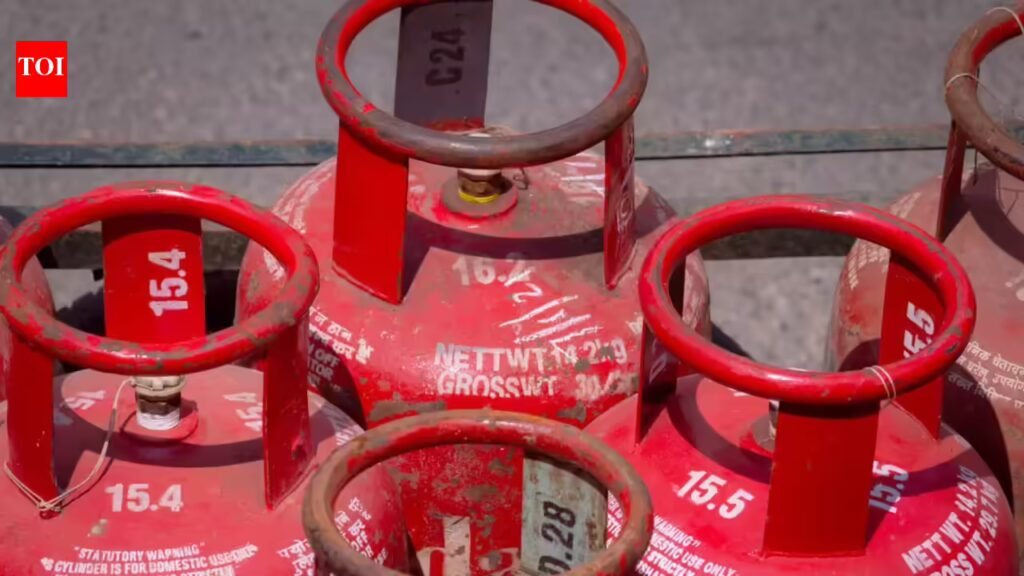
The govt on Friday moved to cushion key industries from the ongoing gas supply disruption, boosting commercial LPG allocations by 20% to reach 70% of pre-crisis levels. The extra supply will prioritise labour-intensive sectors such as steel, automobiles, textiles, dyes, chemicals, and plastics, which are critical for broader economic activity.The move is aimed at stabilising industrial operations, said Prashant Vasisht, senior vice president (corporate ratings) at ICRA, adding that increased domestic LPG production and alternative imports have “reduced the deficit, providing some comfort.” Watch Centre Pushes PNG: LPG Supply May Be Stopped Where Pipelines Are Available Pankaj Chadha, chairman of engineering exports body EEPC India, said the measure will help steel mills, particularly smaller units, maintain production. “Steel is a key segment of the engineering goods sector, and its shortage could severely impact the production chain. The additional LPG allocation should minimise supply bottlenecks and ensure steady output,” he added. To Reach 70% of Pre-Crisis Levels | Move To Prioritise Labour-Intensive Sectors The garment sector, however, sees the step as partial relief but doubts it will meet even half of its near-term demand. Yarn processing, crucial for garment production, is largely gas-powered. Supply to hundreds of units in Tiruppur has been cut for 10 days, affecting around 1 lakh employees. The shortage has disrupted the credit cycle and risks favouring well-capitalised buyers, while costs for raw materials, including polyester yarn, and transportation have increased. Alexander Neroth, director of NC John Garments, said, “Freight and raw materials costs have risen substantially, making it difficult to get yarns processed.”The gas shortage started with the West Asian conflict and the near-closure of the Strait of Hormuz to commercial shipping, prompting the government on March 12 to curtail commercial LPG allocations to 20%. Since then, allocations have gradually increased to 70% of pre-crisis levels.Access to the additional 20% is conditional. Industrial users must register with oil marketing companies such as Indian Oil Corporation, HPCL, and BPCL, and apply for piped natural gas connections with city gas distribution entities to qualify. Process industries and units relying on LPG for specialised heating needs, where natural gas cannot substitute, will get priority.Manufacturers across sectors are adapting to the shortage with various measures to maintain production. Ajay Singhania, MD of EPACK Durable, noted that LPG and piped gas shortages had cut production by nearly 50% over the past three weeks. “We have initiated interim measures like partial fuel-switching across processes, but these come with efficiency and cost trade-offs. For the consumer durables sector, where demand is seasonal, consistent energy availability is critical to ensure timely production,” he said.Auto component makers, particularly forging and casting units, continued production with some shifting to in-house solar powered electrical heating. A Chennai-based exporter said the transition to renewable energy helped in navigating the situation with relative ease, even as inventories have fallen from 15–20 days to 2–3 days. Smaller firms, he added, are feeling the strain due to heavier dependence on LPG.(With contributions from Reeba Zachariah, G Balachandar, Vaitheeswaran B and Asmita Dey)
Rupee breaches 94, worst fiscal year fall in over a decade

MUMBAI: The rupee breached the 94 level for the first time to close at 94.81 per dollar after hitting a record low of 94.84, declining about 4% since late Feb and 11% in the current fiscal year, marking its worst financial year performance in over a decade.Many analysts are forecasting that oil prices will remain above $100 per barrel for several weeks, pushing up the import bill and inflation. Dealers said that pressure on the rupee has been driven more by heavy foreign investor selloffs than by the West Asia conflict, with outflows crossing $13 billion this month, an all-time high. “More than the West Asia war the pressure on rupee is from heavy sell off by the FIIs, which has already crossed more than 13 billion dollars this month. Which itself is an all time record. In case of de-escalation there would be a correction of at least 2%. Also there is an expectation of $4.4 billion dollars inflows from the Mitsubishi-Shriram Finance deal . This will severely boost the falling Rupee,” said KN Dey, a forex consultant.Domestic equity markets declined sharply, while benchmark bond yields rose to multi-month highs, reflecting tightening financial conditions. Foreign investors accelerated outflows from domestic equities and bonds amid heightened concerns over inflation, currency weakness, and external imbalances.Growth forecasts have been revised downward, while expectations of interest rate hikes over the next year have strengthened. Govt has cut excise duty to keep fuel prices under check, but the move is expected to put pressure on the fiscal deficit and increase borrowing. Poll How concerned are you about the impact of rising inflation on the economy? Despite some signals of de-escalation, the currency remains under pressure amid sustained global uncertainty. “The rupee is expected to trade in a weak range of 93.25–94.25, with downside bias likely to persist until clear progress in Iran peace talks emerges,” said Jateen Trivedi, analyst with LKP Securities.