
Cipla, Bajaj Finserv & more: Top stocks to watch on March 27, 2026

UBS has a neutral rating on Cipla with the target price cut to Rs 1,400, from Rs 1,750 earlier. Analysts said the company’s growth drivers are intact but supply headwinds weigh on near-term outlook. A healthy product pipeline to drive FY28 earnings for Cipla. However, there is a lack of near-term catalysts. They feel a healthy product pipeline to drive medium-term growth. They pointed out that there are near-term headwinds for Cipla with key product Lanreotide facing supply issues.Motilal Oswal Securities has initiated its coverage of Bajaj Finserv with a neutral rating and a target price of Rs 1,900. Analysts said in the lending business, the company provides the scale, profitability and about 11-crore customer base. The company remains the core value contributor, providing predictable earnings, strong return on equity (ROE) and sustained compounding.Jefferies has a buy rating on LG India with the target price at Rs 1,910. Analysts said that the initial summer trends were good. The company had a 7-9% price hikes in 3 & 5-star ACs in the Jan-March quarter (Q4FY26). Further hikes of 5-10% likely in April due to weak rupee, and higher raw material cost. While LPG shortage is a key industry risk, players are evaluating other fuel sources. LG India’s exports at 6% of sales, of which West Asia is a smaller part.Nomura has a buy rating on EClerx Services with the target price cut to Rs 2,200 from Rs 2,800. Analysts said that the company’s annual contract value was healthy and sales effectiveness was visible in deal wins and a robust pipeline. The company is aiming to reinvest margins while keeping the guidance band intact. The stock is trading at an attractive valuation of 14.6x FY28 earnings per share (EPS).CLSA has a high conviction outperform rating on Coforge with the target price at Rs 2,278. Analysts met the company’s CEO to discuss the latest AI narrative along with Coforge’s positioning. The CEO mentioned that AI is not going to be deflationary for service providers who have both domain and technical knowledge to build solutions around AI tools. Similar to hybrid cloud and SaaS managed services opportunities during the last decade, there will be a significant managed services opportunity around managing frontier models and orchestrating AI agents. The proof of pudding in case of Coforge would be visible in strong growth in NTM executable orderbook, revenue per employee and earnings before interest and taxes (EBIT) margins. The analysts reiterated their rating on a mid-teens US dollar revenue growth.JP Morgan has an overweight rating on United Spirits with the target price at Rs 1,565. The company announced full divestiture of its stake in Royal Challengers Sports for Rs 16,660 crore (Rs 230/share). Adjusted for tax it would accrue Rs 195-200/share against. This follows a strategic review of the entity announced on November 5, 2025, as the company aims to focus more sharply on its core alcoholic beverage business. The transaction is expected to be completed within 6 months, subject to necessary approvals.(Disclaimer: Recommendations and views on the stock market, other asset classes or personal finance management tips given by experts are their own. These opinions do not represent the views of The Times of India)
Top stocks to buy today: Stock recommendations for March 27, 2026 – check list

Top stocks to buy today (AI image) Stock market recommendations: Granules India, and RBL Bank are the top two stocks that Bajaj Broking Research has recommended for March 27, 2026. Views on Nifty, and Bank Nifty have also been shared:Index View: NiftyIndian benchmark indices staged a strong rebound over the past two trading sessions, driven by improving global sentiment amid signs of a possible de-escalation in Middle East tensions. Investor confidence was buoyed by reports suggesting that U.S. President Donald Trump is actively pursuing a diplomatic resolution to the nearly month-long conflict involving joint U.S.-Israeli forces and Iran.According to media sources, Washington has presented Tehran with a comprehensive 15-point peace proposal aimed at easing hostilities and restoring stability in the region. While these developments have sparked optimism across global markets, there has been no official confirmation or response from the Iranian side so far, leaving some uncertainty over the outcome of the initiative.The prospect of mediated conversations between the U.S. and Iran was enough to spark a decline in oil prices, which have been elevated for days compared to pre-war levels.Volatility is expected to remain elevated in the near term due to uncertain global cues, firm crude oil prices, and ongoing geopolitical tensions. The index is likely to consolidate in the range of 22,400–23,850 in the coming sessions.Nifty in the last two sessions rebounded from extreme oversold territory on both daily and weekly oscillators. Going ahead, a move above Wednesday’s high of 23,465 could extend the pullback towards 23,800 levels.However, for a meaningful pause in the ongoing downtrend, the index needs to form a sustained higher high–higher low structure on the daily chart and close above last week’s high of 23,862.On the downside a breach below current week low of 22,471 may trigger further downside towards 22,100 and 21,800 levelsBANKNIFTYBank Nifty also witnessed a strong rebound in the last two sessions driven by improving global sentiment amid signs of a possible de-escalation in Middle East tensions.Volatility is expected to remain elevated in the near term, driven by rising geopolitical tensions, and rising crude oil prices which continue to weigh on overall market sentiment.Index is likely to consolidate in the range of 51,400-54,800 in the coming sessions.Going ahead a strength above Wednesday high (54150) will open further pullback towards 54,800 levels in the coming sessions. Index need to form higher high and higher low on a sustained basis and closed above the 54,700 levels to signal a pause in the downward trend.On the downside a breach below 51,400 will open further downside towards 50,700 and 50,000. Stock Recommendations: Granules IndiaBuy in the range of ₹ 620.00-632.00 Target Return STOPLOSS Time Period ₹ 685 10% 588 1 Month The share price of Granules India has generated a breakout above the last three months consolidation range 625-560 signaling strength and offers fresh entry opportunity.The breakout is supported by strong volume signaling larger participation at the breakout area. We expect stock to extend the up move and head towards 685 levels, being the measuring implication of the recent range breakout. The daily 14 periods RSI is in uptrend rebounding taking support at its nine periods average thus validating positive bias.RBL BankBuy in the range of 298-305 Target Return STOPLOSS Time Period ₹ 330 10% 287 1 Month The stock has formed a potential double bottom around 290 levels and has surged above the 50 days EMA thus offers fresh entry opportunity.The stock has also given a breakout above last 9 days range signaling positive bias. We expect it to head towards 330 levels in the coming month being the 80% retracement of the entire decline (340-288)The daily 14 periods RSI has generated a buy signal moving above its nine periods average thus validate positive bias.(Disclaimer: Recommendations and views on the stock market, other asset classes or personal finance management tips given by experts are their own. These opinions do not represent the views of The Times of India)
Strait Of Hormuz: Iran’s oil revenue soars as others struggle due to Strait of Hormuz crisis; how much is it earning daily?

Iran is benefitting twofold from the sale of oil amid rising prices since the start of the war as it is the only country to transit the Strait of Hormuz. Tehran is estimated to have generated roughly $139 million per day from sales of this key blend so far in March, up from about $115 million per day in February, Bloomberg reported citing export estimates from TankerTrackers.com.Despite US and Israel’s continuous strikes on Iran, its crude exports are estimated to have stayed broadly in line with prewar levels of around 1.6 million barrels per day this month, the report said. Tankers carrying Iranian oil are still loading at the Kharg Island terminal and transiting the Strait of Hormuz, with activity picking up in recent days. Meanwhile the war-hit nation has blocked ships going to aggressor nations via Hormuz. Watch Strait of Hormuz Crisis Explained | Will Iran Challenge the West More Than Red Sea Iran’s crude has strengthened relative to the global Brent benchmark, with its discount narrowing to about $2.10 per barrel at the start of this week, the tightest level in nearly a year. Before the conflict, the gap had exceeded $10 per barrel..While countries such as Iraq and Kuwait have been forced to sharply curb output and the UAE and Saudi Arabia have rushed to find alternative export routes, Iran has continued shipping crude from the Persian Gulf, exporting about 1.6 million barrels a day on average between March 1 and 23, near prewar levels, after already recording unusually high shipments in February, the strongest since around July 2018.Oil facilities at Iran’s key export hub on Kharg Island have remained untouched by US strikes, which targeted only military sites, even as US President Donald Trump had indicated at attacking the island during the initial days of the war.Iran has warned US and Israel that Hormuz would be “completely shut” if its energy infrastructure is targeted. Trump halted attacks on its energy infrastructure till April 6 saying the talks are going very well“As per Iranian Government request, please let this statement serve to represent that I am pausing the period of Energy Plant destruction by 10 Days to Monday, April 6, 2026, at 8 P.M., Eastern Time. Talks are ongoing and, despite erroneous statements to the contrary by the Fake News Media, and others, they are going very well,” he said.
Oil prices today: Crude falls as Trump pauses attacks on Iranian energy plants; Brent at $105 per barrel
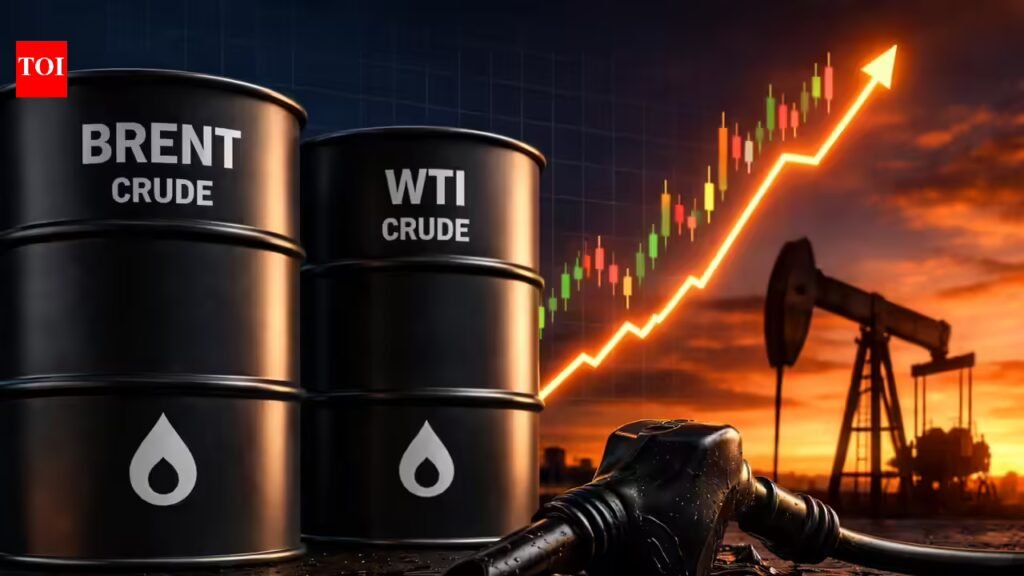
Oil prices cooled down on Friday, after US signalled negotiations with Iran were ‘going very well’ and pushed the deadline with the country for 10 days. Both benchmarks, Brent crude and West Texas Intermediate (WTI) were down 2%. Brent crude touched $108 per barrel before easing to $105.75 per barrel, down 2.08%. West Texas Intermediate stood at 92.67 after a fall of 1.94%, as of 7:50 am IST.This comes after Brent crude prices rose 4.8%, a day earlier to settle at $101.89 a barrel, amid expectations of a return to normal operations in the Strait weakened. The price is significantly higher than the roughly $70 level seen before the war began. At the same time, the US benchmark crude also climbed 4.6% to $94.48 per barrel.However, after surging nearly 5% in the previous sessions, oil prices eased after US President Donald Trump said that negotiations with Iran are underway and dismissed online reports suggesting otherwise. Watch ‘Eight Boats Of Oil’: Trump Gloats Over Iran’s ‘Present’ From Hormuz; Cites Proof Of ‘Negotiations’ “Talks are ongoing and, despite erroneous statements to the contrary by the Fake News Media, and others, they are going very well,” Trump said.“They better get serious soon, before it is too late,” he added on his social media platform on Thursday morning, referring to Iran’s negotiators. “Because once that happens, there is NO TURNING BACK, and it won’t be pretty!”He also extended the deadline for possible strikes on Iran’s energy infrastructure by 10 days, stating that the pause was made at Tehran’s request and that negotiations are progressing positively.“As per Iranian Government request, please let this statement serve to represent that I am pausing the period of Energy Plant destruction by 10 Days to Monday, April 6, 2026, at 8pm, Eastern Time,” Trump said.As the Middle East war nears its one month, tightening global oil supply flows across the globe. Meanwhile, strategists at Goldman Sachs have projected that Brent crude could average around $105 in March and rise further to $115 in April, before gradually easing to about $80 in the fourth quarter and remaining at that level through 2027. Oil prices have been on an upward trajectory since the Middle East war began on February 28, as Iran tightened its control over the Strait of Hormuz. Reports also suggest that Iran’s parliament is working on a draft bill to introduce charges on vessels passing through the strategic waterway, effectively requiring ships to pay for safe passage.At the same time, Iran is reportedly planning a formal system to levy fees on ships using the Strait. According to the semi-official Fars news agency, lawmakers are preparing legislation that would mandate payments from vessels transiting the route.Fars, citing an unnamed lawmaker, reported that the proposal could be finalised as early as next week, potentially providing a legal framework for Iran’s control over the Strait.
Deutsche Bank GCC fuels AI push with incubator
MUMBAI: The Indian Global Capability Center (GCC) of Deutsche Bank is betting on a startup-style approach to accelerate AI adoption, with its in-house incubator at Deutsche India Pvt Ltd (DIPL) drawing 100 ideas within its first 100 days, reflecting what its leadership describes as an unusually high openness to technological change among the local workforce.Stefan Schaffer, MD & CEO of DIPL, said the India-based GCC has seen employees embrace AI-led transformation with far less resistance than in many mature markets. He attributed this to a broader cultural association of change with progress, shaped by rapid digital adoption in India, including platforms such as UPI. He said that this adaptability is proving valuable for a 150-year-old institution navigating structural shifts.DIPL, which employs over 20,000 people across Pune, Bengaluru, Jaipur and Mumbai, is driving its AI push through a programme called “AI Forward”, which combines top-down investment with bottom-up participation. A key pillar is the incubator, modelled on startup ecosystems, where employees can pitch ideas directly to leadership and refine them with expert input. Complementing this is a large-scale training effort that has already covered 20,000 employees on large language models and responsible AI usage, alongside a “Catalyst” initiative that embeds specialists within teams to prototype solutions in live environments.The shift towards AI is part of a broader strategic reset at Deutsche Bank’s technology operations. Having already rebalanced its workforce mix from 30% internal staff to 70%, and increased the share of engineers to 70%, the bank is now targeting deeper ownership from its GCCs. Under a new “70-50-30” framework, it aims to locate 50% of portfolio owners and 30% of senior leadership roles within its technology centres, including India, to ensure end-to-end accountability.Schaffer said that while AI is becoming embedded in mainstream operations, core enterprise platforms will remain critical. Instead of replacing foundational systems, AI is expected to transform the “last mile” of configuration, enabling faster and more flexible development while retaining the structural integrity required in a regulated banking environment.
E-comm hiring up 35% in 2 yrs; AI, ops lead: Report

BENGALURU: India’s e-commerce and quick commerce sector is hiring again, but the playbook has changed. Talent demand rose 35% between 2023 and 2025 to nearly 98,750 roles, even as companies shifted from expansion-led hiring to building technology capability and execution strength, according to a CIEL HR report.The sharpest shift is in technology hiring. Demand for engineering roles has expanded more than threefold over the past two years, with companies prioritising solution architects, and AI and machine learning specialists. These roles are linked to investments in recommendation engines, chatbots, warehouse automation, and payments systems , the report said. Nearly half of incremental hiring is now concentrated in technology, product and operations, signalling a structural move away from customer acquisition-led hiring towards platform capability and fulfilment-led workforce design. Operational hiring remains critical as quick commerce expands into smaller cities. Demand in supply chain and fulfilment roles has risen 25%, with warehouse managers, fulfilment planners, city operations leads and inventory controllers forming the backbone of expansion. These roles are especially concentrated in tier-2 and tier-3 markets. “India’s digital commerce sector is entering a new workforce phase where engineering depth, operational agility and execution precision are becoming the strongest indicators of business competitiveness,” said Aditya Narayan Mishra, managing director and CEO, CIEL HR. “Organisations are designing talent models that combine specialised technology capability with highly responsive frontline execution.“At the frontline, gig work continues to anchor the sector. India’s gig workforce has crossed 12 million, with more than half engaged in delivery, dark-store fulfilment and hyperlocal logistics. The shift is also reflected in pay. AI and machine learning specialists are earning 30%-40% more than conventional tech roles.
India backs WTO reset with core focus intact
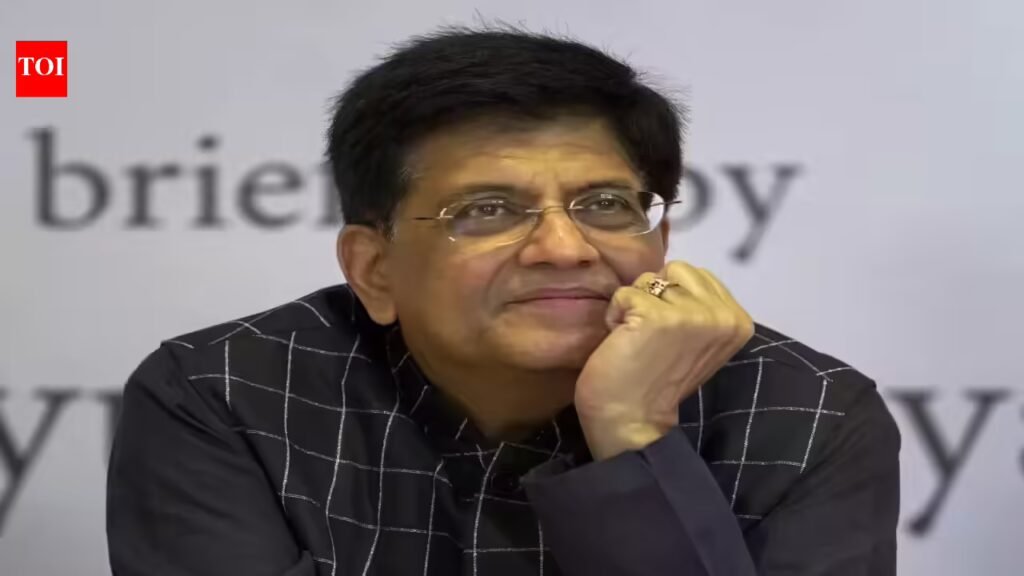
NEW DELHI: India on Thursday backed reforming the World Trade Organisation but underlined the need to retain the core focus on poor and developing countries and a consensus-driven decision-making process.“The necessary reform of WTO should be carried out through a transparent, inclusive and member-driven process, keeping development at its core, upholding the foundational principles and objectives of the organisation, mainly non-discrimination, consensus-based decision making and equity. Special and differential treatment (S&DT) should be precise, effective and operational,” commerce & industry minister Piyush Goyal said in his intervention at the ministerial meeting that kicked off on Thursday.While calling for past mandates given by members to be delivered, Goyal highlighted the need to get the dispute settlement mechanism going again. The US has blocked appointments to the appellate body, holding up the entire process of dispute resolution He also flagged his concern over the failure of the WTO membership to address concerns of poor countries that grow and export cotton, or India’s concerns over public stockholding, an issue that has been pending for 12 years now with ministers kicking the can down the road every time they meet. “…we must deliver on them on priority,” Goyal said at the meeting in Cameroon.India also thumbed down China’s push for an investment facilitation framework but did not make an explicit mention. Instead, Goyal said the incorporation of plurilateral outcomes into the WTO framework should be based on consensus and not impair existing rights of non-parties or cast additional obligations on them. A plurilateral agreement, which according to India needs to be cleared through consensus, means a group of countries can finalise a pact on an issue such as IT goods.Further, he suggested that India is not keen on continuing the customs waiver for e-commerce.
Jindal Steel’s deal with Thyssenkrupp faces delay
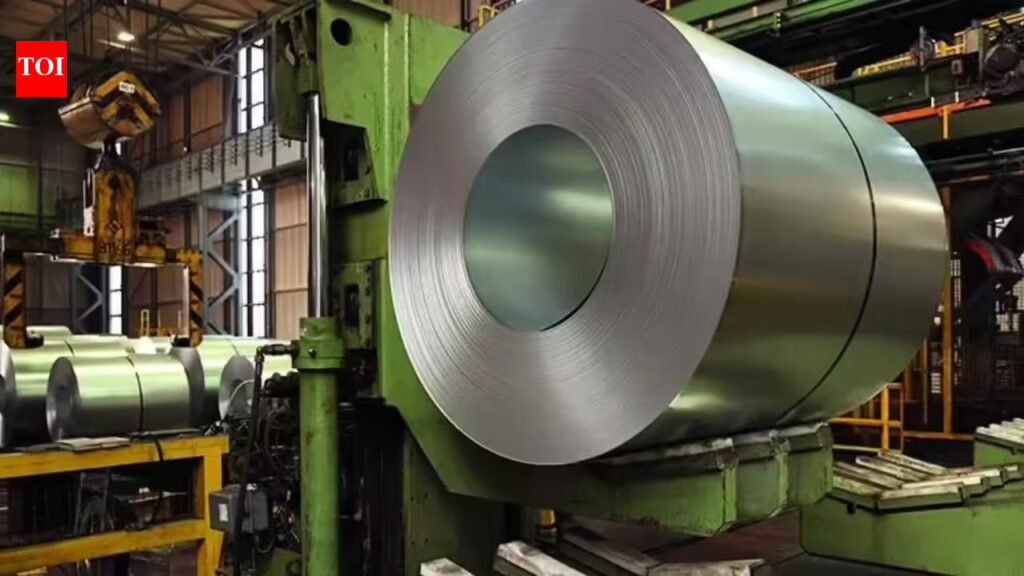
NEW DELHI: Jindal Steel International is seeking clarity from German authorities, with the proposed deal to acquire Thyssenkrupp Steel facing delays over pension-related issues, persons aware of the matter said. The talks remain active and the deal has not been abandoned, though certain legal and operational matters are yet to be resolved. Pension liabilities remain key issues under discussion and further assurances from German stakeholders may be required before the transaction can move forward. “The deal is stuck, but it still has life…assurance is needed from the German establishment. They have to take a shot, may be it will take some more time to conclude, as the pension issue is stuck,” a person familiar with the matter said. Thyssenkrupp confirmed that negotiations with Jindal Steel International and employee representatives are continuing as part of the due diligence process. “We are continuing talks with Jindal Steel International and employee representatives regarding a possible sale of Thyssenkrupp Steel. The non-binding, indicative purchase offer from Jindal Steel International is being addressed directly between the parties in the ongoing due diligence process,” a Thyssenkrupp spokesperson told TOI.Jindal Steel submitted an indicative offer last Sept that included completing a green steel production facility in Duisburg .
E-2-wheelers may get subsidy for 3 more months

NEW DELHI: Govt is likely to extend subsidies for electric two-wheelers under the PM e-Drive scheme until June, while subsidies for e-rickshaws may continue for two years or so. The scheme, initially notified in Sept 2024, is valid till March 31.“We are looking at extending the incentive for these two categories of electric vehicles. Since we have budget under this head, we want that more people get the benefit of the scheme,” a person aware of the development said. Under the scheme, e-two-wheeler and e-rickshaw buyers get subsidy of Rs 2,500 per kWh. Official data shows that out of Rs 1,772 crore subsidy earmarked for electric two-wheelers, about Rs 1,260 crore has been utilised. For electric three-wheelers, Rs 737 crore has been spent out of the Rs 907 crore allocation.Industry sources said e-rickshaw manufacturers have struggled to meet localisation norms under the Phased Manufacturing Programme (PMP), making it difficult for many players to qualify for subsidies. “In the e-rickshaw segment, localisation remains a challenge as several key components such as traction battery packs, motors and instrument clusters are still largely imported. This has limited eligibility for incentives and slowed fund utilisation,” an industry executive said. The Rs 10,900-crore PM E-Drive scheme aims to accelerate EV adoption and build charging infrastructure across the country. Incentives are offered as upfront price reductions for buyers, which are later reimbursed to manufacturers, while localisation norms are aimed at strengthening domestic EV manufacturing.The scheme has been extended by two years, from March 2026, to March 2028, to support the adoption of electric buses, trucks, and ambulances. The scheme aims to boost local manufacturing, requiring e-bus makers to localise traction motors, but so far, no electric buses or trucks have hit the road, according to department of heavy industry data. Officials said that trucks are in the process of getting tested before sales start.
Industry knocks on govt doors, seeks supply woes resolution
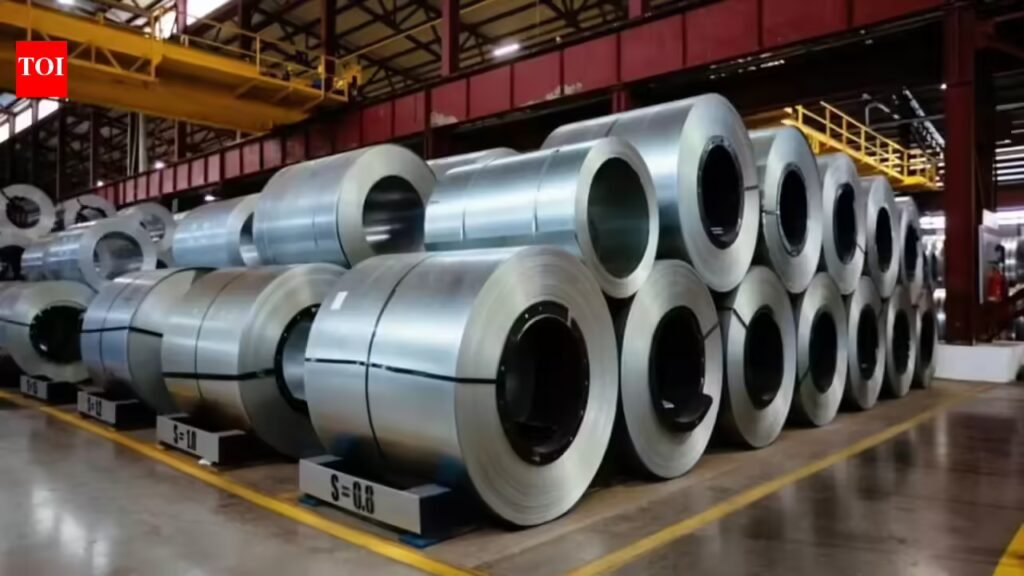
NEW DELHI: Amid disruption in supply chains, including inputs for medicines to glass, sulphur, solvents and polymers, industry has approached govt with multiple suggestions, ranging from relief in loans for small businesses staring at turning to non-performing assets due to lack of gas availability to operationalising a “green corridor” for goods flow to ports such as Sohar, Jeddah and Khorfakkan.It has also called for restricting the use of certain inputs, such as helium, and developing a domestic war risk insurance market. The lack of gas for industries has affected several sectors, be it ceramic or dyeing units, steel, aluminium or plastics.While freight rates have gone up, reflecting in a 20% jump in Drewry World Container index between Feb 26 and Thursday ($2,279 for a 40-feet container), availability is becoming a challenge, which is hurting supply chains as ships take a longer route and go around the Cape of Good Hope to reach Europe or the US. Going forward, a container supply crunch is widely expected.TOI spoke to industry representatives and one of the suggestions in their proposals to govt is a time-bound freight support mechanism to offset the impact, especially for smaller businesses.The supply disruptions from West Asia are prompting Chinese companies to jack up active pharma ingredient rates, including for blood pressure and sugar medicines.There are suggestions to tap alternate markets for fertilisers (Canada for potash, Russia and Egypt for urea). And, same for sulphur where export curbs have been proposed, apart from sourcing from Russia, the US and Kazakhstan. When it comes to helium used for MRI, industry has suggested restricting non-essential use, sourcing from Russia and also recovery from geo-thermal sources.Some of the industrial clusters are also seeking access to alternate fuel, such as furnace oil, diesel and cooking to gas and permission for a quick switchover. In addition, like households, there is a suggestion to let industrial and commercial users, with dual fuel capability, prioritise piped gas over LPG.“There is a need to establish a technical priority, with 80-90% continuity of LNG supply on an average for industries, such as glass, speciality chemicals and ceramics for next four-six weeks,” said an industry executive. With furnaces shut due to unavailability of gas, food and pharma packaging as well as containers for vaccines may be hit.There are demands from industries, such as chemicals and petrochem, to suspend or reduce tariffs for three-six months due to a surge in costs.Besides, there are proposals for a Covid-like loan relief for sectors hit by gas supply woes. One of the suggestions is a sector-specific advisory by RBI, allowing banks to treat gas-dependent manufacturing clusters as a temporary event and allowing asset classification standstill for 90 days.There are also some medium- to long-term solutions with developing a permanent domestic war-risk insurance framework on conflict-related maritime disruption being flagged. Similarly, there have been calls for bilateral air freight agreements, with alternate routing countries in central Asia, east Africa and southeast Asia, apart from creating a hedging framework for ATF.But, it isn’t just airlines and shipping lines that have been hit. The impact is felt on export-import rail cargo, where volumes are said to be up to 40% lower in certain areas, forcing operators to stable around 50 rakes and empty wagon movement has risen to 15-20% compared with under 5% in normal times. Some relief has been sought from railways too.Further, road developers have suggested that the current situation should be a force majeure-line event and the project timelines should be extended due to the 30-40% rise in bitumen cost.