Officials meet to map demand & supply to avoid disruptions
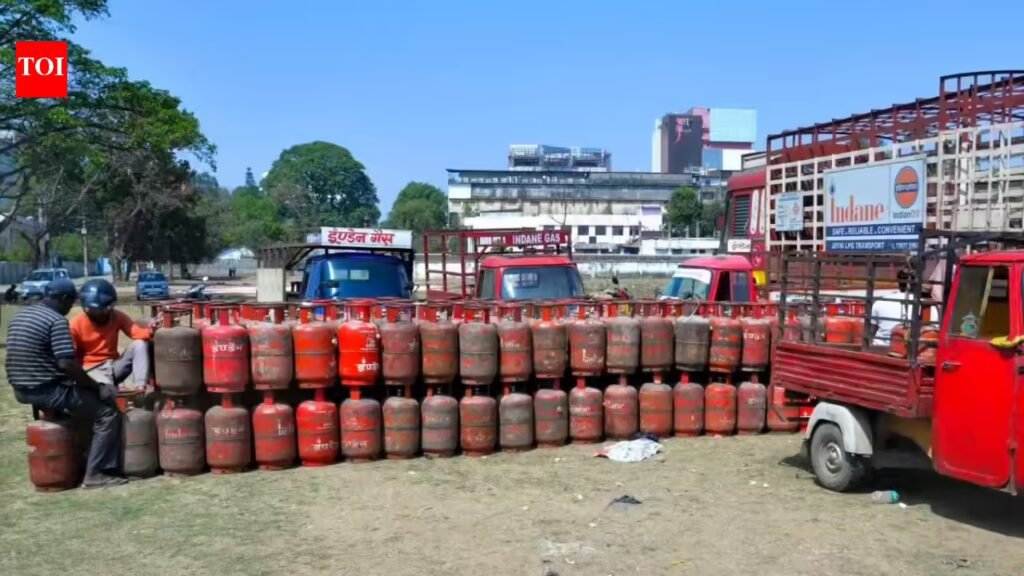
NEW DELHI: The empowered group of officials to deal with the fallout of the West Asia conflict got down to business on Wednesday, and began mapping the demand and supply situation, and also started identifying potential sources to ensure that supply chains are not disrupted.Food and fuel availability are top priority and detailed reports have been sought, including from the states. At the same time, when it comes to fuel, the panel led by petroleum secretary Neeraj Mittal is studying industry consumption trends and comparing it with the availability levels.Products are being identified where there are disruptions and sources are being studied along with measures – including possible duty cuts – in a bid to keep industries going without burdening them and consumers with a significant increase in prices. Chemicals, pharma and petrochemicals have been identified as areas where there is a need to augment supplies.Govt had set up seven empowered groups on Tuesday. For most businesses, gas has been an area of concern, which is sought to be addressed, especially with petroleum minister Hardeep Puri telling an all-party meeting on Wednesday that the curbs on commercial cooking gas cylinders are temporary.While govt has tapped alternate markets, such as Surinam, Guyana, Canada and the US to get LNG, getting LPG (cookig gas) has been more challenging as India relied on imports to meet 60% of its demand with 90% of the quantities coming from West Asia.Although govt is working to get supplies from other countries, there will be a lag in organising the required quantities of fuel. For instance, it takes around 11 days from ships to deliver goods from the Gulf region and 36-37 days from Russia. From the US and Canada, the sail time can be 40-45 days. Supplies are expected to normalise once oil companies align production with the new cycle.For the moment, they are focusing on tapping as many sources as possible. Over the last few years, starting 2023, India had stepped up purchases from Russia, which was a source for around 1.5% of the crude around four years ago. After acquiring more than 30% share, they accounted for nearly 20% of the pie in Feb. With sanctions on Rosneft and Lukoil lifted, Russian oil share is expected to move up again, with some quantities from Iran also adding to the supply.
Middle East crisis: Oil slides, gold & silver rise on US move to end conflict

MUMBAI: The US move to send a 15-point proposal to Iran aiming at ending the war in West Asia, combined with a slowdown in hostilities between the warring nations on Wednesday sent oil prices sliding and precious metals rallying.In late trades on Wednesday, Brent was trading at $97.2/barrel, down 3% on the day. In the second week of March, Brent had rallied to a multi-year high at close to the $120 mark. Incidentally, during the day, Larry Fink, CEO, BlackRocksaid that if oil prices rise to $150 level, due to supply disruptions in the Gulf region even after the war ends, that could result in a global recession.The war has all but halted shipments of oil and liquefied natural gas through the Strait of Hormuz, which typically carries about one-fifth of the world’s gas and crude supply, causing what the International Energy Agency has called the biggest-ever oil supply disruption, a Reuters report said.In the domestic market, in late trades on MCX, crude oil futures for April delivery was down 3% at Rs 8,475/barrel.Precious metals also saw an uptick as an end or a ceasefire would diminish the fears of energy supply-led disruptions leading to inflation and possibility of rate hikes. In mid-session in the US, gold was trading 3.4% up at $4,551/ounce (Oz) while silver was up 4.7% at $72.8/Oz. In the domestic market, in late trades on MCX, gold futures for April delivery was trading 3.8% up at Rs 1.44 lakh/10gm while silver futures for May delivery was up 4.7% at Rs 2.34 lakh/kg.
Infosys to buy two US companies for $560mn
BENGALURU: Infosys has strengthened its healthcare and insurance capabilities with a twin acquisition push, committing up to $560 million to expand its footprint in the US market.The company has signed a definitive agreement to acquire Optimum Healthcare IT for up to $465 million-one of its largest acquisitions in recent years-as it deepens its presence in the healthcare provider segment. The all-cash deal includes upfront payments and earnouts, excluding management incentives and retention bonuses, and will see Infosys acquire 100% of the company’s equity.In a parallel move, Infosys has also agreed to acquire US-based Stratus for up to $95 million to bolster its capabilities in the property and casualty (P&C) insurance segment and accelerate AI-led digital and data transformation for global clients. Both transactions are expected to close in Q1FY27.
US, EU seek WTO reform as meet starts
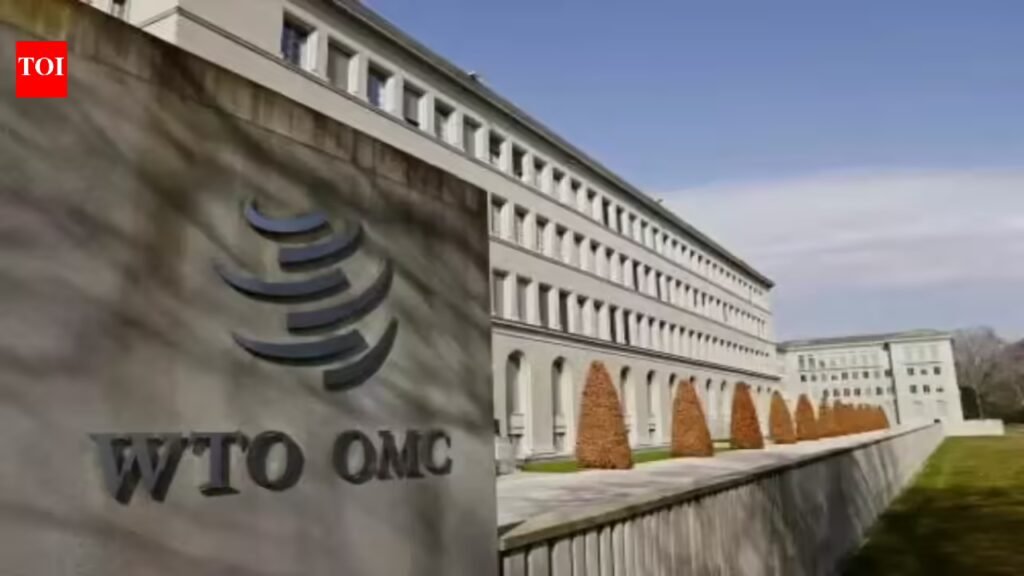
NEW DELHI: World Trade Organisation‘s ministerial meeting will kick off in Cameroon on Thursday, with reform of the 30-year-old multilateral body on top of the agenda of the US and European Union, while India will seek to push for farm trade reforms and retain the basic characteristics of the entity.At the meeting, which comes in the shadow of the conflict in West Asia, the US and EU are seeking to widen scope of the talks to cover new issues and recognise “plurilateral” agreements, which do not have participation of all member nations. Having gone for reciprocal tariffs, Washington has also denounced the most favoured nation principle, which provides for uniform tariffs for all countries.Protecting the livelihoods of small farmers and fishermen, while safeguarding policy space for developing economies in emerging areas, such as digital trade, will remain a central focus for India.
Government retains 4% inflation target for RBI panel
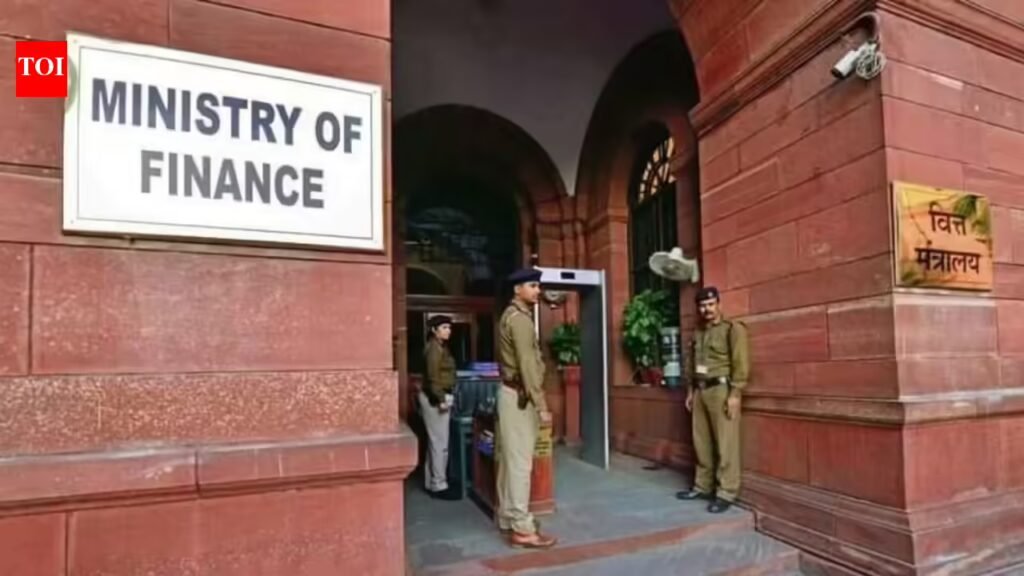
NEW DELHI: After extensive consultation, govt has decided to retain the retail inflation target for the monetary policy committee at 4%. For the next five years, the tolerance band of 2-6% has also been retained, according to a notification issued by the finance ministry on Wednesday.The targets have been in place for 10 years now and were widely expected to be retained. RBI had floated a discussion paper in which it had pointed out that the flexible inflation targeting (FIT) framework had seen price rise stay within the band for three-fourths of the first review period (starting Aug 2016) and two-thirds of the second review period.It had argued for continuation of the framework, amid calls for a review from a section led by CEA V Anantha Nageswaran. “The conduct of monetary policy frameworks needs both policy certainty and credibility. This has become particularly important during the current environment of heightened uncertainty. It is, therefore, important that the basic tenets of the framework that have been tested and judged to be favourable are continued. The adaptability and flexibility already inbuilt into the extant framework should be leveraged to nudge the economy towards further improved macroeconomic outcomes,” RBI had said.Nageswaran had suggested that core inflation, which excludes volatile food and energy prices, should be used, given that food had a large weight.
Regional push: Now, Airbus mulls ATR final assembly line in India after Embraer
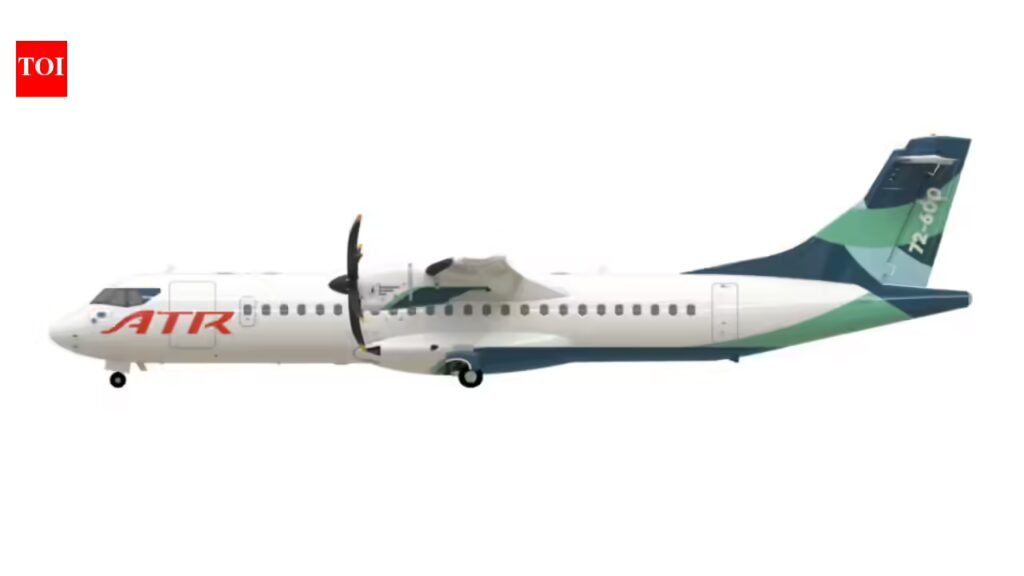
NEW DELHI: Airbus has for the first time indicated it is open to having a final assembly line (FAL) in India for its 50% owned ATR regional aircraft, given the Modi govt’s unprecedented push for enhancing aerial connectivity of small towns and cities. The European aerospace major is learnt to be in talks with stakeholders to see if a business case is made out for the same. As of now, it is the only player with two operational FALs in India in partnership with Tata Advanced Systems Limited (TASL), one for the 70-seater military transport aircraft C295 at Vadodara and the other for H125 commercial helicopter in Karnataka.ATR, jointly owned by European aeronautics players Airbus and Leonardo, has a significant presence in India with IndiGo operating 50 of those turboprops and Goa-based regional carrier FLY91 has a fleet of six at present which is expected to double this year.Being similar in capacity to the C295, the ATR has up to 78 seats. Airbus has a significant supply chain already in place here. The A220 family aircraft doors are made by Bengaluru-based Dynamatic Technologies and TASL makes bulk and cargo doors of the A320 family. Govt on Wednesday cleared a modified regional connectivity scheme (RCS) for a 10-year period with a budget outlay of Rs 28,840 crore under which 100 airstrips will be developed into airports and airlines will get subsidy for operating RCS routes. Bullish that international travel and regional connectivity will provide the next big push for air travel in India after the massive increase seen in domestic flights, sources say Airbus is closely examining two aspects for its proposed ATR FAL in India. “One is the operating cost for airlines which is very high in India and that issue needs to be tackled in terms of jet fuel pricing, airport and navigation charges. Some day RCS viability gap funding will stop and airlines should have a cost structure that keeps them viable when this scheme (which was initially supposed to be in force for three years when launched in 2016) eventually sunsets,” said sources. The other factor is acquisition cost for customer airlines. To reduce that, Airbus is looking at enhancing indigenisation of components in India leading upto a possible setting up of an ATR FAL. Govt has been very keen that Airbus has a FAL in India as the European aerospace major has massive orders from IndiGo — which is the world’s largest operator of its best-selling single aisle A320 family of aircraft — and Air India Group. Together these two have about 1,300 aircraft, mostly single aisles, worth billions of dollars on order from Airbus.Also pilot training (type rating) costs more for smaller planes like Embraer and ATR compared to Boeing 737 and Airbus A320,.for operators and student pilots in India. This is a critical issue that needs to be sorted for regional planes usage to grow in India.Recently Brazilian aerospace major Embraer announced it will set up a FAL with the Adani Group in India if it gets a firm order for 200 aircraft. Airbus India & South Asia president & MD Juergen Westermeier met Union aviation minister Ram Mohan Naidu on Tuesday where the proposed FAL and how it can become a reality in India is learnt to have been discussed. “Discussed Airbus operations and its growing footprint in India’s aviation ecosystem. Emphasised on further strengthening local manufacturing and enhancing component procurement from India, in line with PM Modi’s make in India vision,” the minister said on X Tuesday.Sources say Airbus could make a final announcement of the FAL in coming days if its math works out following the ongoing consultation. Airbus had set up the H125 FAL in India without a single order for the chopper from here. It is learnt the FAL announcement, if made, will also be an unconditional one and not be subject to subsequently receiving orders from Indian customers. Having locally-made ATR or Embraer will reduce cost of acquisition for operators as govt is planning fiscal incentives for them.