
Oil & energy price shock: Goldman Sachs sees India’s macro outlook worsening; cuts Nifty target

Strategists at Goldman Sachs now project Brent crude to average about $105 in March and rise to $115 in April. (AI image) As a direct fallout of the US-Iran war and rising crude oil prices, Goldman Sachs has adopted a more cautious view on Indian equities, revising its rating to “marketweight,. The global brokerage has also lowered its target for the Nifty, and cautioned that an earnings downgrade cycle driven by an energy shock is likely to emerge. The bank has reduced its 12-month Nifty target, for end-March 2027, to 25,900 from an earlier 29,300. This suggests expected returns of about 13% in rupee terms and 12% in dollar terms over the next year, which is lower than the 19% upside projected for the MXAPJ index. It expects these returns to be supported partly by earnings growth of 8% and 13% in calendar years 2026 and 2027, respectively, along with a modest re-rating in valuations to a lower fair value multiple of 19.5 times, compared with its earlier estimate of 20.8 times, as earnings downgrades take effect.The firm said persistently high oil prices amid tensions around the Strait of Hormuz have weakened India’s macroeconomic outlook and are expected to lead to downward revisions in profit estimates over the coming quarters, according to an ET report.Earlier this week, Bernstein also trimmed its year-end Nifty target to 26,000 and warned that, in a worst-case scenario, the benchmark index could fall to as low as 19,000.Goldman Sachs further noted that returns are likely to be skewed toward the latter part of the period. “We see risks tilted to the downside in the next 3 to 6 months as we think the market may not be pricing in the full extent of the earnings downgrades, and low earnings visibility in the near-term could demand a higher risk premium,” it said.The firm added that, historically, forward returns tend to remain subdued when valuations are in the 18–20 times range during an earnings downgrade phase. However, it pointed out that equities have typically recovered once earnings stabilise after about two to three quarters, as has been seen during past energy-related shocks.Strategists at Goldman Sachs now project Brent crude to average about $105 in March and rise to $115 in April, before gradually easing to $80 in the fourth quarter and stabilising at that level through 2027. The report highlights that, within Asia, India is particularly exposed to potential energy supply risks due to its relatively lower per capita income and heavy reliance on energy imports.The change in global energy dynamics has led the firm to significantly revise its outlook for India’s macroeconomic indicators. Since the onset of the Iran conflict, Goldman has cut its 2026 GDP growth forecast for India by 1.1 percentage points to 5.9%, increased its inflation projection by 70 basis points, widened the current account deficit estimate to 2% of GDP, lowered its outlook for the rupee, and factored in an additional 50 basis points of rate hikes in 2026.Its latest internal estimates for calendar year 2026 now assume real GDP growth of 5.9%, average CPI inflation of 4.6%, a current account deficit of 2% of GDP, a fiscal deficit of 4.7% of GDP, a year-end repo rate of 5.75%, and an average Brent crude price of $85 per barrel.Goldman also expects the weaker macro environment to eventually reflect in corporate earnings. Its VAR-based analysis indicates that if oil prices remain about $45 per barrel higher on average for three months, India’s full-year earnings growth could decline by roughly 9%, which is a larger impact compared to the estimated 6% hit to earnings for the MXAPJ index.
DGCA seeks corrective action from Air India over wrong plane on Delhi-Vancouver route

In a regulatory intervention following an operational lapse, aviation watchdog Directorate General of Civil Aviation (DGCA) has asked Air India to take corrective measures after the airline operated a Delhi–Vancouver flight with an aircraft that was not approved for the route, a senior official said on Thursday.Action has also been initiated against an airline official over the incident, the official at DGCA told PTI.The Air India Boeing 777-200 LR aircraft, which took off for Vancouver on March 19, was recalled to Delhi after remaining airborne for over seven hours when it was found that the flight was cleared only for operation by a Boeing 777-300 ER.The regulator subsequently sought a report from the airline and has now directed it to put in place safeguards to prevent a recurrence of such lapses. Specific details of the action taken could not be immediately ascertained.There was no immediate response from Air India, as reported PTI.Sources had earlier indicated on March 20 that an apparent lapse in updating operational requirement lists for Canada-bound services may have led to the deployment of the incorrect aircraft.In a statement issued the same day, the airline said, “Air India flight AI185, operating from Delhi to Vancouver on 19 March, returned to Delhi due to an operational issue and in line with established standard operating procedures. The aircraft landed safely, and all passengers and crew had disembarked.”
Government assures strong fuel security: No LPG shortage, crude reserves secured, PNG transition underway
The government, on Thursday, moved to reassure citizens that the country’s fuel supply situation remains fully stable. The ministry of petroleum and natural gas said India’s petroleum and LPG systems are secure and under firm control, with no shortage of petrol, diesel or LPG anywhere in the country. It also warned against what it called a coordinated misinformation campaign intended to create unnecessary panic.This follows the Centre’s earlier clarification dismissing reports that LPG refill booking timelines had been changed. It said the claims were incorrect and misleading, and reaffirmed that the existing timelines “remain unchanged and continue to” operate under the current time limit.Here’s what the government said: ‘Oasis of energy security’: Fuel supply stable across India The ministry reiterated India’s fuel security, saying that the country continues to function as an “oasis of energy security.” In a press release, the government pointed out that “India is the world’s 4th largest refiner and 5th largest exporter of petroleum products, supplying refined fuel to over 150 countries.”Commenting on petrol and diesel availability, the Centre assured that, being a net exporter, India’s petrol and diesel availability is “structurally assured.” It confirmed that all 1 lakh-plus retail fuel outlets across India are operating normally and dispensing petrol and diesel without interruption.The ministry said no outlet has been instructed to ration fuel. It also highlighted that, unlike several countries facing rationing, price shocks, odd-even vehicle restrictions and even station closures, with some declaring a “National Energy Emergency,” India has no requirement for such measures.According to the ministry, reports of shortages at select locations were driven by panic buying triggered by misinformation circulating on social media. It said that despite temporary surges in demand, fuel continued to be supplied to all customers, while oil company depots operated round-the-clock to strengthen distribution. Oil companies have also extended credit limits to petrol pumps to more than three days, up from one day earlier, to ensure smooth working capital flow and uninterrupted supply. Crude tanks — already covered Addressing concerns over global supply routes, the ministry stated that even with disruptions at the Strait of Hormuz, India is currently receiving higher crude volumes from over 41 international suppliers than what previously came through the strait.It added that increased availability in global markets, particularly from the western hemisphere, has fully offset any disruption. All Indian refineries, it said, are operating at over 100% capacity utilisation.The ministry further stated that crude oil requirements for the next 60 days have already been secured, and there is no supply gap in the system. “Crude oil supplies for next 60 days have already been tied up by Indian Oil companies.” LPG Commenting on LPG supply, a major concern for consumers amid the Middle East crisis, the ministry said that there is no shortage anywhere in the country and production has been significantly ramped up following the LPG Control Order.Domestic refinery output has increased by 40 per cent, reaching 50 TMT per day, more than 60 per cent of the country’s total daily requirement of around 80 TMT. As a result, the net import requirement has been reduced to 30 TMT per day.It said 800 TMT of LPG cargoes have already been secured and are currently en route from countries including the United States, Russia and Australia. These supplies are arriving across 22 LPG import terminals, compared to 11 in 2014.The ministry said about one month of LPG supply is fully secured, with further procurement ongoing. Oil companies are currently distributing over 50 lakh cylinders daily. It noted that demand had briefly surged to 89 lakh cylinders due to panic buying but has since returned to normal levels. Commercial cylinder allocation has been increased to 50% in consultation with state governments to prevent hoarding and black marketing. A PNG transition The ministry once again highlighted the push for piped natural gas expansion, stating that it is part of a planned and ongoing transition towards cleaner, cheaper and safer household energy, being implemented in coordination with state governments. It further clarified that this expansion is not linked to any shortage situation and rejected claims that PNG is being pushed due to LPG scarcity. It said LPG supply remains fully secure.India produces 92 MMSCMD of natural gas domestically against a total requirement of 191 MMSCMD, making gas relatively less import-dependent than LPG.Till now, city gas distribution networks have expanded from 57 geographical areas in 2014 to more than 300 at present. Domestic PNG connections have grown from 25 lakh to over 1.5 crore. Strategic reserves — A bigger picture The ministry also dismissed claims circulating online that India has only six days of fuel stock, saying the country has a total reserve capacity of 74 days, with current stock cover at around 60 days.This includes crude stocks, product inventories and strategic storage in underground caverns. The ministry noted that this is the position even as the country is on the 27th day of the ongoing Middle East crisis.It said that almost two months of steady supply is already secured, with additional crude procurement for the next two months also tied up. It asserted that India remains fully secure for the coming months, and stressed that claims of depleted reserves are false. “Nearly two months of steady supply is available for every Indian citizen regardless of what happens globally. Next 2 months of crude procurement has also been secured. India is completely secure for next many months and the quantity in strategic cavern storage becomes secondary in such a supply situation.” Government’s warning Expressing serious concern, the ministry said misleading videos and social media posts are circulating that misuse images of queues, foreign rationing situations and fabricated claims about fuel emergencies in India.It also said certain posts have misinterpreted routine administrative orders such as the Natural Gas Control Order and LPG Control Order as emergency declarations, when they are standard supply management measures.The Ministry said these false narratives are being spread by miscreants and amplified by motivated elements, causing avoidable public anxiety. It urged citizens to
$760m a day: Putin cashes in as US waivers boost Russian oil earnings amid Iran war

Russian President Vladimir Putin. (AP photo) Russia’s energy revenues are surging as the Iran war rattles global oil markets, with Vladimir Putin estimated to be earning at least $760 million a day from oil and gas exports.According to the Kyiv School of Economics (KSE) Institute, monthly revenues could nearly double from about $12 billion to $24 billion, driven by a spike in prices and temporary sanctions relief granted by Donald Trump, as reported by Telegraph UK.Even if the conflict eases in the coming weeks, Russia’s oil and gas income is projected to reach $218.5 billion this year — about 63% higher than pre-war estimates. In a more prolonged conflict, lasting up to six months, revenues could climb as high as $386.5 billion.At a recent Kremlin meeting, Putin urged energy companies to channel these windfall gains into reducing domestic debt, calling it a “mature decision”.The gains come amid upheaval in global energy markets following Iran’s disruption of shipments through the Strait of Hormuz. Benchmark Brent crude has jumped roughly 38% to around $100 per barrel since the conflict began.Russian oil, however, has risen even faster, with prices climbing about 72%, according to KSE analysts.A key factor has been Washington’s decision to temporarily ease sanctions enforcement, allowing buyers to purchase previously restricted Russian oil shipments already at sea — a move that has effectively reduced the risks associated with such trades.As a result, Russia is now selling oil at or near global market prices, narrowing — and in some cases reversing — the discounts it previously offered to major buyers like India and China.Imports of Russian oil by India have surged sharply since the conflict began, reflecting the shifting dynamics of a market analysts describe as highly volatile.
Air India Express art-wraps its B737 jet in Kochi-Biennale colors

MUMBAI: Aircraft liveries were once about identity in its simplest form with logos, stripes, and national colours painted onto the fuselage. Over time, that surface has evolved into something far more expressive as vinyl technology made it comparatively easy to transform fuselage into moving canvases, carrying stories, art, and cultural narratives across continents. From commemorative liveries to full-fuselage artworks, the aircraft skin has quietly become one of aviation’s most visible storytelling tools, an evolution that Air India Express has tapped into with its latest art-wrapped aircraft, making it India’s first full-aircraft contemporary art wrap.On Thursday, the airline unveiled ‘The Flying Canvas’, a special art‐wrapped Boeing 737‐8 aeroplane (VT‐BWV). “The collaboration is a result of Air India Express’ multi-year partnership with the Kochi-Muziris Biennale, India’s first and largest international exhibition of contemporary art,” said AIX in a press statement. “Wrapped in an original artwork created by artist Osheen Siva, whose work reimagines heritage as a living, evolving force, ‘The Flying Canvas’ transforms into the fastest moving cultural installation. The art livery features a Tamil figure carrying memory and heritage into the future, adorned with traditional motifs that symbolise lineage, identity and continuity. As India’s first full‐aircraft contemporary art wrap, this initiative brings a bold new dimension to Air India Express’ long‐standing commitment to celebrating India’s culture across the Skies,” the airline said.Siddhartha Butalia, Chief Marketing Officer, Air India Express, said, “This initiative reflects how we see travel – not just as a journey between destinations, but as an opportunity to experience, interpret, and connect with culture and communities in meaningful ways.” Thomas Varghese, CEO of the Kochi Biennale Foundation, said, “The Kochi-Muziris Biennale has always been a celebration of art transcending boundaries, bringing contemporary practice out of galleries and into the everyday lives of people. As this aeroplane traverses over 60 destinations, it carries with it the soul of indigenous culture and the vibrancy of contemporary art to people far beyond our shores.” Aircraft wrapping itself has a fascinating lineage. One of the earliest widely noted examples of a special livery dates back to the 1960s and 70s, when airlines began commemorating milestones with painted designs, according to industry publications. In the early decades of aviation, liveries were painstakingly painted by hand, layer by layer, with strict weight considerations and long drying times grounding aircraft for days which also meant complex designs were expensive and difficult to execute. The shift began with advances in vinyl decals and adhesive films in the late 20th century. These allowed airlines to apply intricate, high-resolution graphics quickly and remove or replace them without damaging the aircraft’s surface. What once required weeks in a hangar could now be done in days. More importantly, it opened the door to experimentation, limited-edition designs, collaborations, and bold visual narratives.Airlines such as All Nippon Airways became pioneers, famously introducing Pokémon-themed aircraft that turned heads globally. Southwest Airlines used bold state-themed liveries, while Air New Zealand gained attention with its cinematic tie-ins, including aircraft wrapped in imagery from The Lord of the Rings and The Hobbit. “In India, too, airlines have periodically experimented with special liveries, though mostly limited to tail art or branding variations rather than full-fuselage wraps,” said an airline official.What distinguishes full aircraft wrapping from traditional livery is both scale and intent. “While earlier designs were painted directly onto the fuselage, modern wraps use ultra-thin vinyl films engineered to withstand extreme temperatures, UV exposure, and aerodynamic stress. These films add minimal weight and can be removed without affecting the aircraft’s surface, making them ideal for temporary campaigns or artistic collaborations. Decals have also allowed photorealistic detail in the images which is something nearly impossible with paint alone,” the official added. During the previous edition of the Biennale, Air India Express unveiled a bespoke tail art on one of its Boeing aircraft. The airline’s refreshed brand identity in October 2023 marked the launch of the Tales of India initiative under which every new aircraft tail of its expanding fleet features a unique artistic design, inspired by indigenous craft, textiles and traditions, such as Kalamkari, Bandhani, Kanjivaram, and Banarasi.
New flight ticket refund & cancellation fee rules effective today: How will passengers benefit? Explained

Aviation experts are of the view that the new rules address a bulk of complaints from passengers. (AI image) Booked an air ticket but had to cancel it? Effective today, the new Directorate General of Civil Aviation (DGCA) rules for refunds come into force easing passenger pain points on several accounts and also revoking some charges that have otherwise been implemented by airlines in the past.For example, airlines can now not charge you an additional fee for processing refunds. A timeline has been defined for processing the refunds, you will not be forced to keep your refund amount in a credit shell for future use etc.“The issue of refund of tickets by airlines has become a major source of grievance amongst airline passengers. A large number of complaints are regularly received,” said the DGCA in its circular issued late February, which made it clear that the new rules will be effective March 26, 2026.DGCA also held that the volume of complaints with regards to refunds is rising, necessitating action. “The matter has been discussed in several meetings with the airlines with no improvement in the system adopted by airlines for refund of tickets. It is now considered that the onus rests with the Government to fix some minimum bench marks, as far as the refund policy is concerned in order to stem the growing dissatisfaction among the passengers regarding the refund procedures adopted by some airlines,” DGCA explained.What type of complaints is DGCA looking to address? Cases of delays in refunds of unused tickets Complaints around the amount that airlines refund against cancelled tickets. The ongoing policy where airlines do not refund tickets but instead adjust the amount against tickets to be purchased by the passenger for future travel in the same airline which in turn is valid for a limited period of time. The circular is clear that the change in refund rules underlines the ‘minimum requirements for refund of ticket’. This includes tickets for both domestic and international travel, booked with domestic and international airlines operating to and from India. New Airline Refund Rules: Top Points To Know If a passenger has purchased the air-ticket using credit card as a payment system, then the airline is mandated to issue a refund within seven days of the ticket cancellation If the payment for the flight ticket has been done via cash transactions, then the refund has to be immediate at the airline’s office from which the ticket was purchased. If you have used a travel agent or a travel portal to book your flight ticket, then the refund onus lies with the airlines, since agents act as their representatives. In such a case, the airlines have been asked to make sure that the refund is issued within 14 working days. Airlines are also now not allowed to charge any additional amount for processing refunds Not only that, airlines have also been asked to make sure the refund includes all taxes and user development fee (UDF), airport development fee (AFD), and passenger service fee (PSF) in cases of no show, non-utilisation of tickets, and cancellation. What is important to note is that this condition is also applicable for tickets which have special fares, promotional offers or where the basic fare is non-refundable. The window for a ‘look-in option’ has been kept at 48 hours after the ticket is booked. In this time period a passenger can cancel or even amend the ticket without any additional charges, except for the ‘normal prevailing fare’ that is applicable for the new flight. However, an option is not available in case your flight is scheduled to depart in less than 7 days and less than 15 days for domestic and international booking respectively when the ticket is booked directly through the airline website. The facility is not available after the 48 hour window and in such cases the passenger will have to pay whatever is the fee decided by the airline for cancellation or ticket amendment. Yet another important point in the DGCA circular is the insistence on optional credit shells. What this means is that when you cancel your flight ticket, the airline has to mandatorily ask you if you want the refund to be issued or you would prefer to keep the amount in a credit shell for future use. Airlines have also been asked to make the refund amount clearly visible along with a detailed break up. The amount and the break-up can be indicated on the ticket or any separate form for this purpose. The refund policy and amounts are required to be displayed on the airline’s website as well. For the knowledge of passengers and for the sake of transparency, airlines have been asked to prominently display the cancellation charges at the time of the flight ticket booking The DGCA guidelines are unambiguous: Under no circumstances, can the airline or its agent implement a cancellation charge that is more than the basic fare plus fuel surcharge. However, this excludes any charges that are levied by the travel agent, which have been fully disclosed at the time of booking. The airline is responsible for this through their contracts with travel agents/portals. Foreign carriers that operate to and from India have to refund the tickets in accordance with regulations of their country of origin. In case your name is wrongly spelt or incomplete, an airline cannot charge you extra for correction in the name of the same person. This is applicable when the error is pointed out by the passenger within 24 hours of making the booking when the ticket is booked directly through the airline website. If you are cancelling your flight ticket due to a medical emergency, where you or your family member who is listed on the same PNR gets admitted/hospitalized during the travel period, airlines have been asked to provide either a refund or a credit shell. For other situations, refunds will be issued by the airline once an opinion on the passenger’s fitness to travel
Middle East conflict hits rice traders: Basmati exporters left pending payments; funds ranging Rs 2,000 to Rs 25,000 crore in limbo

India’s premium basmati rice trade has come under severe strain as the escalating conflict in West Asia disrupts exports, blocks consignments at ports and leaves payments worth thousands of crores pending, raising concerns for traders and farmers alike.A Bhopal-based businessman told ANI that consignments of Premium 1121 Basmati rice, earlier exported regularly, are now stuck at ports due to the ongoing situation, warning that continued disruption could lead to heavy losses for Indian traders and impact farming communities. “The Premium 1121 Basmati rice, which we used to export, is currently being held at the ports. If this situation continues, Indian traders will face significant losses. Our payments, ranging from Rs 2,000 crores to Rs 25,000 crores, are pending and have not been received, causing difficulties for the traders. The government is currently taking its own measures, and if the situation persists, farmers will also face problems in the future.“In response to the broader crisis, the government held an all-party meeting on Wednesday to assess the situation in West Asia. The meeting was chaired by defence minister Rajnath Singh and saw participation from senior opposition leaders as well as key Union ministers.Union home minister Amit Shah, Parliamentary affairs minister Kiren Rijiju, finance minister Nirmala Sitharaman, external affairs minister S Jaishankar, petroleum and natural gas minister Hardeep Puri and foreign secretary Vikram Misri were among those present.The ripple effects of the conflict are also being felt across the country’s workforce engaged in trade and logistics, with traders, businessmen, contractors and factory labourers facing disruption as transportation routes and payment systems slow down amid rising tensions in West Asia.According to a Crisil Ratings report, prolonged instability in the region could impact several Indian sectors, including basmati rice, fertilisers, diamond polishing, travel operators and airlines, all of which have significant exposure to West Asian markets.The report further cautioned that industries dependent on imported liquefied natural gas (LNG), such as ceramics and fertilisers, may face operational challenges in the near term and will need close monitoring.It also highlighted possible pressure on crude-linked sectors including downstream oil refiners, tyres, paints, speciality chemicals, flexible packaging and synthetic textiles if elevated energy prices persist.India imports around 85 per cent of its crude oil requirement and half of its LNG needs, with nearly 40–50 per cent of crude and 50–60 per cent of LNG shipments passing through the Strait of Hormuz.The report added that most shipping vessels have stopped using this route since March 1, 2026, citing heightened risks. A prolonged disruption, it warned, could tighten global crude and LNG supplies and push prices higher.Meanwhile, geopolitical tensions in West Asia remain elevated. Even as US President Donald Trump has claimed that negotiations with Iran are underway and the conflict may soon de-escalate, the Pentagon is expected to deploy troops from the 82nd Airborne Division to the Middle East as the war enters its fourth week.
UAE car insurance explained: Third-party vs comprehensive, which is right for you and does it cover flood damage
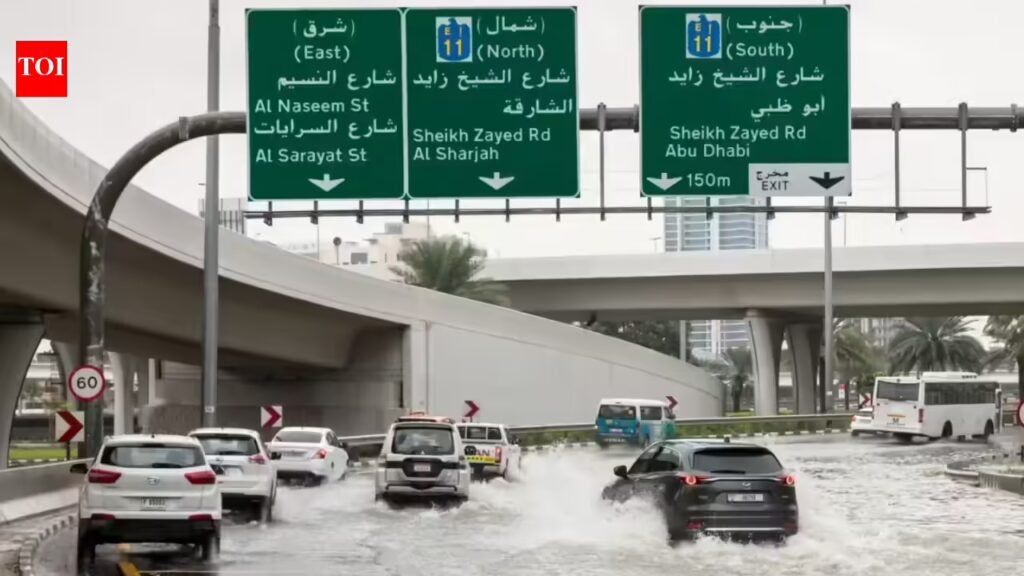
UAE Car Insurance: Third-Party or Comprehensive? The Decision That Could Cost You Thousands As car ownership continues to rise across the UAE along with repair costs, extreme weather risks and high-value vehicles, one question keeps surfacing among residents: Should you choose comprehensive insurance or stick to basic third-party cover? The difference is not just technical, it can mean the gap between minor inconvenience and major financial loss. The basic car insurance rule in the UAE: One is mandatory, the other is optional In the UAE, you cannot legally drive without insurance but the law only requires the most basic form: Third-party insurance is mandatory Comprehensive insurance is optional upgrade Without at least third-party coverage, your car cannot be registered or legally driven. Third-party car insurance in the UAE: The legal minimum Think of this as the bare essentials. What third-party car insurance in the UAE covers: Damage to another person’s vehicle Injury or death of third parties Damage to public or private property What third-party car insurance in the UAE does NOT cover: Damage to your own car Your medical expenses Theft, fire, or natural disasters In simple terms, it protects others from you, not you from loss. This is why it is cheaper and widely used for older or low-value cars. Comprehensive car insurance in the UAE: Full-spectrum protection This is where coverage expands significantly. What comprehensive car insurance in the UAE covers: Everything included in third-party insurance Damage to your own vehicle (even if you’re at fault) Theft, fire, vandalism Natural disasters (rain, floods, sandstorms) Sometimes personal injury and add-ons In simple terms, it protects both you and others across most scenarios. This makes it the preferred option for: New cars Luxury or financed vehicles Drivers seeking peace of mind Cost difference: Why many still choose basic car insurance cover in the UAE The biggest deciding factor is the price. Typical UAE insurance costs (2026): Third-party: AED 450 – 2,000/year Comprehensive: AED 1,200 – 5,000+/year That is often 2–3x more expensive, which is why budget-conscious drivers lean toward third-party but there is a trade-off: Lower premium Higher risk out-of-pocket Side-by-side comparison – Feature Third-Party Insurance Comprehensive Insurance Legal requirement Mandatory Optional Covers damage to others Yes Yes Covers your own car No Yes Theft/fire/natural disasters No Yes Cost Low Higher Best for Older cars New/high-value cars Recent trends in the UAE are reshaping how residents think about insurance: Rising repair costs – Modern vehicles, especially EVs and luxury cars, are expensive to fix. Extreme weather risks – Heavy rain and flooding events have made natural disaster coverage more relevant. Dense urban driving – More cars on the road means higher accident probability. All of this makes comprehensive insurance less of a luxury, more of a safeguard. So, which car insurance cover should you choose in the UAE? Choose third-party car insurance cover if: Your car is old or low-value You want the cheapest legal option You can afford repair costs yourself Choose comprehensive car insurance cover if: Your car is new, financed or expensive You want protection from theft or weather damage You prefer financial security over risk The hidden risk most car drivers ignore in the UAE The catch that many residents underestimate in the UAE is that if you are at fault in an accident with third-party insurance, the insurer pays for the other person’s damage while you pay for your own repairs, fully out of pocket. In the UAE, that can easily run into thousands of dirhams.Car insurance in the UAE is evolving from a legal checkbox into a financial strategy decision where third-party insurance is for compliance while comprehensive cover is for protection. As vehicles become more expensive and climate risks increase, more residents are reassessing whether saving on premiums today could cost far more tomorrow.Remember, third-party insurance keeps you legal while comprehensive insurance keeps you protected. The real question is not which one is better, it is how much risk you are willing to carry on UAE roads.
UDAN 2.0 scheme: How will it benefit consumers? Check key features of the aviation initiative

Imagine boarding a flight from a small city airport that barely existed a few years ago, that’s the kind of connectivity India is now aiming to expand. The Centre has given the green signal to UDAN 2.0, a revamped version of the Ude Desh ka Aam Nagrik scheme, with an outlay of over Rs 28,000 crore to further boost regional air travel.The modified scheme focuses on strengthening regional air connectivity through new airport infrastructure, enhanced financial support for airlines, and operational assistance for smaller aerodromes. It builds on the original UDAN initiative launched in 2016, which has already connected 95 airports and facilitated over 3.41 lakh flights, carrying more than 162 lakh passengers.The Union Cabinet, chaired by Prime Minister Narendra Modi, has approved the launch and implementation of the Regional Connectivity Scheme – Modified UDAN (UDAN 2.0) for a 10-year period from FY 2026–27 to FY 2035–36, with a total outlay of Rs 28,840 crore. How will UDAN 2.0 benefit consumers? Aimed at significantly expanding affordable air connectivity across the country, especially in underserved and unserved regions, UDAN 2.0 is expected to bring wide-ranging benefits for consumers and the broader economy. The scheme will improve air connectivity to Tier-2 and Tier-3 cities, making air travel more accessible and affordable for a larger section of the population. It is also likely to boost tourism, trade and local economies by improving regional access and mobility. For consumers, it will enhance access to healthcare and emergency services in remote areas by reducing travel time to major centres. In addition, the scheme will strengthen regional aviation infrastructure, support indigenous aerospace manufacturing under the vision of Atmanirbhar Bharat, and contribute to the long-term goal of Viksit Bharat 2047 by building a more connected and inclusive transport network across the country. Key features of the UDAN 2.0 scheme Expansion of airport infrastructureIn a major push to bring unserved and underserved regions of India onto the aviation map, the Modi government on Wednesday approved a modified Regional Connectivity Scheme (RCS) for a 10-year period with a budget outlay of Rs 28,840 crore. Under the plan, 100 airports will be developed at existing unserved airstrips to strengthen regional connectivity, at a cost of Rs 12,159 crore.Support for aerodrome operation and maintenanceTo ensure sustainability of low-traffic regional airports, the government will provide Operation & Maintenance (O&M) support for three years. The assistance is capped at Rs 3.06 crore per airport annually and Rs 0.90 crore per heliport/water aerodrome. The total allocation for this component is Rs 2,577 crore for around 441 aerodromes.Development of modern helipadsThe scheme includes the construction of 200 modern helipads in hilly, remote, island and aspirational districts to improve emergency response and connectivity. Each helipad will cost around Rs 15 crore, taking the total outlay for this segment to Rs 3,661 crore.Viability gap funding (VGF) for airlinesAirline operators will continue to receive financial support under the scheme to operate regional routes. The government has proposed Rs 10,043 crore in VGF support over 10 years, helping improve route viability and encourage wider participation by carriers.Atmanirbhar Bharat aircraft acquisitionTo address the shortage of small aircraft and strengthen domestic manufacturing, the scheme includes procurement of indigenous aircraft and helicopters, including two HAL Dhruv helicopters for Pawan Hans and two HAL Dornier aircraft for Alliance Air.Since its launch in October 2016, the UDAN scheme has operationalised 663 routes across 95 airports, heliports and water aerodromes (as of February 28, 2026). It has enabled over 3.41 lakh flights and carried 162.47 lakh passengers, significantly improving connectivity in remote, hilly and island regions while promoting regional aviation growth.
How Iran’s hit on Qatar LNG will impact global supply to buyers like India, Pakistan; China largely secure

Around 80% of Qatar’s LNG exports are directed to Asia, but higher prices are forcing India to look for alternative supplies. (AI image) The US-Iran war has had far reaching implications beyond the immediate rise in global oil and gas prices. The Middle East conflict has led to hits on key energy infrastructure in Gulf countries, impacting future production and supply of liquefied natural gas (LNG).The conflict is disrupting the global LNG market, as rising prices, damage to key export infrastructure in Qatar, and possible delays in new supply projects cast uncertainty over demand projections, particularly from price-sensitive buyers in Asia.“We expect this gas price crisis will lead some countries to reconsider growing their gas demand at the rate we previously forecast and so LNG demand growth will be lower than our pre-war forecast,” said Lucien Mulberg, an analyst at S&P Global. LNG Supply Constraints To Persist Iran’s closure of the Strait of Hormuz, a critical route accounting for about 20% of global LNG trade, along with damage to Qatar’s liquefaction facilities that could sideline 12.8 million tonnes per year of capacity for three to five years, has led consultancies such as S&P Global, ICIS, Kpler and Rystad Energy to lower their global supply forecasts by as much as 35 million tonnes.This reduction is roughly 500 LNG cargoes, enough to cover more than half of Japan’s annual LNG imports or meet Bangladesh’s demand for about five years!Also Read | How Iran’s strikes on Qatar’s Ras Laffan, world’s largest LNG hub & other Middle East oil & gas infra, will impact IndiaPrior to the conflict, analysts had projected global LNG supply to increase by up to 10% this year, reaching between 460 million and 484 million metric tonnes, supported by new capacity additions, mainly from the United States and Qatar, with demand expected to grow at a similar pace, according to a Reuters report.S&P Global estimates that exports from Qatar and the United Arab Emirates could drop by about 33 million tonnes this year. It has also reduced its supply projections by an additional 19 million tonnes annually between 2027 and 2029, citing anticipated delays in Qatar’s North Field expansion and ADNOC’s Ruwais LNG projects currently under development. LNG prices surge beyond Asian demand comfort levels Amid the supply disruption, LNG prices in Asia have surged 143% since the US-Israeli conflict with Iran began on February 28, marking the second major spike in four years after Russia’s invasion of Ukraine.Prices have climbed to a more than three-year high of $25.30 per million British thermal units, significantly above the $10 per mmBtu level typically associated with stronger demand from emerging markets. Analysts expect prices to remain above this threshold through 2027.Rabobank has projected that Asian LNG prices will average $16.62 per mmBtu this year and $13.60 in 2027, while UBS has raised its forecast to $23.60 per mmBtu for the current year and $14.50 for the next.“In the near term, the market rebalances primarily through higher prices and demand destruction in South Asia,” said Laura Page, manager of LNG Insight at Kpler. Industrial demand weakens across South and Southeast Asia Around 80% of Qatar’s LNG exports are directed to Asia, but higher prices are forcing cost-sensitive buyers such as Bangladesh and India to look for alternative supplies while increasingly shifting to coal and domestic gas, the Reuters report said.Pakistan, which depends heavily on LNG imports from Qatar, has introduced measures such as a four-day work week to manage energy shortages. Demand has declined in energy-intensive industries including fertilisers and textiles.“There is a demand destruction process going on,” said Iqbal Ahmed, Chairman and CEO of Pakistan GasPort, which co-owns an LNG import terminal.In India, industrial players said sectors such as petrochemicals and ceramics have also been affected.The United States, currently the world’s largest LNG exporter, is unlikely to compensate for the shortfall, as its export facilities are operating close to full capacity and most volumes are tied up in long-term agreements.“There’s just no way to easily replace the lost volumes, and no amount of portfolio optimisation or cargo swaps will bridge the gap between the lost supply and current demand… which is a significant blow to energy security for those countries that are relying on those volumes,” said Seb Kennedy, an independent analyst at Energy Flux News.According to Sam Reynolds, LNG research lead at Institute for Energy Economics and Financial Analysis, the situation could accelerate efforts in Asia to adopt domestic energy alternatives, potentially resulting in a lasting reduction in LNG demand. China remains largely unaffected China, the world’s leading LNG importer, had already begun reducing its dependence on the fuel. After a decade of rapid growth in imports, Beijing shifted its strategy toward boosting domestic gas production, increasing pipeline supplies from Russia, and expanding renewable energy capacity.A state-run Chinese gas trader said that rising domestic output, additional inflows through the Power of Siberia pipeline, and continued volumes from Russia’s Arctic LNG 2 project are expected to more than compensate for any disruption in Qatari shipments, which make up about 6% of China’s annual gas consumption of roughly 400 billion cubic metres.In contrast, markets that are less sensitive to price fluctuations, such as Japan and South Korea, are unlikely to significantly alter their LNG procurement strategies. As the second- and third-largest importers globally, both countries have limited domestic gas production and lack access to pipeline supplies.JERA, Japan’s largest LNG buyer, said it continues to view Qatar as a dependable supplier and does not plan to change its contracting strategy.“I don’t think the fundamental fact that the Middle East – and Qatar in particular – plays an important role will change,” said executive Ryosuke Tsugaru.