
Maruti lines up Rs 10k cr for new Gujarat plant
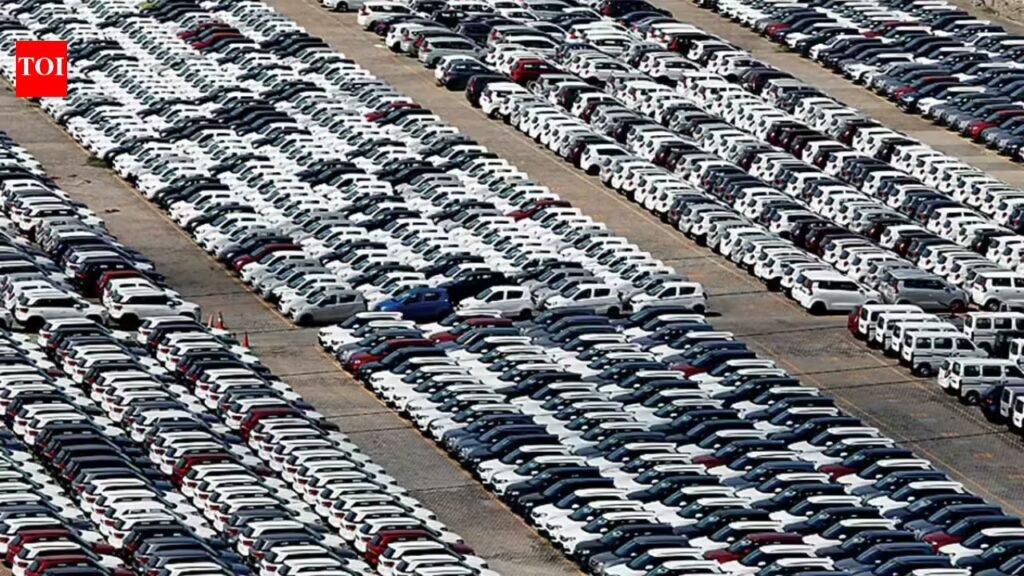
NEW DELHI: Maruti Suzuki on Tuesday approved investment of Rs 10,189 crore to add capacity of 2.5 lakh vehicles per year at its upcoming manufacturing facility in Gujarat, as the country’s largest carmaker looks to meet growing domestic demand including exports.
Government plans to merge Ircon, RVNL to help them scale up

NEW DELHI: Two major railway PSUs – Rail Vikas Nigam (RVNL) and Ircon International – are set to be merged as part of a move to create a bigger entity that can take up larger domestic and international projects, instead of competing with each other, top officials said Tuesday.This marks the second PSU merger after finance minister Nirmala Sitharaman announced the merger of PFC and REC in her Budget on Feb 1. The details of the RVNL-Ircon merger will be worked out by the railways brass in the coming days, the official said.People aware of the development said that railway has initiated the process, which will eliminate duplication, pooling of resources, and enhancing the ability of the merged entity to bid for mega infrastructure projects. They added that the process would be lengthy as this would require approvals from different departments and then from the Cabinet.As on Tuesday, the market capitalisation of RVNL was Rs 53,877 crore, while that of Ircon was Rs 11,159 crore, according to BSE data. Officials said the combined order book of the two entities is likely to be more than Rs 1.5 lakh crore. Ircon shares rose 2.9% on BSE to close at Rs 119, while RVNL closed 3.3% higher at Rs 258.“After merger, the new entity will become a bigger player and share value will also increase. The need for merging the two has been felt for a long time. It will increase pool of manpower and capability. The merged entity can give competition to other major players in infrastructure sector and it can handle larger order books,” said an official.
FMCG companies plan to hike prices, cut grammage

MUMBAI: Your next bottle of soft drink could cost you more and chances are that you will get lesser value out of the pack of biscuits or chips you buy. Consumer goods companies are implementing a mix of selective price hikes and grammage cuts to pass on some of the steep rise in input costs to consumers. Some firms are also looking at the option of smaller packs to make products more accessible for consumers. The West Asia conflict, which has now entered its fourth week, has triggered a surge in crude oil prices, shooting up raw material costs for companies. Crude oil has a direct bearing on packaging and logistics costs. Besides, crude derivatives are also used to manufacture several household products. “Some price corrections were already overdue over the past two years. Given the current environment, we have advanced this decision and will be implementing selective price increases effective April 1. In certain larger SKUs (stock keeping units), the increase may be slightly higher as there was some flexibility available through trade margin adjustments,” said Nikhil Doda, co-founder and chief operating officer at Lahori Zeera.Parle Products is looking to take selective price actions or grammage adjustments, said chief marketing officer Mayank Shah. “A more immediate and critical concern at this stage is the availability of fuel itself. It is important that policymakers differentiate between industrial users, with priority given to sectors linked to essential commodities like food to ensure there is no disruption in supply,” Shah said. Dabur will take price hikes wherever necessary, a company spokesperson said without sharing additional details. For FMCG companies, which had been betting on GST cuts to spur consumption after a long spell of sluggishness, the war risks slowing the pace of demand recovery just when revival was in sight. Firms had underlined improving consumption trends in their Q3 earnings. AWL Agri Business is pushing a wide range of pack sizes to the retail shelves starting from 200 ml. “If inflationary pressures continue, smaller pack sizes may help consumers manage their monthly household budgets more efficiently,” said managing director & CEO Shrikant Kanhere.“Household staples from soaps to packaged foods face margin pressure as petrochemical inputs rise. FMCG firms are weighing price hikes vs pack reduction-balancing margin protection with consumer demand,” said analysts at The Knowledge Company, who estimate packaging costs to have surged by 15%-20% on higher crude prices.
Beer, alcohol companies seek price hike

NE DELHI: Beer makers on Tuesday warned of supply disruptions this summer due to cost increase and inadequate availability of packing material, while Indian alcohol makers have asked states to revise prices of Indian Made Foreign Liquor, citing price pressures. The Confederation of Indian Alcoholic Beverage Companies said a weaker rupee, along with higher cost of packing material and fuel and transport costs, are putting pressure on the industry.Brewers Association of India said in last three weeks the conflict has pushed up costs by 10-12%. “Glass bottles prices have risen by approximately 20%, paper cartons have increased by almost 100%, and cost of materials have gone up 20-25%. Freight and logistics costs have also risen by 10%,” it said. Glass bottle supplies are hit due to LNG shortage, while aluminium shortage is affecting availability of cans, it added. Watch Premium Petrol Prices Hiked By Up To ₹2.35 Per Litre In India Amid West Asia Conflict
Combine view for all mandates in one place: RBI to payment industry
MUMBAI: The Reserve Bank of India (RBI) wants the payments industry to move towards an interoperable system that allows customers to view all mandates across payment instruments, whether UPI or credit cards, in a single interface. The central bank wants to position it as a key customer protection measure at a time when subscription-based services are proliferating and making it harder for users to track recurring outflows.Speaking at an event organised by the Merchant Payments Alliance of India, RBI executive director P Vasudevan said in UPI alone, about 87 crore mandates, or standing instructions for recurring payments, were created in Feb 2026. While UPI already provides a facility for users to view mandates in one place, he underlined the need to extend such visibility across all payment instruments and platforms.“I might have created mandates across aggregators, can I get a bird’s eye view? Imagine I also get a bird’s eye view across systems. I might have done something on UPI, I might have done something on say Mastercard, Visa. Can I get a bird’s eye view in one place so that I can easily continue or not?,” said Vasudevan.He said RBI is working on a Digital Payments Intelligence Platform that can generate real-time risk scores for transactions. It is also expanding the digital public infrastructure stack across payments, lending and identity, including the Unified Lending Interface, while exploring tokenisation beyond cards into areas such as KYC and financial instruments. Among other initiatives underway, the RBI is working on AI-driven systems, such as UPI Help for automated grievance handling, MuleHunter for identifying mule accounts. He emphasised that interoperability should remain the “mool mantra” of the payments ecosystem, urging industry participants to bring together disparate systems to deliver a seamless customer experience rather than forcing users to navigate multiple platforms for mandates, subscriptions and grievances. The central bank’s push comes amid rapid growth in digital payments and a shift towards merchant payments, with UPI increasingly being used for transactions .The regulator is also pushing for deeper use of artificial intelligence across the payments ecosystem, but cautioned against mechanical or rule-based deployments that could end up increasing friction. Systems should be context-aware , improving fraud detection , he said.
Metals melt as West Asia war rages on

MUMBAI: The accepted wisdom, for years, was that global uncertainties and inflation would drive the prices of precious metals northward. The war in West Asia is challenging that direction of causality.Despite heightened global uncertainties and fear of oil-price-led inflation, the price of the two precious metals-gold and silver-have slid southward. And market players and analysts said that the changing global market and economic structure that slowed down de-dollarisation moves compared to the pre-war period, as well as fear of rising rate of interest due to higher inflation is pulling down prices of these two precious metals. In addition, several of the central banks, that were buyers of the yellow metal for months, have started selling. And in the case of silver, slowdown in industrial demand is a factor that’s weighing down prices, market players said.Consider this: Since the war started, the price of gold in the local market has fallen 12% to about Rs 1.4 lakh/10 grams while silver is down 14% to Rs 2.3 lakh/kg. In the international market, gold is down 16.5% to $4,367/ounce (Oz) while silver is now at $68.5/Oz.The slide is even more sharp if we consider their all-time peak prices, recorded end-Jan this year. In the domestic market, gold has lost 19% while silver is down 41%. And in the international markets, gold has shed 20% and silver 42%.According to a local fund manager, for the past couple of years there has been a de-dollarisation wave, meaning economies trying to move away from dollar as the primary currency for international trade. This in turn led to a slide in the price of dollar, reflected in the slide in the dollar index, an index that shows the price of dollar against a basket of major currencies.Since Sept 2022, from a high of 114, dollar index had fallen to a low of 97 by mid-Feb this year. With precious metals all priced in dollars, this resulted in prices of these metals being cheaper in other major currencies, leading to higher demand and rising prices.“The war has slowed down the de-dollarisation move,” said the fund manager. “Also war has raised the spectre of inflation that in turn could lead to a higher rate of interest. Large buyers of precious metals keep their holdings in warehouses, paying the rents with borrowed money. With prospects of higher interest rates on the horizon, warehouse rents would also rise and therefore some profit taking by selling a part of their holdings which were in profit,” the fund manager said.There are analysts who are also indicating these factors for the recent bearish sentiment in precious metals.According to a note by Jateen Trivedi, VP research analyst, commodity & currency, LKP Securities, despite some recent gains in precious metals, the upside remains capped as the broader macroeconomic environment is still not supportive. “Despite temporary relief, markets continue to factor in inflation risks from elevated crude prices and uncertainty around interest rate trajectory, which keeps gold sentiment fragile.“For silver, which in the domestic market has lost over 40% from its all-time peak in late-Jan, a slide in industrial demand due to the war is also a factor, analysts said.