
Middle East tensions ripple through Pakistan’s fragile economy: Fuel cost soars, household bills pile up and more

The Middle East crisis is sending shockwaves far beyond the region, unsettling everything from oil markets to stocks and currencies. At a time when markets around the world are already volatile, Pakistan, which is already grappling with a fragile economy, is finding itself on the brink of an economic crisis. Concerns are rising around inflation, energy security and social stability continue to rise, putting the economy under visible strain.Experts warn that the fallout from the ongoing conflict involving Iran, Israel and the United States could deepen Pakistan’s existing vulnerabilities, especially given its heavy reliance on energy imports. The impact is no longer limited to markets, it is beginning to show in everyday life, from travel costs to education and household expenses. The energy shock International oil prices have surged sharply as Iran tightened its grip over the strategically important Strait of Hormuz, sending fresh tremors through global fuel markets. With a large share of the world’s oil supply passing through this narrow corridor, even minor disruptions have unsettled supply chains.For Pakistan, the impact has been immediate.The disruption has pushed up the cost of liquefied natural gas (LNG), a key fuel for power generation and industry. Shipments that cost around $25 million just weeks ago are now reportedly exceeding $100 million due to supply shortages and uncertainty, The Express Tribune reported.Qatar, a major LNG supplier to Pakistan, has declared force majeure following production disruptions. At the same time, global suppliers, including Shell, have also declared force majeure on contracts linked to Qatari supplies. Rising fuel costs and inflation risks The global energy shock is now spilling into daily household bills. Earlier this week, the Pakistan government approved a steep increase in the levy on high-octane fuel, raising it by PKR 200 per litre, from PKR 100 to PKR 300, according to ARY News.This comes after a March 6 hike, when petrol and diesel prices were raised by PKR 55 per litre amid rising global oil prices driven by the US-Israel war with Iran. Petrol now costs PKR 321.17 per litre, up from PKR 266.17, while diesel has risen to PKR 335.86 from PKR 280.86.Since fuel is the backbone of transportation, logistics and manufacturing, the increase is expected to push inflation higher.Senior Karachi-based journalist Shams Kerio warned that Pakistan’s dependence on regional trade and oil imports makes it particularly vulnerable. He noted that prolonged disruptions, especially if negotiations between Iran and the United States fail, could worsen economic instability. Strain on aviation sector The aviation sector is also feeling the pressure.Fuel costs have surged, with Jet A-1 prices rising by around PKR 154 per litre and aviation gasoline by nearly PKR 80 per litre, according to The Express Tribune. Airlines are struggling to manage rising costs and have passed much of the burden on to passengers leading to high airfares during Eid ul-Fitr. Domestic fares increased by 15% to 20%, with some passengers paying up to 30% more. Ticket prices for domestic routes have jumped by PKR 10,000 to PKR 15,000, while international fares have surged between PKR 30,000 and PKR 150,000 depending on routes and demand.Further increases may be unavoidable if the situation persists. Pressure on government finances and reserves The crisis is also exposing deeper economic weaknesses, including limited reserves and high government spending.Kerio stressed the need for tighter fiscal management, warning that prolonged conflict could have severe consequences. “If the war continues, Pakistan’s economy could collapse due to lack of reserves and weak financial accountability,” he said, adding that ordinary citizens would bear the brunt.The government has begun taking precautionary steps. Prime Minister Shehbaz Sharif chaired a meeting to review fuel reserves and supply, with officials stating that there are “adequate stocks of petroleum products” for now.However, authorities warned that the unstable regional situation could disrupt supplies, prompting austerity measures. Impact spills into daily life To manage the crisis, the government has introduced strict fuel-saving measures.These include a 50% cut in fuel allowances for official vehicles, a four-day work week, and a directive for half of public sector employees to work from home, except those in essential services.Citizens have been urged to conserve fuel to “avert the risk of petroleum products’ supply getting affected in the coming days”, with suggestions such as carpooling and limiting unnecessary travel.Sharif has also called for a “comprehensive strategy” to handle any emergency, while the Intelligence Bureau has been tasked with monitoring the implementation of these measures. Impact on vulnerable populations The burden is expected to fall hardest on lower-income groups.Kerio noted that daily wage workers are already under pressure and warned that rising fuel prices could worsen food insecurity and unemployment. “Daily wage workers are already struggling. If petrol prices rise further, food insecurity and unemployment will worsen,” he said.Higher fuel costs are also increasing expenses in agriculture and industry, which is likely to push up prices of essential goods, including food and household items. More pressure on an already fragile backbone The crisis comes at a time when Pakistan is already dealing with deep structural challenges, including gaps in education.Nearly 28% of children aged 5-16 remain out of school, with girls disproportionately affected. The literacy rate stands at 63%, with clear gaps between urban and rural areas, and between men and women.Experts say financial pressures, household responsibilities and limited access to secondary education continue to drive high dropout rates, especially among girls.These long-standing issues reduce the country’s ability to absorb economic shocks and sustain growth. External support and uncertain outlook Amid the crisis, the Asian Development Bank is expected to provide about $10 billion in financing over the next five years under its 2026–30 strategy.ADB Country Director Emma Fan said, “The new CPS is tailored to address Pakistan’s structural challenges and promote robust and lasting growth, which benefits the whole country, especially the poor and vulnerable.”While this may offer some support, uncertainty remains high.Kerio warned that the conflict could escalate further, potentially drawing in countries like Russia and China. At the same time, he expressed cautious optimism. “If negotiations succeed and
$20 billion bet: ONGC eyes its oil exploration programme with deep-water drilling rigs; eye on energy security

ONGC floated a tender for these rigs as it looks to accelerate hydrocarbon exploration under the government’s Samudra Manthan mission. (AI image) Oil and Natural Gas Corporation or ONGC is expected to spend about $18–20 billion on hiring deep-water drilling rigs for what could become its largest-ever oil exploration programme, according to people familiar with the development.Last month, ONGC floated a tender for these rigs as it looks to accelerate hydrocarbon exploration under the government’s Samudra Manthan mission, which is aimed at strengthening the country’s energy security. Around a dozen domestic and global drilling firms took part in a pre-bid meeting held in Mumbai on March 20, sources said.“The tender seeks a mix of drill ships and semi-submersible rigs for up to five years. This programme will cost ONGC around $18-20 billion,” a senior industry official whose company attended the meeting told ET.“ONGC is seeking mobilisation of the rigs within 80 days, which highlights ONGC’s urgency to scale up deep-water activity,” the industry official added.Apart from operations in the KG Basin along the east coast, ONGC has also initiated ultra-deep-water drilling in the Andaman region. The company is also exploring partnerships with global energy majors such as BP, ExxonMobil, TotalEnergies and Petrobras as part of its strategy to reduce risks that are associated with exploration in capital-intensive frontier areas. The tender that was issued in February invites bids from experienced offshore drilling contractors. This tender invites bids through an international competitive bidding process.Though the tender was issued in February, the news assumes significance at a time when India’s energy is particularly in focus with the Middle East conflict and the US-Iran war disrupting flows of crude oil, LPG, and LNG.
‘Adequate stock available’: Govt issues clarification on LPG refill booking timeline amid confusion
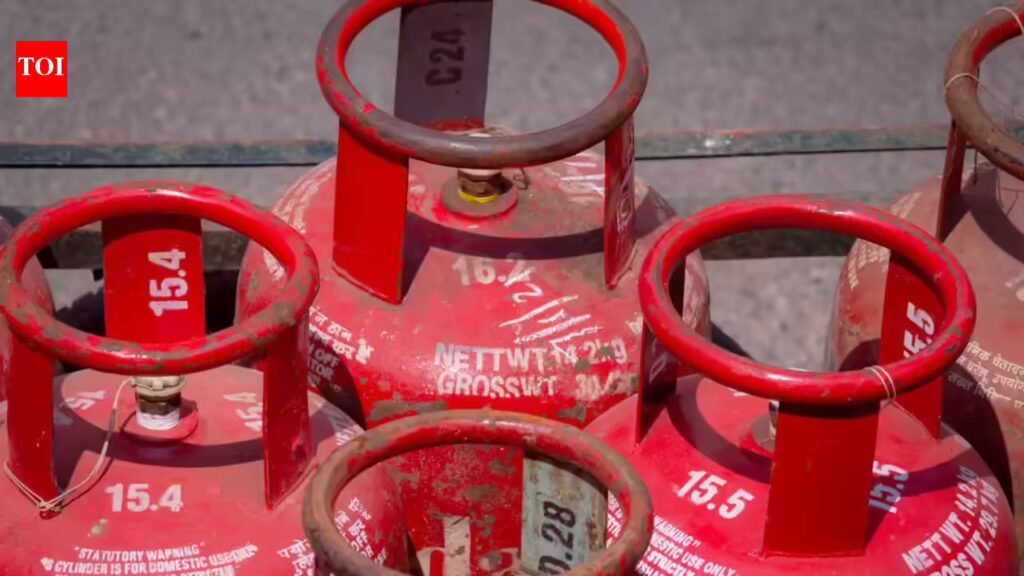
The government on Wednesday dismissed reports suggesting a change in LPG refill booking timelines, stating that the information being shared is incorrect and misleading. The Centre reaffirmed that the existing timelines “remain unchanged and continue to” function under the current time limit.The ministry of petroleum & natural gas clarified that reports circulating on social media claiming changes to LPG refill booking timelines are false, stating that the suggested revised intervals: 45 days for PMUY connections, 25 days for single non-PMUY connections and 35 days for double cylinder non-PMUY connections, have no basis. It further added that the country has adequate LPG supplies and assured citizens that there is no need to panic. Here’s what the government said: The ministry stated that “no such changes have been made. The existing refill booking timelines remain unchanged and continue to be under the existing system.” Presently, LPG refill bookings follow a uniform structure: 25 days in urban areas, and 45 days in rural areas, irrespective of connection type It also urged citizens not to believe or “circulate such misinformation” and to avoid unnecessary or panic-driven LPG refill bookings.“It is reiterated that adequate LPG stocks are available in the country, and there is no cause for concern,” the ministry added.Meanwhile, Indian Oil Corp Ltd has also soothed concerns about the timeline change reports. The oil firm stated that “reports claiming changes in LPG refill booking timelines are incorrect. There is no change in the existing timelines (25 days in urban areas / 45 days in rural areas), and LPG supplies remain adequate across the country. Please rely only on official sources and avoid panic.”In its statement, the ministry also cautioned the public against spreading or believing such misinformation. It also advised consumers to refrain from unnecessary or panic-driven refill bookings, reiterating that LPG stocks remain sufficient across the country and there is no cause for concern. Fuel supply concerns arise amid Middle East crisis As ongoing tensions in the Middle East region stretch through their fourth week, concerns are rising over fuel supply and prices in the country. Earlier, this week, Sujata Sharma, joint secretary, ministry of petroleum and natural gas said that the country continues to have adequate reserves of petroleum products. She noted that refineries are functioning at high operational levels with sufficient crude inventories.“All the refineries are operating at high capacity with adequate crude inventories. We have sufficient stock of petrol and diesel. The domestic production of LPG has been stepped up in the refineries,” she said.Sharma acknowledged that isolated instances of misinformation had led to confusion in certain areas, resulting in panic buying. She said such rumours had come to the notice of the ministry and were promptly addressed.She further added that around 7,500 domestic and commercial PNG connections were provided in a single day across 110 geographical areas. Highlighting potential reach, she noted that about “60 lakh such households where PNG connection can be provided” have been identified and encouraged eligible users to adopt PNG connections at the earliest.
‘No shortage of petrol, diesel, or LPG’: BPCL, HPCL, IOCL soothe fuel concerns in India

Amid rising concerns about fuel supply in the country, several oil giants have issued clarifications stating there is no shortage, calling such rumours “completely false” and assuring that supply remains normal and sufficient. The statements come at a time when global oil supplies are disrupted due to Iran’s chokehold of the Strait of Hormuz amid the ongoing Middle East crisis. The firms also urged the buyers to not panic in the situation and avoid unnecessary purchases.Bharat Petroleum on Wednesday dismissed concerns around fuel shortage in the country, clarifying that the “rumors are completely false.” Taking to social media platform X, the oil giant wrote, “Important Notice Rumors of a petrol-diesel shortage are completely false. There is sufficient availability of fuel across the country and the supply is normal. BPCL is ensuring uninterrupted supply at all locations. Please do not panic and avoid unnecessary purchases.“Hindustan Petroleum Corporation Limited or HPCL also echoed a similar view, stating that “there is no shortage of petrol, diesel, or LPG across the country.” It further added, “Fuel supplies remain stable, and adequate stocks are available. Customers are advised not to be misled by rumours or resort to panic buying. Please continue with normal consumption patterns. HPCL remains committed to ensuring an uninterrupted and seamless fuel supply across its network.“Indian Oil also took to X, easing concerns around petrol and diesel shortage. The firm said, “there is no shortage of petrol or diesel. Rumours circulating online can create unnecessary concern and disrupt normal supply patterns. IndianOil outlets are well-stocked and fully operational. We urge citizens to avoid panic buying and rely only on verified information. Together, we can keep the system running efficiently for everyone.“To demonstrate the stability of its supply chain, Indian Oil Corporation Limited shared real-time updates from its retail outlets, pointing to normal operations at its COCO Maradu facility. “Our Retail Outlet COCO Maradu, Kochi at 09:30 AM Today. No Rush! No Panic! Everything is operating smoothly. We remain fully committed and available to serve you at all times,” the company said.Going further, the oil giant also dismissed any changes in LPG refill booking timelines. “Reports claiming changes in LPG refill booking timelines are incorrect. There is no change in the existing timelines (25 days in urban areas / 45 days in rural areas), and LPG supplies remain adequate across the country. Please rely only on official sources and avoid panic booking.The ongoing crisis in the Middle East region has triggered oil supply tensions globally and pushed oil prices higher. Last week, oil marketing companies raised the price of 95-octane premium petrol by nearly Rs 2 per litre and increased industrial diesel rates by Rs 22 per litre. However, prices of regular petrol, diesel and aviation turbine fuel have not been changed. Officials noted that the premium petrol segment accounts for less than 5% of total users. In parallel, global oil markets showed a decline in prices. Brent crude futures were down $6.21, or 5.9%, at $98.28 a barrel by 0058 GMT after touching a low of $97.57. US West Texas Intermediate crude futures fell $4.67, or 5.1%, to $87.68 a barrel, having earlier dropped to $86.72.
Gold price prediction today: Where is gold headed on March 25, 2026 & in the near-term?

Gold recorded one of the sharpest weekly losses in recent years in the last week. (AI image) Gold price prediction today: Gold prices are likely to see movement based on inflation projections and rate cut expectations, says Maneesh Sharma, AVP – Commodities & Currencies at Anand Rathi Shares and Stock Brokers.Gold recorded one of the sharpest weekly losses in recent years in the last week while prices plunged to four month lows at around $4099/Oz in spot yesterday. Reasons for fall in gold prices since last week Higher oil prices led to inflationary fears leading to expectations of rate hikes by central banks. US Treasury yields remain elevated – US 10Y yields 3.93% on 3rd Mar. to 4.37 % today) A steady US Dollar (USD) trading above 99 continues to cap the upside for the commodity. The International Monetary Fund (IMF) Managing Director Kristalina Georgieva had warned earlier in March that a sustained 10% rise in Oil prices for a year would push global inflation by 40 basis pointsGlobal central banks continued to buy gold in the month of January (net 5 tonnes), but momentum has eased at the start of the year, with a monthly average of 27t seen in 2025.The recent weakness in bullions has also been exacerbated by forced selling, as investors liquidate gold positions to cover losses elsewhere in their portfolios rather than a deterioration in gold’s longer term fundamentalsA prolonged conflict meanwhile creates a risk for emerging market central banks to allocate less funds to buy gold during the current year as the same could be used to fund elevated oil purchases & injecting liquidity through tools like quantitative easing to boost economic growth.Geopolitical Developments Iran denied that it had held talks with the US to end the war, contradicting US President Donald Trump’s remarks on Monday that a deal could be reached soon. Moreover, Mohsen Rezaei, the senior military adviser to Iranian Supreme Leader Mojtaba Khamenei, said – war to continue until Iran receives full compensation for the damage. Adding to this, energy infrastructure in Iran has reportedly come under renewed pressure, which, along with the effective closure of the Strait of Hormuz, assists Crude Oil prices. Gold Price Broad Outlook (International markets) Weekly View: Spot Gold (CMP 4,410/Oz) – Volatile for current week, Downside Bias for 1 – 2 weeks Spot Silver (CMP $70.10/Oz): Bounce towards $ 73 – 74/Oz, remains a selling opportunity for 1 – 2 week Currently gold & silver have reversed the upside trend seen since the start of the year. Spot Gold (CMP 4410/oz) bounced seen since yesterday from a four-month low, below $4,100 looks unsustainable on a weekly basis. Upside resistance zone $ 4520 – 4570/Oz. A 10 – 15 % fall in Spot prices towards $ 3800 – 3750/Oz in next 1 – 2 weeks cannot be ruled out in case Oil continues to rise on prolonged geopolitical tensions. Support for Silver pegged at around $ 56 – 58/Oz in Spot while resistance remains at around 73 – 74/Oz in spot. Gold has now fallen every week since the conflict began on 28 February as elevated energy prices and geopolitical risks are increasingly being offset by higher real yields and a firmer dollar Hence gold’s direction will depend less on geopolitical headlines alone and more on how those events shape inflation, monetary policy expectations and real interest rates.(Disclaimer: Recommendations and views on the stock market, other asset classes or personal finance management tips given by experts are their own. These opinions do not represent the views of The Times of India)
Rupee inches closer to 94: Currency falls 20 paise to 93.96 per US dollar in early trade
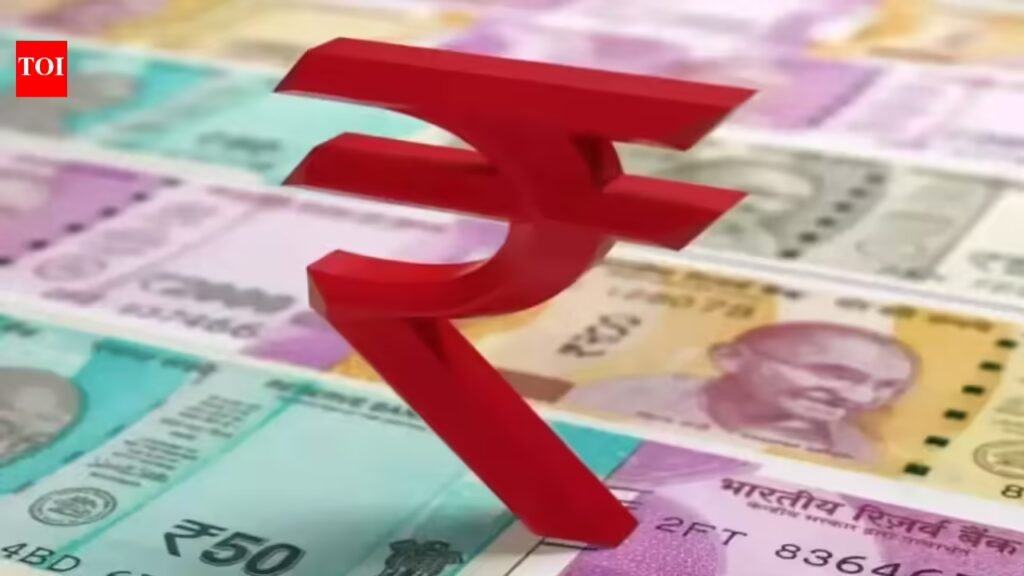
Rupee on Wednesday took another fall towards the 94 per US dollar mark, tumbling 20 paise in early trade to reach 93.96 against the greenback. This follows a weak run for the currency this month. Earlier on Tuesday, the currency had already slipped by 23 paise to settle at 93.76, pressured by a stronger US dollar against major currencies and elevated global crude oil prices, which weighed on investor sentiment.Rupee has been facing pressure due to foreign fund outflows, with forex traders citing uncertainty linked to the West Asia crisis as a key factor behind the sustained weakness. The currency had already shown signs of strain earlier in the week, inching closer to the psychological 94-level against the US dollar for the first time on Monday, before recovering to close flat at 93.53.“Persistent FPI outflows continue to pressure INR. A strong US dollar is keeping emerging market currencies weak, and the INR has weakened by about 4.5 per cent during the month. The rupee range for Wednesday is expected to be 93.65 to 94.25,” Anil Kumar Bhansali, head of treasury and executive director, Finrex Treasury Advisors LLP, said. Meanwhile, Dalal Street remained strong with benchmark indices jumping by over 1% each. As of 9:40 am IST, NSE Nifty50 was trading at 23,212.55, up 300.15 or 1.31%. BSE Sensex was also trading in green, gaining almost 900 points or 1.22% to trade at 74,969.91.Uncertainity around the Middle East tensions have also triggered volitality in financial markets. The plunge comes after the United States had put forward a 15-point proposal to Iran aimed at ending the ongoing conflict. US President Donald Trump said Washington and Tehran are “currently in negotiations” and suggested that Iran is eager to strike a peace deal, even as the Islamic Republic has denied holding any direct talks with the United States. Watch Rahul Gandhi Warns Of Inflation Wave Amid Rupee Fall, Slams Modi Govt Over Strategy
Stock market today (March 25, 2026): Nifty50 goes above 23,400; BSE Sensex rises over 1,500 points as oil goes below $100

Stock market today (AI image) Stock market today: Nifty50 and BSE Sensex continued their rally on Wednesday rising over 1.5% in early morning trade. While Nifty50 went above 23,400, BSE Sensex rose over 1,500 points. At 11:10 am, Nifty50 was trading at 23,426.75, up 514.35 or 2.24%. BSE Sensex was trading at 75,678.73 up 1610.28 or 2.17%.Dr. VK Vijayakumar, Chief Investment Strategist, Geojit Investments Limited says, “Hope is returning to the market with indications of deescalation in the conflict. Remarks from President Trump and from the Iranian regime indicate that the conflict might end soon. Particularly the reiteration from Iran that “non-hostile ships can transit the Strait of Hormuz” is good news that will mitigate India’s energy concerns. These positive geopolitical developments have reflected a sharp decline in Brent crude to around $98. The US 10-year yield also has declined. Gold has recovered. If this positive development sustains, there is room for a sharp rebound in the market. But if the recovery is to sustain FIIs should stop their big sustained selling, which, in turn, will require stability in the rupee. Yesterday’s 399 point recovery in the Nifty was caused more by short covering. In the near-term, mid and small caps can rebound more than large caps since there is no worry of significant FII selling in this segment.”Asian equities moved higher as optimism grew around Washington’s efforts to resolve the nearly month-long conflict in the Middle East. The dollar also weakened.US markets, however, saw choppy trading during Tuesday’s session, as investors weighed concerns over rising oil prices against hopes for a resolution to the conflict. This came even as reports indicated that additional American troops could be deployed to the region despite signs of diplomatic progress.Oil prices fell more than 5% on Wednesday on expectations that a potential ceasefire could ease supply disruptions from the key Middle East producing region, following reports that the US had presented Iran with a 15-point proposal to end the conflict.On the domestic front, foreign institutional investors remained net sellers, offloading shares worth Rs 8,009.56 crore on Tuesday, while domestic institutional investors provided some support by purchasing equities worth Rs 5,867.15 crore.(Disclaimer: Recommendations and views on the stock market, other asset classes or personal finance management tips given by experts are their own. These opinions do not represent the views of The Times of India)
Gold, Silver Rate Today Live Updates: Gold, silver prices up, precious metals rally strongly after crash as worries on US-Iran war ease; what should investors do?

Gold and silver prices rebounded sharply on Wednesday on the Multi Commodity Exchange of India after witnessing heavy selling in the previous two sessions. The recovery was aided by a softer dollar, while easing oil prices helped reduce concerns over inflation and the trajectory of global interest rates. US President Donald Trump said that Washington and Tehran are “currently in negotiations” and indicated that Iran is keen to reach a peace agreement, although the country has denied engaging in any direct talks with the United States. On the MCX, silver futures for May 2026 delivery rose by Rs 12,196, or 5.4%, to Rs 2,36,137 per kilogram. Gold futures for April 2026 delivery also advanced, gaining Rs 5,522, or 4%, to Rs 1,44,434 per 10 grams.
Top stocks to buy today: Stock recommendations for March 25, 2026 – check list

Top stocks to buy (AI image) Stock market recommendations: Aurobindo Pharma, Infosys, and Larsen & Toubro (L&T) – these are the stocks that Mehul Kothari, DVP – Technical Research at Anand Rathi Shares and Stock Brokers has recommended as top stocks to buy today (March 25, 2026):Aurobindo Pharma – Breakout with Momentum ConfirmationBuy: ₹1280–₹1260 | Stop Loss: ₹1235 | Target: ₹1390Aurobindo Pharma has delivered a decisive breakout after several weeks of consolidation, indicating a potential resumption of the uptrend. The stock had been trading within a narrow range, forming a strong base before this upward move. From a technical standpoint, the setup appears constructive with multiple indicators aligning in favor of the bulls. The DMI reflects a positive bias, suggesting strengthening directional momentum, while the RSI has moved above the 60 mark, indicating strong buying interest and improving trend strength. Additionally, the MACD has given a bullish crossover above the zero line, confirming a shift in momentum toward the upside. This confluence of breakout and momentum signals points toward a continuation of the upward move, provided the stock sustains above the breakout zone.Infosys – Bullish Divergence Indicating Potential ReversalBuy: ₹1270–₹1240 | Stop Loss: ₹1175 | Target: ₹1375Infosys is showing early signs of a potential reversal as momentum indicators begin to diverge from price action. While the stock has been forming lower lows, the RSI has been making higher lows, indicating a clear bullish divergence and suggesting that selling pressure is gradually weakening. Adding to this, the MACD has given a bullish crossover, reflecting improving momentum and a possible shift in short-term trend direction. This combination of RSI divergence and MACD confirmation points toward emerging accumulation at lower levels. The setup indicates a high probability of a relief rally or short-term recovery as momentum stabilizes.Larsen & Toubro – Oversold Bounce with Positive DivergenceBuy: ₹3400–₹3350 | Stop Loss: ₹3250 | Target: ₹3600Larsen & Toubro appears to be nearing exhaustion in its recent downtrend, with momentum indicators signaling a potential bounce. Despite the extended decline in price, the RSI is not making fresh lower lows, indicating positive divergence and a gradual loss of selling momentum. At the same time, the MACD is positioned in an oversold zone, which typically reflects trend exhaustion and increases the probability of a reversal or technical pullback. The alignment of these indicators suggests that the stock may witness a short-term recovery if buying interest emerges near current levels.(Disclaimer: Recommendations and views on the stock market, other asset classes or personal finance management tips given by experts are their own. These opinions do not represent the views of The Times of India)
ITC, Tata Power & more: Top stocks to watch for on March 25, 2026
Morgan Stanley initiated its coverage on Fractal Analytics with the target price at Rs 946. Analysts said they see Fractal Analytics as a challenger in the tech services space. With its strong positioning in data and analytics (a segment growing faster than overall IT services spend), and its platform-centric approach to delivering agentic AI services, expect its revenue growth to continue surpassing that of industry. They also expect gross margin improvement, alongside operating leverage across other items, to lift earnings before interest and taxes (EBIT) margins to 15% and narrow the gap with peers.UBS has a buy rating on ITC with the target price at Rs 395. Analysts said ITC has implemented price hikes across its cigarette portfolio following additional excise duties effective Feb 1 this year. It has adopted a three-pronged pricing strategy to protect volumes. Overall, the company has ensured a same-price option across all sensitive variants that should largely limit volume impact (barring trade destocking). But this pricing strategy leads to mid-single digit decline in net realisable value. Nonetheless, ITC is likely to exceed the bearish consensus expectations for FY27.Motilal Oswal Securities has a buy on Tata Power with the target price at Rs 455. Analysts said the company’s finalisation of the supplemental power purchase agreement (SPPA) with Gujarat is a significant positive development, addressing the viability challenges of the Mundra plant. If SPPA is adopted by all states, losses at Mundra are likely to reduce by 75% from current Rs 1,700-1,800 crore per annum. This would lead to a 4.5-5.5% upward earnings revision to our FY27/28 net profit estimates. Beyond Mundra, the company continued strong performance in the Odisha and Delhi distribution businesses, as well as the rooftop solar segment, along with backward integration through a planned 10GW ingot/wafer manufacturing capacity, emerging distribution opportunities, and an increased focus on expanding its own renewable energy capacity remain key growth drivers and catalysts for the company.Nuvama has a reduce rating on Coal India with the target price at Rs 384. Analysts said Coal India’s narrative of higher volume and e-auction prices, amid higher global coal prices, may not materialise due to excess domestic supply, competition and relatively lower demand. They expect blended e-auction prices to be range bound though volumes could be higher. Analysts are yet to see a volume growth in FY26 and a 4% volume compounded annual growth rate (CAGR) over FY26–FY28 is at risk amid higher volume from captive miners. Wage revision for non-executives is due from July ‘26 and the company may not be able to pass on the same. Earnings are likely to be muted over FY26–FY28.Kotak Institutional Equities has a reduce rating on Power Grid Corp with the target price at Rs 300. Analysts said the company has raised its capex and capitalization guidance for FY26 to Rs 35,000 crore and Rs 25,000 crore, respectively, while reiterating the guidance for FY27-28. Improved capitalization is largely on the back of the resolution of right of way issues. The company further highlighted CEA’s latest estimate for transmission capex of Rs 7.9 lakh crore for non-fossil fuel generation capacities by FY36, with potentially incremental opportunities from global undersea projects and Brahmaputra basin. The company’s management is accordingly targeting Rs 40,000 crore/Rs 35,000 crore of average annual capex/capitalization over FY29-FY36. A longer growth runway is positive, however, valuations at 16X of price-to-earnings are saturated.(Disclaimer: Recommendations and views on the stock market, other asset classes or personal finance management tips given by experts are their own. These opinions do not represent the views of The Times of India)