
Stock market today (March 25, 2025): Which are the top gainers and losers in Nifty50 and BSE Sensex today? Check list

Investor wealth surged by Rs 15.80 lakh crore over two trading sessions as equities rebounded sharply amid a decline in crude oil prices and growing hopes of de-escalation in the West Asia conflict.Stock markets have been gaining for the past two days, with the BSE Sensex rising 2,577.06 points or 3.54 per cent. On Wednesday, the 30-share benchmark jumped 1,205 points or 1.63 per cent to settle at 75,273.45.Reflecting the improvement in investor sentiment, the market capitalisation of BSE-listed companies increased by Rs 15,80,204.92 crore to Rs 4,31,01,834.74 crore (USD 4.59 trillion) during the period.Here are the top gainers and losers of the day: Nifty50 top gainers Shriram Finance (+5.80%) UltraTech Cement (+4.09%) Bajaj Finance (+3.98%) Grasim Industries (+3.86%) Adani Enterprises (+3.78%) Larsen & Toubro (+3.77%) Titan Company (+3.59%) InterGlobe Aviation (+3.47%) Trent (+3.37%) Dr Reddy’s (+3.27%) Nifty50 top losers Tech Mahindra (−1.69%) Power Grid (−1.34%) Tata Consultancy Services (−0.90%) Bharat Electronics (−0.25%) BSE Sensex top gainers UltraTech Cement (+4.09%) Bajaj Finance (+3.98%) Larsen & Toubro (+3.77%) Titan Company (+3.59%) InterGlobe Aviation (+3.47%) Trent (+3.37%) Mahindra & Mahindra (+3.20%) Tata Steel (+3.08%) State Bank of India (+2.90%) Kwality Wall’s (+2.59%) BSE Sensex top losers Tech Mahindra (−1.69%) Power Grid (−1.34%) Tata Consultancy Services (−0.90%) Bharat Electronics (−0.25%) “Indian equities extended their recovery for the second consecutive session, supported by improving global cues and emerging hopes of a potential de-escalation in the ongoing US–Iran conflict,” Siddhartha Khemka, Head of Research, Wealth Management, Motilal Oswal Financial Services Ltd, said, PTI quoted.Brent crude, the global oil benchmark, declined 6.16 per cent to USD 97.79 per barrel.“Markets continued to build on the previous day’s momentum as global risk sentiment improved, with hopes of peace emerging on the radar. Potential diplomatic progress between the US and Iran—despite mixed geopolitical commentary — led to easing crude oil prices below USD 100, which was welcomed by the market,” Vinod Nair, Head of Research, Geojit Investments Limited, said.In Asian markets, South Korea’s Kospi, Japan’s Nikkei 225, Shanghai’s SSE Composite and Hong Kong’s Hang Seng index ended higher, while European markets were also trading in positive territory.All sectoral indices closed in the green, with BSE MidSmall Private Banks Quality Tilt rising 3.70 per cent, followed by commodities (2.75 per cent), PSU Bank (2.61 per cent), realty (2.53 per cent), metal (2.51 per cent), industrials (2.49 per cent) and services (2.42 per cent).“Markets extended their recovery for the second consecutive session on Wednesday, supported by easing geopolitical tensions and a decline in crude oil prices,” Ajit Mishra, SVP, Research, Religare Broking Ltd, said.On the BSE, 2,959 stocks advanced, while 1,357 declined and 156 remained unchanged, according to exchange data.
CCPA warns hotels, restaurants of action for levying ‘LPG, Gas surcharges’

NEW DELHI: The Central Consumer Protection Authority (CCPA) on Wednesday warned hotels and restaurants of action in case it found them levying additional charges under heads such as “LPG charges,” “gas surcharge,” and “fuel cost recovery” in food bills.The authority issued an advisory invoking provisions of Consumer Protection Act observing that such charges are being imposed by default to circumvent existing guidelines on service charges. It said that no such charges shall be levied automatically, and warned that violations may invite “strict action” as this constitutes “unfair trade practice”.In an official statement, the CCPA said that grievances received on the National Consumer Helpline (NCH), and media reports, show that certain hotels and restaurants are levying such charges in the consumer bill by default, over and above the price of food and beverages displayed in the menu and applicable taxes. “Such practices result in lack of transparency and impose unjustified costs on consumers,” it said.The authority clarified that input costs such as fuel, LPG, electricity, and other operational expenses are part of the cost of running a business and must be factored into the pricing of menu items.It advised eateries that the price displayed in the menu shall be the final price, exclusive only of applicable taxes. Consumers should not be misled or compelled to pay any additional charge that is not voluntary in nature.The CCPA said consumers who encounter such practices may request the hotel or restaurant to remove the charge from the bill; lodge a complaint on NCH by calling 1915 or through its mobile app and can also file a complaint before the appropriate consumer commission through the e-Jagriti portal.
British Airways plans bonus for pilots for cutting fuel use under new emissions-linked plan: Report

British Airways is proposing a new incentive scheme that would reward pilots for reducing fuel burn and carbon emissions, with a potential bonus of up to 1% of basic salary if collective targets are metAccording to a document seen by Bloomberg, pilots would need to collectively cut their aircrafts’ carbon dioxide emissions by 60,000 tonnes above 2025 levels to unlock the payout. The incentive is due to begin next year, the report said.The plan, which has reportedly been under discussion for months, is expected to be put to a vote among members of the British Airline Pilots’ Association (BALPA) at the end of April, Bloomberg reported, citing a person familiar with the matter. Focus on fuel-saving flying practices The proposal says pilots could help improve efficiency through measures such as taxiing procedures and managing extra fuel loads, according to the document cited.“Flight crew decisions have a direct and measurable impact on fuel burn and emissions,” the document sent to BA pilots said.It added, “The incentive exists only to recognise and reward fuel efficient behaviours when, and only when, they are compatible with uncompromised safety and sound airmanship.” Airline, union acknowledge discussions A British Airways spokesperson said the airline was pleased to be working with BALPA on the initiative, while the union said it was discussing possible changes affecting BA pilots.The union represents 85% of pilots in the UK, the report said. Rising oil prices and climate pressure The move comes as airlines face pressure from surging oil prices, with crude rising above $100 a barrel amid the ongoing war in Iran.The report further noted that some carriers have already introduced surcharges or cancelled flights, while European airlines have warned that higher costs could be passed on to passengers.Like many global carriers, British Airways is aiming to become carbon neutral by investing in sustainable aviation fuel (SAF), purchasing credits and operating more fuel-efficient aircraft.The UK government has said SAF must account for 3.6% of airlines’ total jet fuel demand this year as part of its broader plan to reach net zero by 2050.
Govt extends RBI’s 4% retail inflation target framework till March 2031
The government on Wednesday extended the mandate for the Reserve Bank of India (RBI) to maintain retail inflation at 4 per cent, with a tolerance band of 2 percentage points on either side, for another five years ending March 31, 2031.The move continues the flexible inflation-targeting framework first introduced in 2016 and retained once earlier in March 2021.“The central government, in consultation with the Reserve Bank, hereby notifies the inflation target for the period beginning April 1, 2026, and ending on March 31, 2031,” a gazette notification issued by the Department of Economic Affairs dated March 25 said, quoted PTI.According to the notification, the inflation target remains at 4 per cent, with an upper tolerance level of 6 per cent and a lower tolerance level of 2 per cent.India formally adopted the inflation-targeting regime in 2016, when the six-member Monetary Policy Committee (MPC), headed by the RBI governor, was tasked with keeping annual retail inflation aligned to the 4 per cent target until March 31, 2021. The framework was subsequently extended for another five-year period in 2021.Over the past decade, retail inflation has remained within the prescribed band for nearly three-quarters of the time, although volatility increased during the pandemic years.The latest official data showed retail inflation rising to 3.21 per cent in February from 2.74 per cent in the previous month. The Consumer Price Index (CPI) released earlier this month is based on a new series with base year 2024.Against the backdrop of the upcoming review effective from April 1, 2026 and evolving global and domestic economic conditions, the RBI had undertaken an assessment of the nature and format of the inflation target.In August 2025, the central bank issued a discussion paper seeking stakeholder feedback on several issues, including whether headline inflation or core inflation should guide monetary policy, whether the 4 per cent target remains optimal for balancing growth and stability, and whether the tolerance band around the target requires revision.The paper also explored whether the target level should be replaced with a range-based framework while maintaining flexibility and policy credibility.It noted that inflation performance during the nine years of flexible inflation targeting showed a “hump-shaped” trajectory. The first three years and the most recent three years broadly aligned with the target, while the intervening period saw inflation trends move closer to the upper tolerance band amid disruptions such as the Covid-19 pandemic and the Russia-Ukraine conflict.“The experience of the FIT framework, introduced in 2016 and first reviewed in 2021, has broadly performed well. From the inception of FIT till about the end of 2019, inflation was low and stable, averaging around 4 per cent,” the RBI paper said.It emphasised that monetary policy frameworks require both certainty and credibility, particularly in an environment marked by heightened global uncertainty, and suggested that the existing framework’s built-in flexibility should be used to steer macroeconomic outcomes.Globally, inflation targeting has become the most widely adopted monetary policy framework since New Zealand first introduced it in 1990. The RBI paper noted that average inflation in India has moderated to around 4.9 per cent since the adoption of flexible inflation targeting, compared with an average of 6.8 per cent in the pre-framework period under the current data series.
8th Pay Commission update: Centre details roadmap and mandate in Parliament; what employees should know

The government on Tuesday informed Parliament that the 8th Central Pay Commission (CPC) is examining revisions in pay scales, salaries, allowances and pension structures for central government employees, while consultations with stakeholders are currently under way.In a reply to an unstarred question in the Lok Sabha, minister of state for finance Pankaj Chaudhary said the Centre had notified a resolution dated November 3, 2025 for the constitution of the 8th CPC along with the appointment of its chairperson and members, reported ET.The finance ministry also outlined the broad roadmap for implementation of the panel’s recommendations and clarified that the fiscal impact on the Union Budget would be known only after the government takes a final decision on accepting the report.Raising the issue in the House, Lok Sabha member A Raja sought details on the key areas under review by the commission. He asked whether proposed changes would cover pay scales, salaries, allowances and pension structures, and also sought clarity on the timeline for submission of the report.Raja further inquired whether the government had made any assessment of the fiscal implications of implementing the commission’s recommendations on the Union Budget.Responding to the queries, Chaudhary said the 8th CPC will make recommendations on “various issues viz. pay, allowances, pension, etc.” of central government employees within 18 months of its constitution.He added that the financial impact of the recommendations cannot be quantified at present and would be determined only after the Centre considers and accepts them.The commission has already started functioning from its office in New Delhi and has put in place an administrative framework to carry forward its work. It has appointed Ranjana Prakash Desai as chairperson, Pulak Ghosh as part-time member and Pankaj Jain as member-secretary to examine issues related to pay, pension, allowances and other service-related matters concerning central government employees.Apart from these appointments, the commission has also invited applications for various posts, including director or deputy secretary, under secretary and other supporting administrative positions.As part of its consultative process, the 8th CPC has provided an online structured format on its official website for submission of memoranda or representations. Associations and unions of serving employees and pensioners, organisations, institutions as well as individual employees and pensioners can submit their views through this mechanism.According to the commission, memoranda and representations will be accepted till April 30, 2026.In addition, the panel has sought feedback from ministries, departments, state governments, Union Territories, judicial officers, officers and employees of courts, members of regulatory bodies, associations or unions of serving or retired employees, pensioners, researchers, academicians and interested individuals.These inputs are being invited through a structured questionnaire comprising 18 questions hosted on the MyGov portal. The commission said stakeholders can access the questionnaire online and submit their responses within the specified timeline.The last date for submission of responses to the questionnaire is March 31, 2026.
India, Chile review progress in proposed trade pact talks ahead of WTO meet
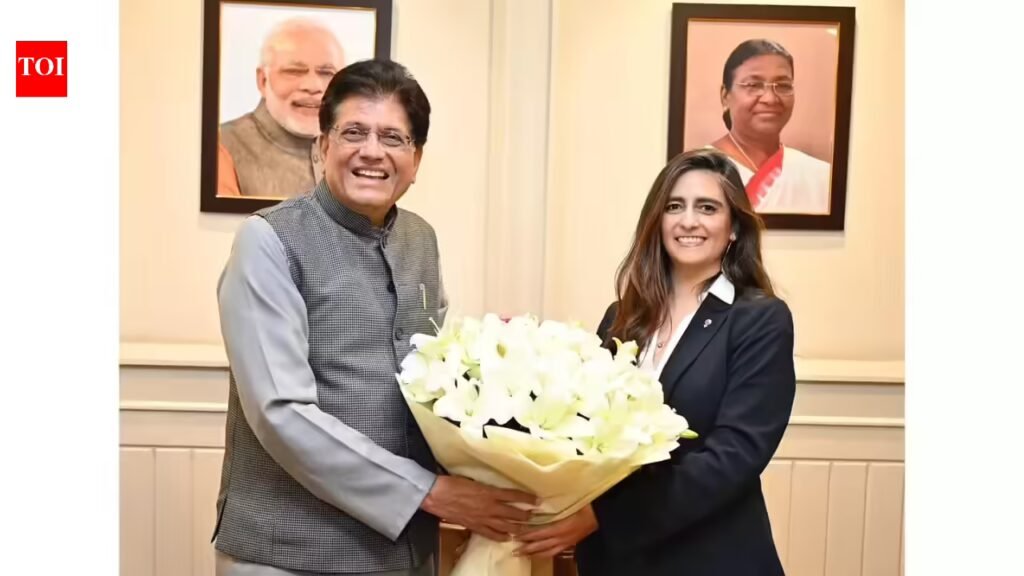
India and Chile on Wednesday reviewed the progress of negotiations for a proposed free trade agreement (FTA), with both sides discussing ways to accelerate talks and deepen bilateral economic engagement, reported PTI.The issue came up during a meeting between Commerce Secretary Rajesh Agrawal and Chile’s Vice-Minister of International Economic Relations Paula Estevez Weinstein in Yaounde, the capital of Cameroon, where Agrawal is attending the 14th ministerial conference of the World Trade Organisation (WTO). The four-day meeting will begin on March 26.“Discussed progress in India-Chile CEPA (comprehensive economic partnership agreement) negotiations, its early conclusion, and explored ways to further strengthen bilateral economic cooperation and trade,” the Department of Commerce said in a social media post.The proposed pact with the South American nation is expected to help India secure access to critical minerals that are key inputs for sectors such as electronics, automobiles and solar energy.India and Chile had implemented a preferential trade agreement (PTA) in 2006 and are now working to expand its scope into a comprehensive economic partnership agreement. The CEPA is aimed at building on the existing framework while covering a wider range of areas, including digital services, investment promotion and cooperation, MSMEs (micro, small and medium enterprises) and critical minerals.Bilateral trade between the two countries remains modest. In 2024-25, India’s exports to Chile declined 2.46 per cent to $1.15 billion, while imports rose sharply by 72 per cent to $2.60 billion, according to official data.
US-Iran war: Why India is facing an LPG crisis — explained in charts

India is facing one of its worst LPG crises in decades, as disruptions triggered by the ongoing Middle East conflict ripple through global energy supply chains and begin to impact domestic availability of Liquefied Petroleum Gas (LPG).With imports slowing, prices rising and distribution systems under strain, the government has moved to prioritise household supply, cutting allocations for industries and commercial users. The result has been panic buying, long queues outside gas agencies and mounting anxiety across several states. Watch Centre Pushes PNG: LPG Supply May Be Stopped Where Pipelines Are Available Queues, panic and disruption Across cities such as Delhi, Gurgaon, Mumbai, Kolkata, Lucknow and Chennai, long queues outside LPG distribution centres have become a common sight. Women carrying empty cylinders, elderly residents and office-goers are waiting for hours to secure refills.The shortage has also triggered panic buying. Consumers have rushed to book cylinders through mobile apps, websites and IVRS systems, overwhelming booking platforms. Many reported technical glitches, with systems crashing or displaying “server down” messages, forcing people to visit agencies in person.At the peak of the crisis last week, several restaurants temporarily shut down after running out of LPG stocks. Small businesses, especially those dependent on commercial cylinders, have been hit the hardest. Meanwhile, induction cookers have seen a surge in demand as households look for alternatives.Although the Centre has maintained that domestic LPG supplies remain adequate, disruptions in commercial cylinder distribution and reports of shortages have created widespread concern. Why did the crisis erupt? The current crisis can be traced back to early March 2026, when military strikes by the United States and Israel on Iran escalated tensions in the region. In response, Tehran effectively tightened control over the Strait of Hormuz, a crucial shipping route through which a significant portion of the world’s energy supplies pass.For India, the impact has been immediate. A big portion of the country’s LPG imports from the Middle East pass through this narrow corridor. Any disruption to traffic through Hormuz directly affects India’s supply chain.India consumed about 31.3 million metric tonnes of LPG last year, with imports accounting for around 60–65% of total demand. Of this, nearly 87% is used in household kitchens, while the rest goes to commercial establishments such as hotels and restaurants, Reuters reported. How the war exposed India’s LPG import dependence The crisis has once again highlighted India’s heavy dependence on LPG imports, a structural vulnerability that has grown over the years.Data from the Petroleum Planning and Analysis Cell (PPAC) shows a wide gap between domestic production and consumption. In the first half of FY 2025–26, India produced 6,219 thousand metric tonnes (TMT) of LPG, while consumption stood at 16,200 TMT. Imports filled the gap at 10,731 TMT, translating into an import dependency of around 62%.Over the long term, LPG imports have surged dramatically. From just 1,722 TMT in 1998–99, imports have risen to over 20,667 TMT in 2024–25, a nearly 12-fold increase. LPG now accounts for around 40% of India’s total petroleum product imports, up from just 7.2% in the late 1990s.This rise has been driven by growing demand for cleaner cooking fuel, supported by government schemes and increasing household adoption. Shipping disruption and rising risks The conflict has significantly increased risks for vessels travelling through the Strait of Hormuz, located between Iran and Oman. Shipping data shows that tanker traffic has declined sharply, while freight rates have surged.Maritime insurers have responded by withdrawing war-risk cover or sharply increasing premiums, in some cases by over 1,000%. This has made shipments commercially unviable for many operators.As a result, fewer ships are willing to load LPG cargoes from Gulf producers, leading to delays and rising costs. Saudi Aramco’s loading terminal also faced disruptions, further tightening supply.Within the first two weeks of the crisis, weekly LPG inflows to India fell noticeably. Imports dropped from 322,000 tonnes in the week ending March 5 to 265,000 tonnes by March 19. Supplies from the Middle East declined to just 89,000 tonnes, the lowest share since January 2026.Alternative supplies from regions have increased but they take longer to arrive and come at a significantly higher cost. India’s demand surge? India’s LPG consumption has grown rapidly in recent years. By FY25, consumption reached 31.3 million tonnes, compared to 29.7 million tonnes in FY24. However, domestic production has remained largely stagnant at around 12.8 million tonnes.Early estimates for FY26 suggest consumption at around 28 million tonnes, with production at about 10.7 million tonnes, again indicating a large gap filled through imports.This growing mismatch between demand and domestic supply has made LPG one of the most import-dependent fuels in India’s energy basket. Limited storage worsens vulnerability Another key weakness exposed by the crisis is India’s limited LPG storage capacity.Unlike crude oil, LPG is difficult and expensive to store, as it must be kept in liquid form under pressure. It requires specialised infrastructure such as pressurised cylinders, spherical tanks and underground caverns.India’s total LPG storage capacity is estimated at around 1.9 million tonnes, equivalent to roughly 22 days of supply.High infrastructure costs, geological constraints and the dispersed nature of LPG distribution have limited the expansion of storage facilities. As demand has grown rapidly, storage capacity has struggled to keep pace. Region-wise data on LPG marketing (As on 01.02.2026) Particulars North North-East East West South Total LPG Active Domestic Customers (in Lakh) 1005.2 127.0 677.3 697.4 824.1 3331.0 Non-PMUY Customers (in Lakh) 693.4 63.9 338.0 471.9 712.7 2280.0 PMUY Beneficiaries (in Lakh) 311.8 63.1 339.3 225.4 111.4 1051.0 LPG Distributors (Numbers) 8194 1120 5207 5433 5646 25600 Auto LPG Dispensing Stations (Numbers) 61 0 28 53 247 389 Bottling Plants (Numbers) 65 11 34 50 54 214 Prices rise, black marketing surfaces The crisis has also led to a rise in prices. Domestic LPG cylinder rates were increased by Rs 60 recently, while commercial cylinder prices rose by Rs 114.5 nationwide.As of March 16, 2026, a 14.2 kg domestic LPG cylinder in New Delhi costs Rs 913, up from Rs 853 earlier.However, consumers say the bigger issue is
KV Ramana Murty named Sebi whole-time member
The Centre has appointed Kompella Venkata Ramana Murty as a whole-time member of the Securities and Exchange Board of India (Sebi) for a term of three years.His appointment completes the regulator’s full strength of four whole-time members, according to PTI. The other members currently serving on the Sebi board are Amarjeet Singh, Kamlesh Chandra Varshney and Sandip Pradhan.A retired 1991-batch Indian Defence Accounts Service (IDAS) officer, Murty earlier held the position of Additional Controller General of Defence Accounts in the Ministry of Defence.As per a government notification issued late on Tuesday, he has been appointed “for a period of three years from the date of assumption of charge of the post, or until further orders, whichever is earlier.”
US stock markets today (March 25, 2026): S&P 500, Nasdaq & Dow rally over 1%; Brent crude slides on renewed hopes of Iran war pause
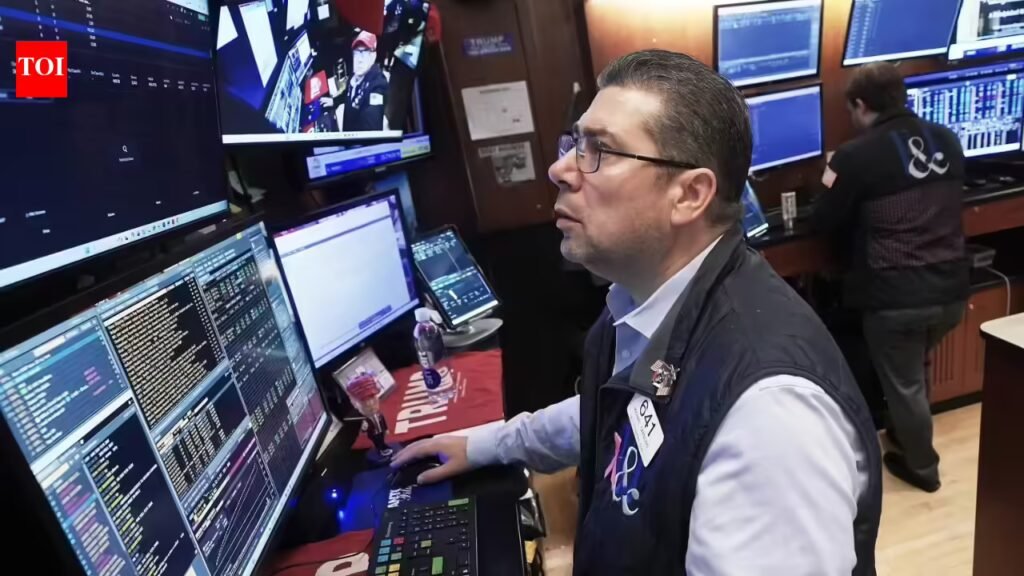
US stock markets jumped on Wednesday while oil prices declined as hopes resurfaced for a possible pause in the war with Iran, lifting investor sentiment across global financial markets.The S&P 500 rose 1.1% in early trading after the United States delivered a proposal to Iran aimed at halting the conflict. The Dow Jones Industrial Average was up 529 points, or 1.1%, at 9:35 a.m. Eastern time, while the Nasdaq Composite gained 1.3%, AP reported.Brent crude, the global oil benchmark, fell 5.4% to $94.78 per barrel amid expectations that easing hostilities could allow smoother flow of oil and natural gas from the Persian Gulf. Oil tanker movement has remained disrupted around the Strait of Hormuz, which had earlier pushed Brent prices close to $120 per barrel.Despite the rally, markets remained volatile as uncertainty persisted over the duration and trajectory of the conflict, which began more than three weeks ago with US and Israeli strikes on Iran. Financial markets have swung sharply in recent weeks, with sentiment shifting rapidly in response to geopolitical developments.Iran did not confirm receiving the US ceasefire proposal and publicly rejected the diplomatic effort, even as fresh attacks were launched on Israel and Gulf Arab countries. Military action also continued against Iran, while the US deployed additional paratroopers and Marines to the region.Optimism, however, was visible across global markets, with stock indices rising more than 1% in several regions, including London, Paris and Shanghai. Japan’s Nikkei 225 surged 2.9%.In the bond market, Treasury yields eased, potentially providing some relief for borrowing costs such as mortgages that had risen since the start of the conflict. The yield on the 10-year US Treasury slipped to 4.33% from 4.39% late Tuesday, though it remained above the 3.97% level seen before the war began.Gold prices also recovered, rising 3.5% to $4,558.10 per ounce. The metal had earlier touched nearly $5,400 this month before retreating as higher Treasury yields reduced its relative appeal.On Wall Street, companies with high fuel expenses rallied on the back of falling oil prices. Norwegian Cruise Line Holdings rose 4.2%, while United Airlines gained 4%.Robinhood Markets jumped 7.1% after its board approved a programme to return up to $1.5 billion to shareholders through stock buybacks.
Delay in FSSAI finalising front of pack labelling rules unusual by its own norm

While the Food Safety and Standards Authority of India (FSSAI) has claimed in the Supreme Court that the framing of front-of-pack labelling (FOPL) regulations would take longer and sought more time, a look at several regulations framed by the authority in the last ten years shows that the average time taken to frame one or make amendments to existing ones has been about two years. In the case of the FOPL, the process has been dragging on for about a decade.After framing guidelines in 2014 which included front-of-pack labelling specifying how much fat, sugar or salt a packaged food contained, when the FSSAI put it in the public domain in 2015, it had stated that the guidelines would be “converted into regulation in due course after following the process of inviting suggestions and comments, suggestions etc. from various stakeholders”. FSSAI put out the draft Food Safety and Standards (Labelling and Display) Regulations, 2018 in public domain in April 2018. However, since then there have been half a dozen stakeholder consultations and more drafts put out, but no regulation in sight yet.In response to a public interest petition in the Supreme Court seeking directions to FSSAI to make FOPL regarding high fat, sugar and salt mandatory for packaged foods, the court has been monitoring the process even as the authority has been seeking repeated extensions. In its latest affidavit in court, the FSSAI laid out a long process before the Supreme Court.It told the court that it is “contemplating” a tabular or pictorial representation to reflect high fat sugar or salt on front of pack labelling. It stated that it is a complex matter “requiring further consultation and examination” and hence stakeholder consultation is proposed before deciding on the modalities of FOPL. The latest stakeholder consultation had over 60 food industry and industry association representatives and just two public health experts representing civil society or public health interest.There remain several steps:1. After stakeholder consultations a draft amendment will be prepared2. Draft amendment will be placed before scientific panel (consist of nine eminent food scientists from different government organizations/institutions). Scientific committee comprising of chairpersons of the 21 scientific panels and six independent members, FSSAI and Health ministry “for due consideration”3. To include amendment in the regulation a draft regulation including the proposed amendment/s is placed before the scientific panel concerned4.Recommendations of the scientific panel will be placed before the scientific committee5. On endorsement of the scientific committee it will be placed before FSSAI for approval and if there are substantial changes in the notified draft regulation, another draft regulation will have to be notified6. Once approved by FSSAI, the draft or final regulation is sent to health ministry7. After ministry approval, if it is a draft regulation, it has to be notified in the gazette for public comments giving 60 days’ time and the entire process spelt out above is repeated before it is finally notified.8. In case what the health ministry approves is the final regulation, it has to be sent to the legislative department of the law ministry for vetting followed by approval of the health ministry. The approved final regulation is published in the Gazette of India for implementation.In short, the FSSAI stated in court that the regulation is far from becoming a reality any time soon. However, the longest time FSSAI has taken for framing any of the existing regulations or amendments has been over three years. The only other regulation that the FSSAI has not framed even after seven years is the Food Safety and Standards (Genetically Modified and Engineered Foods) Regulations which have been in the works since 2019.Average time to bring in various regulations/amendments to regulations New regulations Draft notified in the gazette Put in public domain for feedback from stakeholders Date of gazette notification Gap between draft and final notification Food Safety and Standards (Health Supplements, Nutraceuticals, Food for Special Dietary Use, Food for Special Medical Purpose, Functional Food and Novel Food) Regulations, 2016. Jul 30, 2015 Sep 11, 2015 Dec 23, 2016 17 months Food Safety and Standards (Alcoholic Beverages) Regulations, 2018 Sep 5, 2016 Sep 9, 2016 Mar 19, 2018 18 months Food Safety and Standards (Fortification of Foods) Regulations, 2018 Dec 23, 2016 Jan 3, 2017 Aug 2, 2018 19 months Food Safety and Standards (Organic Foods) Regulations, 2017 Jun 19, 2017 Jun 22, 2017 Dec 29, 2017 6 months Food Safety and Standards (Advertising and Claims) Regulations, 2018 Mar 13, 2018 Mar 23, 2018 Nov 19, 2018 8 months Food Safety and Standards (Packaging) Regulations, 2018 Mar 19, 2018 Apr 2, 2018 Dec 24, 2018 9 months Regulation amendments Food Safety and Standards (Contaminants, toxins and Residues) First Amendment Regulations, 2024 Aug 20, 2020 Aug 26, 2020 Oct 17, 2024 26 months Food Safety and Standards (Packaging) First Amendment Regulations, 2025. May 17, 2022 May 24, 2022 Mar 28, 2025 34 months Food Safety and Standards (Food Products Standards and Food Additives) First Amendment Regulations, 2024. May 25, 2022 May 31, 2022 Oct 21, 2024 29 months Food Safety and Standards (Food Products Standards and Food Additives) First Amendment Regulations, 2025 Oct 31, 2022 Nov 3, 2022 Jul 10, 2025 32 months Food Safety and Standards (Prohibition and Restrictions on Sales) first Amendment Regulations, 2024 Apr 27, 2023 Apr 28, 2023 Oct 17, 2024 18 months